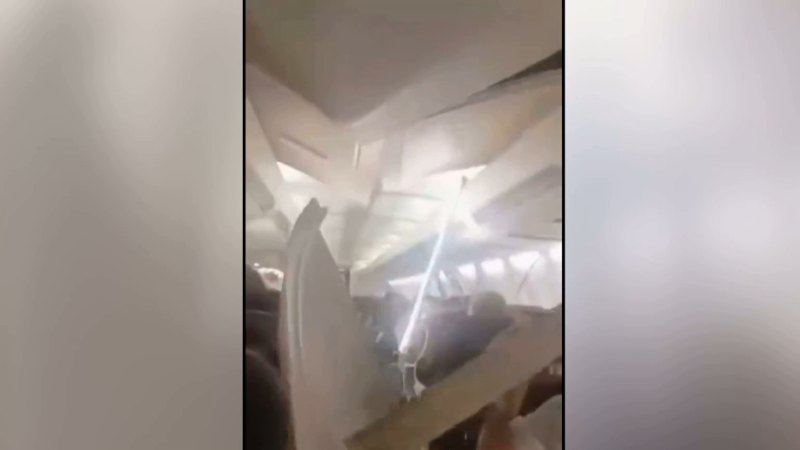
When a cabin ceiling panel drops mid-flight on an Iranian commercial route, the knee-jerk media response writes itself: decrepit airframes, crushing sanctions, and a neglected aviation fleet pushed past the brink. Everyone nods along. Everyone points fingers at international embargoes starving airlines of spare parts. It is neat. It is tidy. And it is entirely lazy.
The popular narrative assumes that a structural detachment or interior failure inside an older passenger cabin is purely a symptom of maintenance starvation. If only they had fresh hardware straight from Western assembly lines, the argument goes, rivets would stay put and overhead linings would remain intact.
That theory collapses under basic engineering reality.
I have spent decades watching aviation safety boards autopsy structural incidents, and the truth is far more uncomfortable than a simple geopolitical talking point. Cabin ceiling panels do not detach because an aircraft crossed some arbitrary age milestone or because a technician missed a parts shipment. They fail because of extreme cabin pressure differential spikes, aggressive dynamic loads from turbulence, and the hidden degradation of composite fasteners that get zero attention until gravity makes its announcement.
Blaming sanctions for a dislodged interior shroud is like blaming a broken steering wheel on a car's registration status. It ignores the mechanical physics playing out inches above passengers' heads.
The Myth of the Eternal Airframe
Modern passengers suffer from a dangerous illusion: the belief that commercial aircraft are monolithic machines that either operate at peak factory perfection or belong in a scrapyard.
Commercial jets are not consumer electronics. They are modular, highly stressed pressure vessels operating in a brutal thermal and mechanical cycle. Every single time a plane climbs to thirty-five thousand feet, the fuselage expands under internal pressure. Every time it lands, it contracts. Over thousands of cycles, secondary interior structures—the fiberglass panels, plastic shrouds, and lightweight trim that make a cabin look like a luxury hotel instead of a cargo hold—experience constant vibrational fatigue.
When a panel caves in, it is rarely the primary structural frame failing. The primary spar is doing its job. It is the secondary attachment points, the quick-release clips, and the vibration dampers that take the beating.
The media loves to frame aircraft age as a ticking clock. In reality, a properly maintained forty-year-old airframe with zero-timed engines and overhauled wiring is structurally safer than a brand-new aircraft rushed through a backlogged factory production line with supply-chain shortcuts. Airframe longevity is a function of disciplined maintenance intervals, not the date stamped on the bill of sale. When maintenance cultures cut corners—whether driven by financial desperation, administrative chaos, or supply shortages—the failure manifests at the weakest structural interface. That interface is almost always interior trim and non-load-bearing cabin hardware.
How Sanctions Actually Kill Aviation Safety
Let us address the elephant in the room without the political hand-wringing. Yes, sanctions restrict direct access to OEM replacement parts for specific Western-built fleets in Iran. Yes, operators have been forced to scavenge parts, rely on third-party reverse engineering, or keep aging fleets aloft far longer than originally modeled.
But pretending this is unique to sanctioned airspace is sheer ignorance.
Global aviation supply chains have been strained to their absolute limits everywhere. Major carriers across Europe and North America have grounded fleets due to premature engine wear, parts counterfeiting scandals, and severe bottlenecks in heavy maintenance checks. The difference is that wealthy carriers mask these systemic vulnerabilities with redundancy and newer inventory, while operators in constrained markets operate with a razor-thin margin for error.
When access to certified aerospace-grade fasteners or authorized cabin adhesive compounds is restricted, technicians improvise. They use local alternatives. They extend the service life of components past manufacturer recommendations because a grounded plane earns zero revenue.
This is where the real danger lies. It is not that older planes magically fall apart on schedule. It is that resource starvation forces maintenance teams to make impossible operational compromises. When you starve an airline of predictable logistics, mechanics are forced to triage. They focus strictly on engines, flight controls, and avionics—the things that keep the plane in the air.
Interior cabin trim becomes an afterthought. A loose ceiling panel isn't a priority when you are burning through your last set of certified hydraulic seals. So the panel stays put with a prayer and a worn-out latch until a sudden pressure differential or a sharp downdraft finishes the job.
The Passenger Panic Trap
When interior panels drop, panic spreads instantly through the cabin and across social media feeds. Passengers post frantic videos of exposed wiring and dangling insulation, assuming the aircraft is breaking apart in mid-air.
This fundamental misunderstanding of aircraft architecture creates a toxic feedback loop.
Commercial cabins are designed with a strict separation between the pressure hull and the interior aesthetic shell. The metal tube keeping you alive at high altitude is the aluminum or composite fuselage skin beneath everything you can see, touch, or lean against. The overhead bins, ceiling panels, reading lights, and gaspers are part of the cabin interior trim package. They hang from shock mounts and brackets attached to the frame, but they do not hold the airplane together.
When a ceiling panel caves in, it looks catastrophic. It feels like the sky is falling. But acoustically and structurally, it is closer to drywall cracking during an earthquake than it is to the structural collapse of a building's foundation. It is terrifying, chaotic, and completely unacceptable from a quality control standpoint—but it is a localized failure of non-structural trim.
Treating every cosmetic or secondary trim failure as an imminent catastrophe misallocates public attention and regulatory pressure. It encourages airlines to slap superficial cosmetic fixes over deeper systemic issues just to satisfy nervous flyers, rather than auditing the rigorous maintenance protocols required to keep secondary structures locked down.
What Real Aviation Resilience Looks Like
If we want to stop passenger cabins from turning into hazard zones, we need to strip away the political narratives and look at the mechanics of risk management.
First, regulators and operators must stop treating cabin interiors as purely aesthetic elements. A heavy fiberglass shroud vibrating loose at Mach 0.8 is a projectile. Maintenance programs must mandate non-destructive testing and physical torque verification of secondary cabin attachment points, regardless of whether the plane is flying under Western certification or localized oversight.
Second, the global aviation community needs to confront the reality of parts obsolescence. Fleets are staying in service longer worldwide due to manufacturing backlogs for new aircraft. Every airline on earth is currently flying older metal than they planned to a decade ago. If the industry does not adapt its inspection intervals for aging interior bonding and fastener fatigue, cabin failures will become more common, regardless of geography.
The broken ceiling panel in an Iranian commercial flight is a warning shot. Not because it proves that older planes are death traps, but because it exposes the breaking point of a system forced to run marathons on empty tanks. Until we fix the underlying logistical constraints and respect the mechanical realities of vibrational fatigue, passengers will keep ducking falling hardware while analysts blame the wrong culprit.