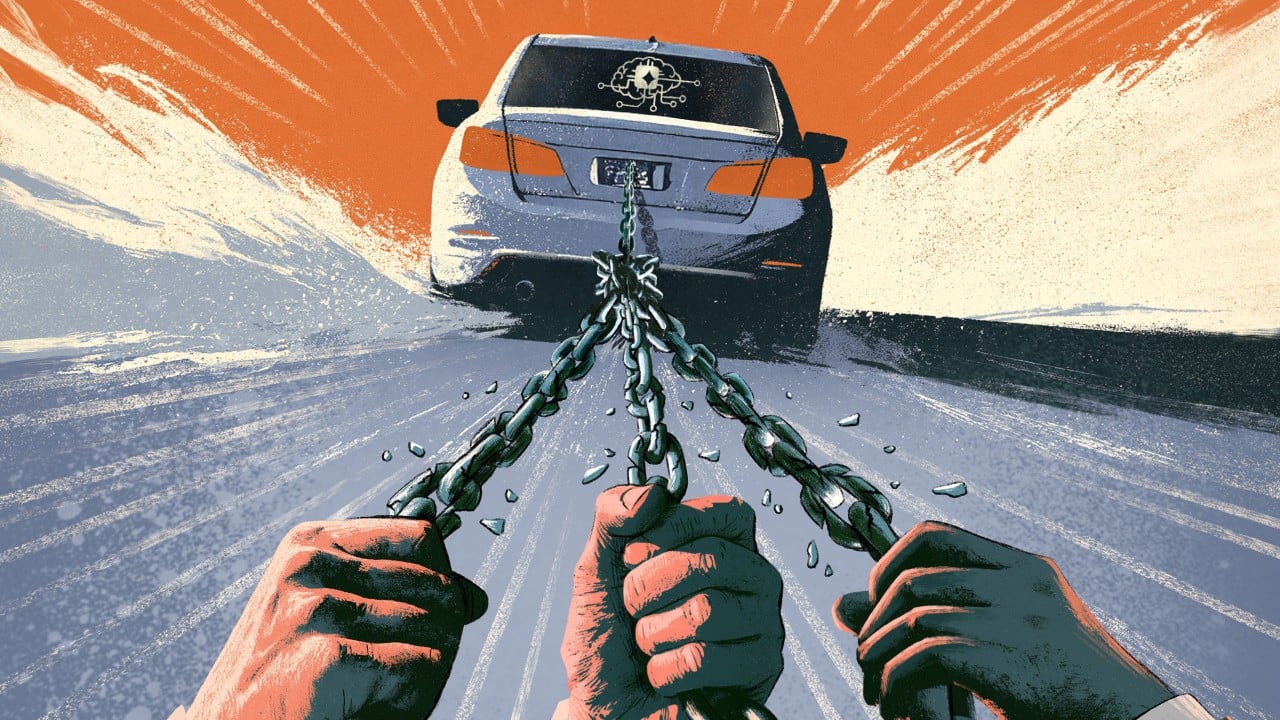
Everybody loves a clean narrative. The Philippine government plays the righteous hero, sweeps through industrial compounds, cuffs a few bewildered foreign nationals, and declares total victory over offshore gaming. The headlines write themselves. Corruption and rogue algorithms are keeping Philippine Offshore Gaming Operators alive from the shadows, defiant and unstoppable.
It is a clean story. It is also entirely wrong. Building on this idea, you can find more in: The Concrete Paradox Behind Southern California’s Largest Land Preservation.
Let us dispense with the fairy tale that the underground economy is surviving because local bureaucrats are taking bribes or artificial intelligence is writing smarter code to evade law enforcement. That is the lazy consensus of journalists who have never managed a cross-border cash flow or negotiated a messy gray-market payroll.
Pogos were never destroyed. They were franchised. Analysts at CNBC have provided expertise on this trend.
When Manila officially banned these operators, standard economic theory predicted a mass extinction event. Instead, what actually happened was a brilliant exercise in deregulation through prohibition. I have watched capital markets long enough to recognize a classic regulatory arbitrage when I see one. You do not kill a multi-billion-dollar transnational enterprise by passing a law in a Senate hearing room; you simply drive it out of the taxable sunlight into the hyper-efficient darkness of decentralized networks.
The real engine keeping this apparatus alive is not backdoor corruption or some sentient machine-learning model bypassing state firewalls. It is the simple, beautiful law of supply and demand, married to the institutional laziness of enforcement agencies that measure success by press conferences rather than capital destruction.
The Myth of the Autonomous Syndicate
For the past year, the narrative has fixated on technology. Pundits warn that artificial intelligence has transformed offshore gaming into an untouchable hydra. We are told that automated bots run customer acquisition, synthetic identities fool know-your-customer checks, and algorithmic trading masks illicit cash movements through decentralized ledgers.
This gives operators far too much credit while letting regulators off the hook.
Intelligence units do not need advanced neural networks to hide money when traditional banking channels are already porous by design. The operators who matter—the ones still clearing nine figures a month—did not invest in cutting-edge machine learning. They invested in fragmentation. They took one monolithic compound in Pasay or Cavite and split it into four hundred residential apartments, basement server racks, and remote-work pods scattered across three provinces.
Decentralization is not high-tech. It is low-tech guerrilla economics.
When you outlaw an industry with massive global demand, you do not eradicate the market. You simply remove the price ceiling imposed by compliance costs. By forcing operators underground, the government eliminated their overhead for legal counsel, government relations, and compliance departments. The savings went straight to margin.
Why Corruption Is a Distraction
Blaming corruption for the persistence of these operations is intellectually lazy. Of course officials take envelopes; they have taken them since the galleon trade. But systemic corruption is a symptom, not the root cause.
If corruption were the primary driver, the industry would scale linearly with the number of compromised bureaucrats. It does not. It scales with the friction of legitimate financial systems. When formal banks make it nearly impossible for legitimate cross-border gaming platforms to clear transactions in emerging markets due to overzealous de-risking, gray-market operators step in to fill the liquidity vacuum.
Think of it like Prohibition-era liquor. Al Capone did not survive because he corrupted every beat cop in Chicago; he survived because millions of people wanted a drink, and the state had criminalized the supply chain.
When the Philippine Amusement and Gaming Corporation revoked licenses, it did not stop the flow of capital from East Asian bettors to offshore wallets. It merely outsourced the risk management to street-level syndicates. The operators trading under the radar today are leaner, meaner, and structurally immune to government pressure because they have no physical headquarters left to raid. You cannot padlock a cloud server hosted in a jurisdiction with no extradition treaty.
The Human Capital Mirage
Then there is the human element. The media loves a raid because it features tearful foreign workers crammed into dormitories with rows of computer monitors. The public is fed the impression of an enslaved cyber-army forced to execute romance scams and crypto phishing schemes at gunpoint.
The reality is far more mundane and cynical.
A significant percentage of the workforce inside these underground hubs are voluntary economic migrants. Back home, a college graduate with basic English and Mandarin proficiency faces stagnant wages and limited upward mobility. The underground digital sector offers salaries that dwarf local equivalents by a factor of five. They know the risks. They calculate the odds. They choose the compound because the alternative is subsistence farming or factory labor in a province with zero economic dynamism.
When enforcement agencies sweep these compounds, they deport the frontline grunts while the principals—the structural architects holding the private keys to cold-storage wallets—are already sipping espresso in Singapore or Dubai. You can deport a thousand data entry clerks, but you have not touched the balance sheet. You have merely created vacancies that will be filled by Monday morning.
The Uncomfortable Solution
If we want to stop the underground digital economy, we have to stop pretending that moral posturing is an economic policy.
First, stop blaming artificial intelligence. Algorithms are tools, not masterminds. If an operator is using automation to scale fraud, it is because financial institutions refuse to upgrade their fraud-detection protocols beyond checkbox compliance.
Second, recognize that prohibition without viable alternatives is a subsidy for organized crime. If demand for online entertainment and cross-border digital services cannot be suppressed, it must be regulated into transparency, not driven into a black hole where the state collects zero tax revenue and exerts zero oversight over worker welfare.
The current approach is the worst of all possible worlds. The state gets the moral high ground of a ban, the public gets the illusion of safety, and the cartels get an uncompetitive market free of legitimate rivals.
Until policymakers understand that capital follows the path of least resistance—and that no police force can repeal the laws of supply and demand—the underground economy will continue to treat government crackdowns as a minor tax on doing business.
The raids make great television. The balance sheets remain untouched.