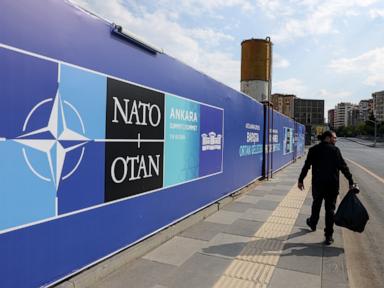
The upcoming NATO summit in Ankara, Turkey, marks a fundamental departure from traditional multilateral diplomacy, transitioning instead into a transactional node for parallel, asymmetric negotiations. By staging concurrent bilateral meetings with Ukrainian President Volodymyr Zelenskyy and Syrian President Ahmad al-Sharaa, the United States administration is seeking to leverage its security architecture to resolve two prolonged regional conflicts simultaneously. This strategy does not rely on collective alliance consensus. It operates through hyper-personalized, high-stakes mediation designed to exploit specific vulnerabilities within the theater of war in Eastern Europe and the restructured political reality of the Levant.
Understanding this diplomatic deployment requires mapping the interconnected pressure points that the United States intends to manipulate. The administration's objective is to execute a dual-exit strategy: extracting American strategic exposure from the Russo-Ukrainian war while re-engineering Middle Eastern security dynamics following the collapse of the Assad regime. The success of this operational framework depends on calculating the precise trade-offs each actor is prepared to accept under intense fiscal and military constraints.
The Eastern European Theater: The Strategic Calculus of War Termination
The conflict in Ukraine, now persisting in its fifth year, has reached an equilibrium characterized by high attrition rates and diminishing marginal returns for both belligerents. While recent tactical shifts demonstrate that Russian offensive operations have slowed, Ukraine has simultaneously escalated its asymmetric capabilities, executing deep-penetration strikes inside Russian territory to disrupt logistical networks and energy infrastructure. This specific battlefield dynamic forms the backdrop for the meeting between Donald Trump and Volodymyr Zelenskyy.
The United States approach is driven by a calculated sense of urgency to halt hostilities, a position that relies on a specific sequence of actions:
[U.S.-Zelenskyy Bilateral Alignment] ➔ [Direct U.S.-Putin Follow-up] ➔ [Enforced Ceasefire Architecture]
This sequence bypasses traditional NATO consultative mechanisms to accelerate a diplomatic settlement. The structural logic governing this approach can be divided into three distinct operational pressures.
The Exhaustion of Material Logistics
The prolonged nature of the war has exposed systemic manufacturing bottlenecks within Western defense industrial bases. Artillery ammunition production, air defense replenishment rates, and financial aid packages face increasing domestic political friction within the United States. By confronting Kyiv with these long-term resource constraints, Washington aims to establish a realistic baseline for what a negotiated settlement must look like, shifting the objective from total territorial reclamation to long-term structural security guarantees.
The Frontline Attrition Function
Despite successful deep-tier drone strikes by Ukrainian forces, the static nature of the frontline imposes a severe demographic and economic burden on Ukraine. The objective for Kyiv during the Ankara summit is to refocus American attention on the immediate tactical realities, ensuring that any enforced peace framework does not leave the state vulnerable to a secondary wave of Russian aggression. Zelenskyy’s public assertion that a real prospect for ending the war exists indicates an alignment on the necessity of a diplomatic off-ramp, though the underlying conditions remain highly contested.
The Kremlin's Parallel Track
The diplomatic mechanism cannot function in isolation. Moscow's confirmation via foreign affairs adviser Yuri Ushakov that Russia remains ready to discuss peaceful solutions indicates that the Kremlin perceives an opening to institutionalize its current territorial gains. The American strategy involves using the threat of increased military aid to Ukraine as leverage against Putin, while simultaneously using the threat of a complete aid cutoff to compel Zelenskyy to the negotiating table. This creates a dual-sided enforcement mechanism where the United States attempts to dictate the parameters of peace by controlling the supply valve of Ukrainian defense capabilities.
The Syrian Equation: Re-Engineering the Levantine Security Architecture
The presence of Syrian President Ahmad al-Sharaa at a NATO summit venue represents a drastic reordering of Middle Eastern geopolitics. Following the ouster of Bashar al-Assad by rebel forces led by al-Sharaa’s Islamic insurgent coalition, the new Syrian government is seeking international legitimacy and economic reconstruction funds. Washington views this political transition as an opportunity to alter the regional balance of power, specifically targeting Iranian influence and the operational footprint of Hezbollah in Lebanon.
The administration’s strategic intent relies on a simple yet highly volatile hypothesis: utilizing the new Sunni-led administration in Damascus to physically dismantle Hezbollah's supply lines and northern sanctuary. This strategy faces significant structural friction.
The Counter-Hezbollah Mandate
Frustrated by the ongoing conflict between Israel and Hezbollah, which has continuously complicated broader diplomatic initiatives involving Iran, the United States has publicly suggested that Syria should actively engage and neutralize Hezbollah forces within its borders. This expectation ignores the domestic stabilization challenges currently facing the al-Sharaa government. Syria is transitioning away from decades of dynastic autocracy; its state institutions are fragile, and its military forces are primarily configured for internal security rather than a high-intensity conventional conflict against a battle-hardened paramilitary organization.
The Friction of Local Incentives
Al-Sharaa has explicitly stated a lack of interest in participating in a foreign-directed military campaign against Hezbollah, noting that Washington’s expectations may be misconstrued. The Syrian government's priority is economic survival, domestic consolidation, and securing recognition from regional neighbors. Engaging in a secondary war against an Iranian proxy would invite severe asymmetric retaliation, destabilize fragile border regions, and potentially trigger a resurgence of internal civil strife. Damascus is seeking capital injection and sanctions relief, not an expansion of its military liabilities.
The Transactional Leverage
The Ankara bilateral meeting will center on an explicit exchange of currencies. Washington possesses the leverage of state recognition, the lifting of primary and secondary sanctions, and access to international financial institutions. Damascus possesses geographic control over the land corridors linking Tehran to the Mediterranean. The American analytical model assumes that Syria’s economic desperation can eventually overcome its strategic reluctance. The limitation of this model is its underestimation of the ideological and security ties that still permeate the regional intelligence network, meaning any compliance by al-Sharaa will likely be nominal rather than operational.
NATO Burden-Sharing and Global Asset Realignment
While the bilateral meetings dominate the geopolitical narrative, the broader NATO summit agenda in Ankara reflects a structural drive by the United States to shift the financial and logistical burdens of collective defense onto its allies. The administration is using the summit to enforce strict compliance with defense spending targets, explicitly demanding meaningful upward trajectories in national defense budgets to achieve a more equitable distribution of costs.
This pressure coincides with a planned expansion of NATO’s functional mandates outside its traditional North Atlantic geographical boundaries.
Maritime Projections in the Strait of Hormuz
The security of the Strait of Hormuz has emerged as a key agenda item for the summit, driven by prolonged naval skirmishes and threats to global energy corridors. The United States is actively pushing European allies to commit naval assets to safeguard shipping through this vital waterway. This creates an immediate operational bottleneck. While several allies have expressed programmatic interest in contributing to maritime security, a senior United States official noted that many lack the actual hull count, logistical auxiliary vessels, or advanced naval systems required to sustain a meaningful presence in a contested maritime environment. The American objective is to force these states to fund and develop these specific capabilities, reducing the operational strain on the United States Navy.
Defense Industrial Integration and Transatlantic Capital Flows
The summit will feature billions of dollars in defense industry announcements on the sidelines, focusing primarily on joint co-production projects and the establishment of manufacturing facilities involving European and Canadian partners. This initiative serves two structural purposes:
- It scales up the overall production capacity of the alliance without requiring direct American capital expenditure.
- It institutionalizes Western defense supply chains against future disruption, ensuring that European allies possess the industrial self-sufficiency to manage continental security threats independently over the next decade.
The Greenland Strategic Asset Calculus
The administration’s persistent focus on the potential acquisition of Greenland remains a point of active discussion during the summit. Officials have confirmed that the United States views the acquisition or long-term structural control of Greenland as the optimal solution to secure NATO's northern flank against Arctic encirclement. While alternative sovereign arrangements are being explored with the governments of Greenland and Denmark, the underlying logic is entirely resource-driven and defensive. Control of Greenland secures critical early-warning radar positioning, commands the GIUK (Greenland-Iceland-United Kingdom) gap, and provides access to vast unexploited rare earth minerals necessary for the defense industrial supply chain.
The Geopolitical Forecast
The strategic play entering the Ankara summit indicates a profound realignment of international security priorities. The United States is attempting to execute a complex geopolitical rebalancing, trading security guarantees in Europe for tactical concessionary behavior in the Middle East, all while demanding that its traditional allies pick up the financial costs of containment.
The definitive trajectory of these initiatives will be determined by the sequence of outcomes on Wednesday. If the administration successfully extracts a framework for a ceasefire from Zelenskyy, it will immediately pivot to confront Putin from a position of managed strength, aiming for a rapid freezing of the Ukrainian theater by winter. Simultaneously, the interaction with al-Sharaa will dictate whether the Levant transitions into a managed security zone or fractures into a new phase of proxy warfare. The strategic recommendation for allied nations is clear: prepare for a highly transactional international environment where security architecture is treated not as a permanent treaty-based obligation, but as an active asset to be allocated based on immediate strategic returns.