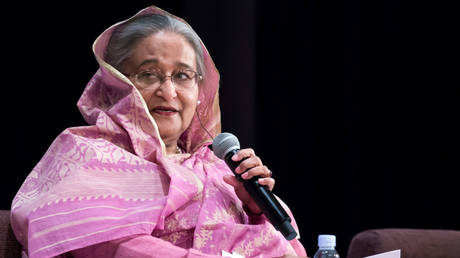
The mainstream media loves a political ghost story. The narrative template is entirely predictable: an aging autocrat is ousted in a bloody uprising, flees the country in a midnight helicopter, gets slammed with a death sentence by a kangaroo court back home, and immediately issues a defiant press release from an undisclosed villa vowing a triumphant, Mandela-esque return to save the motherland.
It makes for great theater. It drives clicks. It is also a complete geopolitical fantasy. Meanwhile, you can explore similar stories here: Why the EU is picking a fight with Washington over the ICC.
The western press corps treats these declarations of return as credible political strategies. They analyze them through the lens of romantic nationalism, painting the exiled leader as a looming shadow over the new regime, waiting for the perfect moment to cross the border and reclaim the throne.
Let's stop playing along with the theater. To see the full picture, we recommend the detailed analysis by TIME.
Exiled prime ministers facing capital convictions do not return to lead popular revolutions. They stay in hiding, hoard their wealth, and slowly fade into historical trivia while their domestic political machines are systematically dismantled. The "vow to return" is not an operational plan; it is a desperate PR exercise designed to keep a shattered loyalist base from completely liquidating itself.
The Flawed Premise of the Political Return
The lazy consensus among foreign policy analysts relies on historical anomalies. They point to cases like Benazir Bhutto returning to Pakistan or Ayatollah Khomeini flying back to Iran, assuming that history repeats itself on a loop.
They ignore the structural mechanics of modern political power.
When an autocrat is deposed via a popular uprising backed by military non-intervention—as we saw play out vividly—the collapse of the regime is structural, not just managerial. The entire apparatus of patronage that sustained the leader vanishes overnight.
Power vacuums do not remain vacant. The provisional government and the military high command immediately align to build institutional firewalls against the old guard. A death sentence handed down in absentia is the ultimate firewall. It is not a placeholder punishment meant to be negotiated away; it is a legally binding green light for any border guard to pull a trigger or slip on handcuffs the second that leader steps foot on sovereign soil.
The Mirage of the Royal Loyalists
The biggest miscalculation in the competitor's coverage is the belief that the ousted party’s infrastructure survives the decapitation of its leadership.
I have spent years tracking how authoritarian networks dissolve post-coup. The anatomy of a political party built around a personality cult is fragile. It is entirely top-down. The moment the apex predator is removed from the ecosystem, the secondary and tertiary tier politicians shift into pure survival mode.
They do not plot a counter-revolution. They execute three very predictable moves:
- They liquidate domestic assets and move capital through illicit channels to places like Dubai, London, or Singapore.
- They cut backdoor deals with the new interim authorities, trading intelligence or party assets for legal immunity.
- They form splinter factions to distance themselves from the radioactive brand of the exiled leader.
The idea that millions of supporters will march into machine-gun fire to welcome back a leader who fled when things got tough is a delusion born of reading too many revolutionary biographies. The ground reality is far more cynical. Politics in a transitioning state is transactional, not sentimental. Without state funds to distribute, the exiled leader has zero leverage.
The Host Country Golden Handcuffs
There is another variable the romantic narratives completely overlook: the geopolitical hosts.
Deposed leaders do not just sit in foreign capitals with a blank check to run a shadow government. Whether they are resting in New Delhi, Riyadh, or London, they are guests of a foreign intelligence apparatus. Those host nations have their own long-term bilateral relationships to consider.
While a host country might refuse an extradition request to save face or preserve a intelligence asset, they will absolutely not allow that asset to launch a destabilizing political campaign from their soil. The moment an exiled leader attempts to actively mobilize a cross-border insurgency, their internet access gets throttled, their press conferences get canceled, and their security detail morphs into a house-arrest squad.
The host nation wants a quiet token of leverage to hold over the new government—not a regional war.
Dismantling the Consensus
Let's address the flawed questions that dominate international coverage of this crisis.
People Also Ask: Can an exiled leader beat a death sentence through international pressure?
The short answer is no. International human rights organizations might issue statements condemning the lack of due process in a fast-tracked tribunal, but those statements carry zero weight with a revolutionary government trying to legitimize its own existence. To the new leaders in Dhaka, executing or permanently barring the old dictator is an existential necessity. If they blink, they look weak to the very streets that put them in office. International pressure works on trade tariffs; it does not work on the raw survival instincts of a newly minted regime.
People Also Ask: Will the party base remain loyal while the leader is in exile?
History tells us the exact opposite. A party without its leader on the ground quickly degenerates into an uncoordinated mess of regional factions. Local bosses begin fighting over what little patronage is left. The brand becomes a liability. Within twenty-four months, the rank-and-file members either stop showing up or quietly join rival coalitions under a different banner.
The Tactical Blueprint for Realists
If you want to understand where this situation actually goes, ignore the bombastic rhetoric and track the mechanics of state control.
Watch the central bank, not the political rallies. Watch how quickly the provisional government freezes the accounts of the old regime's cronies. That is where the real war is won or lost. Once the financial plumbing of the old ruling party is choked off, the political infrastructure suffers systemic organ failure.
The truth is uncomfortable for foreign correspondents who want an epic saga of betrayal and return. The reality is cold, administrative, and deeply unromantic.
The ousted prime minister will grow old in comfortable foreign exile, writing memoirs that distort the past, issuing occasional statements that get fewer and fewer retweets, while a new generation of politicians redefines the state without them. The death sentence will stand. The border will remain closed. The vow to return will remain what it always was: an empty echo from a regime that ran out of road.