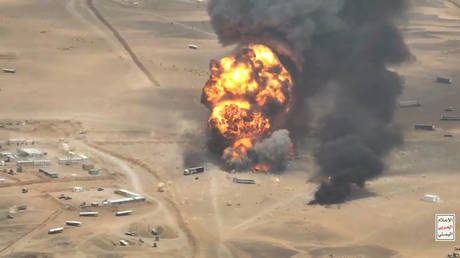
Geopolitical signaling rarely operates in a vacuum of pure military doctrine. When leadership ties the expiration date of an active theater of operations to a domestic legislative calendar, the underlying mechanics shift from tactical attrition to electoral calculus. The assertion that military operations against Iran will conclude immediately following the United States midterm elections establishes a fixed timeline that subordinates campaign milestones to domestic political imperatives. Evaluating this dynamic requires stripping away political rhetoric to examine the structural costs, operational hurdles, and intelligence constraints governing the current Middle East engagement.
At the center of this theater lies Pickaxe Mountain, known locally as Kuh-e Kolang Gaz La, a subterranean complex situated roughly two kilometers south of the heavily damaged Natanz uranium enrichment facility. The facility consists of two deeply buried tunnel systems carved into solid granite following sabotage incidents at surface-level structures in late 2020. Intelligence assessments from organizations like the Institute for Science and International Security indicate that the mountain was excavated to house sensitive nuclear infrastructure, potentially including centrifuge assembly halls or hidden enrichment cascades, far out of reach of traditional conventional air strikes.
The strategic standoff surrounding Pickaxe Mountain is governed by three distinct variables: structural depth, intelligence ambiguity, and maritime transit costs.
The structural depth of the complex presents a hard engineering problem for military planners. Excavated hundreds of feet beneath solid rock, the site is designed to withstand severe conventional bombardments. While standard ordnance can neutralize surface infrastructure, destroying deeply buried subterranean halls requires evaluating the limits of heavy penetrator munitions against reinforced granite or shifting operational focus toward structural vulnerabilities like ventilation shafts, power feeds, and tunnel portals.
Intelligence ambiguity compounds these operational challenges. International monitors have noted disruptions in continuity of knowledge regarding Iran's enriched uranium inventories. While allied intelligence assessments suggest that thousands of centrifuges or sensitive material may have been shifted into the mountain tunnels, independent verification remains elusive. Without precise schematics, targeting decisions must weigh the probability of complete functional collapse against the risk of merely sealing the entrances while internal machinery remains intact.
Maritime logistics dictate the economic cost function of the ongoing conflict. The Strait of Hormuz, a critical artery carrying a significant share of global petroleum supplies, acts as a volatility amplifier. Intermittent kinetic activity directly impacts vessel throughput, driving up shipping insurance premiums and energy price projections. The economic feedback loop relies heavily on stabilizing maritime corridors to prevent domestic inflationary pressures from impacting the electoral cycle.
Framing the conflict as limited in scope serves to manage domestic political exposure while maintaining the optionality of a high-consequence kinetic strike on remaining nuclear assets. If satellite intelligence detects active mobilization of equipment at the subterranean site, the threshold for preemptive action drops significantly, prioritizing immediate non-proliferation objectives over regional de-escalation.
Prepare for a tactical window immediately preceding the midterm cycle where intelligence-led interdiction operations focus heavily on portal neutralization and power grid disruption around central Iranian subterranean facilities, bypassing full-scale ground engagement in favor of targeted infrastructural isolation.
Iran war updates: Trump says US may attack Iran’s Pickaxe Mountain soon
This video provides an overview of the ongoing statements regarding potential strikes against underground nuclear sites and the diplomatic positioning tied to the election timeline.