Viral clips of baby loons riding on their mothers' backs treat parental care as a novelty spectacle, missing the thermoregulation, predator defense, and foraging economics that keep precocial waterfowl alive on cold northern lakes. A rigorous breakdown of maternal loon behavior exposes how physical contact, underwater foraging, and brood division operate as an integrated survival system rather than a heartwarming display. This analysis maps the competing claims of viral media coverage and translates those observations into a structural model of loon chick development, along with operational steps for observers and lake managers trying not to disrupt fragile broods.
Deconstructing Viral Loon Coverage and Its Analytical Gaps
Viral clips framed around "must-see" play or cuteness rely on a single observation—chicks perched on an adult's dorsal feathers or swimming alongside a parent—and compress weeks of behavioral ecology into a thirty-second reaction loop. That framing is not wrong on its face; loon chicks do climb onto their parents' backs and engage in frequent physical contact. The analytical failure lies in misclassifying high-utility survival behaviors as leisure and treating a static snapshot of a brood as a complete lifecycle.
In standard click-driven coverage, three structural distortions recur:
- Anthropomorphic mislabeling: Brief bouts of bill-touching, food transfers, or back-riding get read as human-style play or affection, obscuring how energy is budgeted when water temperatures are cold and daylight hours are long.
- Temporal flattening: A newly hatched chick in dark down faces acute thermal and predation pressures that look very different from a six-week-old juvenile testing wing-flapping and independent dives, yet viral posts rarely distinguish age stages.
- Observer blindness: Short clips almost never show the shoreline, boat wakes, or approaching eagles and gulls that triggered an adult's posture shift seconds before filming began.
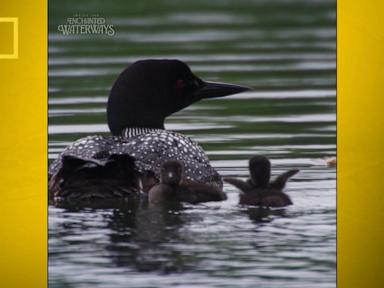
To rebuild the subject on solid analytical ground, we have to separate what is directly observable in loon behavior from what requires ecological inference. Direct observation confirms that loon chicks hatch with eyes open and downy plumage, enter the water quickly after leaving the nest, frequently ride on a parent's back during early weeks, and receive prey items delivered at the surface by adults. What remains an educated hypothesis in any single unverified clip is the exact proximate trigger—whether the adult climbed up to shield chicks from a snapping turtle or large fish below, shed heat or cold stress, or repositioned the brood away from a disturbance—because camera angles rarely capture submerged threats or water-column gradients.
The Three Pillars of Maternal Loon Care
Rather than treating loon parenting as a collection of cute moments, an operational model organizes maternal and biparental care around three interlocking pillars: Thermal Protection, Predator Mitigation, and Foraging and Energetic Allocation. Each pillar addresses a specific physical constraint of aquatic life.
Thermal Protection and Hydrodynamic Trade-Offs
Newly hatched loon chicks enter cool or chilly freshwater lakes with high surface-area-to-volume ratios and downy insulation that cannot match an adult's dense contour plumage. Even though loon chicks are precocial and mobile early, prolonged immersion in cold water draws heat away rapidly, especially on windy days or early in the summer breeding season.
Climbing onto an adult's back solves two problems at once. First, it lifts the chick out of direct water contact and places it against warm adult plumage, reducing convective and conductive heat loss. Second, it removes the drag and energetic cost of the chick swimming on its own while the adult propels both bodies through the water. The second limitation of surface travel is visibility: a chick elevated on a parent's back is more exposed from above than a chick tucked tightly along a parent's flank in calm cover, which forces adults to balance warmth against aerial detection.
Predator Mitigation Across Air and Water
A loon chick's survival bottleneck in its first several weeks is predation from both above and below. Avian predators such as bald eagles and large gulls scan open water from above, while aquatic predators—including large northern pike, largemouth bass, and snapping turtles—strike from below where a swimming chick's legs and underside are vulnerable.
Adults counter these threats through coordinated positioning and rapid signaling. When a chick rides on a parent's back, it is physically shielded from underwater strikes aimed at its lower body while remaining close to an adult capable of aggressive surface displays, bill jabbing, or rapid movement. When danger approaches from the air or shoreline, parents shift chicks toward dense emergent vegetation, reeds, or shallow coves that break up silhouettes and complicate a predator's attack angle. This creates a bottleneck for observers on boats: a human vessel moving steadily along a shoreline may look harmless to a passenger, yet it compresses the brood's available escape corridor between deep open water and shallow cover.
Foraging Economics and Prey Delivery
Adult loons are specialized pursuit divers built for underwater propulsion rather than agile walking on land, with legs set far back on the body. Foraging requires diving down to catch fish and aquatic invertebrates, then returning to the surface to swallow or transfer food—an energy-expensive cycle governed by dive depth, water clarity, and prey availability.
Chicks cannot dive efficiently like adults at hatching. Instead, adults act as mobile provisioning units, bringing small fish and invertebrates to the surface and offering them directly to the chicks. As chicks grow older and stronger, their ability to chase prey and execute shallow dives increases, shifting the energetic ratio from full provisioning toward self-feeding. In many loon pairs, adults also divide labor or shift attention between siblings, a dynamic that can leave one chick consistently better fed if prey availability is tight or if one chick dominates surface positioning.
Cause-and-Effect Chains Viral Clips Miss
When a video shows a parent loon nudging a chick, diving abruptly, or carrying chicks across open water, the visible action is usually the downstream effect of an upstream environmental shift. Tracing those cause-and-effect chains prevents misreading routine survival work as casual play.
First, wind and wave chop alter both buoyancy and visibility. Ripples make small chicks harder to spot from a distance, increase splashing noise, and cool exposed down faster; in response, adults often herd chicks closer together or bring them onto their backs to consolidate control and keep the brood cohesive.
Second, prey patchiness and dive depth govern how long a chick is left near the surface. When an adult dives for food, the chick remains at the surface—often near the second parent if both are present—creating a brief window of heightened vulnerability. If a parent stays underwater longer because prey is scarce or deeper, the remaining parent or the returning adult faces higher coordination demands to keep chicks from drifting into open water or toward hazards.
Third, human boat wakes and shoreline traffic trigger cascading behavioral costs even without direct collision. A passing powerboat or personal watercraft creates wakes that can separate a chick from a parent, push broods out of sheltered bays, or force repeated displacement. Repeatedly flushing or scattering a brood burns adult and chick energy and interrupts feeding intervals, compounding stress across a breeding season when chicks already face tight growth timelines before autumn migration.
Tactical Protocol for Watching and Protecting Loon Broods
Anyone observing loons from a shoreline, kayak, canoe, or motorboat can reduce disturbance and read behavior more accurately by following a disciplined sequence of actions rather than relying on impulse.
- Establish a wide buffer before approaching: Maintain generous distance from any adult loon with chicks—especially near nesting shorelines, narrow channels, or quiet coves—and treat any change in adult posture, head-bobbing, or vocalization as a signal that you are too close.
- Eliminate sudden speed and direction changes: When operating a boat or paddling nearby, keep speed steady, avoid circling or cutting across the line between an adult and its chicks, and steer clear of wakes rolling into vegetated shallows where chicks shelter.
- Read the brood's age and activity state: Distinguish newly hatched, downy chicks that rely heavily on back-riding and constant surface handoffs from older, larger juveniles that spend more time swimming independently and testing dives, adjusting your distance upward for younger broods.
- Log context rather than just the visual hook: If you record observations or share footage, note water conditions, boat traffic, approximate chick size relative to the adult, and what happened before and after the clip so the behavior is interpreted accurately.
These steps have clear operational limits. A calm lake with low boat density still poses natural risks from predators, weather swings, and fluctuating fish stocks, and no observer protocol can eliminate ecological hazards built into the territory. Even strict distance rules can be strained on busy recreational lakes where multiple boats approach from different angles at once, leaving a brood with few quiet refuges.
Strategic Play for Lake Stewards and Media Producers
Treat every loon-and-chick encounter as a coupled energy and risk-management event rather than standalone entertainment, and build viewing guidelines and content framing around brood protection during the peak summer rearing window. Lake associations, wildlife stewards, and media creators should pair clear no-wake and buffer-zone messaging around active nursery coves with accurate lifecycle context so audiences recognize that calm, unbothered parenting is the clearest sign of a healthy territory.