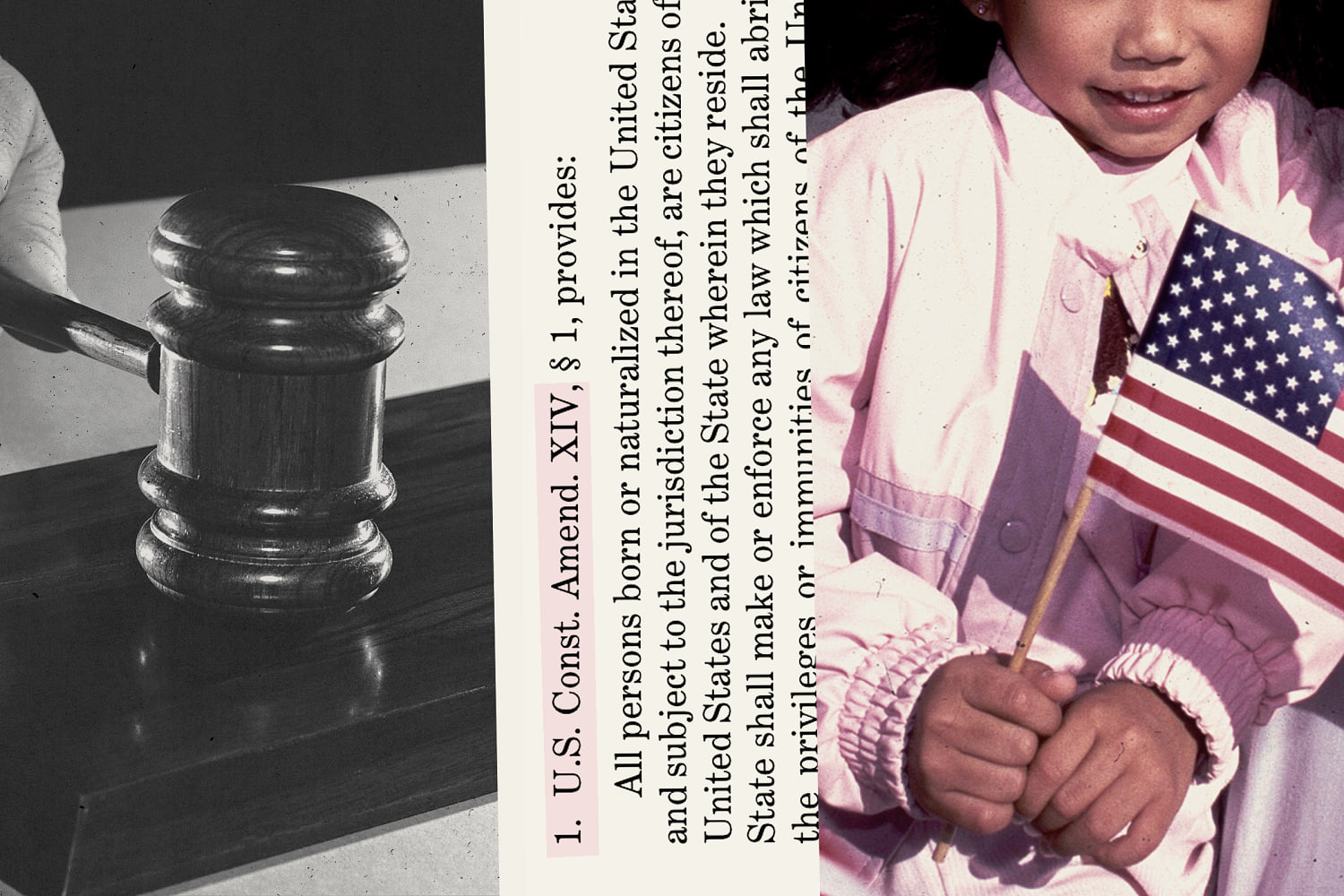
You’ve probably heard the 14th Amendment described as an ironclad guarantee. If you’re born on U.S. soil, you’re a citizen. Period. But that bedrock principle is being shaken by a legal strategy that digs up a dusty, 142-year-old case involving a Native American man named John Elk. It sounds like a niche history lesson, but the implications are massive for millions of families today.
The Trump administration isn't just venting on social media; they're using specific legal precedents to argue that "subject to the jurisdiction" doesn't mean what we think it means. By reaching back to Elk v. Wilkins (1884), they’re trying to carve out a massive exception to birthright citizenship that could fundamentally rewrite who belongs in this country.
The case of John Elk and the 1884 loophole
In 1880, John Elk tried to register to vote in Omaha, Nebraska. He’d left his tribe, moved to the city, and paid his taxes. He did everything "by the book" to integrate into American life. Yet, the Supreme Court shut him down.
The Court ruled that even though Elk was born within the physical borders of the U.S., he wasn't "subject to the jurisdiction" of the United States at birth. Why? Because he owed allegiance to his tribe. The Court viewed Indian tribes as "alien nations."
Today’s legal challenge uses this logic as a bridge. The argument is that children of undocumented immigrants or temporary visitors are like John Elk. They claim these children owe "allegiance" to a foreign power (their parents' home country) and therefore aren't fully under U.S. jurisdiction. It’s a bold, controversial attempt to turn a ruling used to marginalize Native Americans into a tool to exclude the children of immigrants.
Why Wong Kim Ark usually wins the argument
Most legal scholars point to a different case: United States v. Wong Kim Ark (1898). Wong Kim Ark was born in San Francisco to Chinese parents. When he tried to return from a trip to China, the government tried to keep him out, claiming he wasn't a citizen.
The Supreme Court disagreed. They ruled that the 14th Amendment applied to almost everyone born here, regardless of their parents' status. This case has been the gold standard for over a century. It's why we take birthright citizenship for granted.
But the current administration is betting they can convince a modern, conservative-leaning Supreme Court that Wong Kim Ark was too broad. They want to return to the narrower, more restrictive view found in Elk v. Wilkins. They're basically saying, "If we could exclude Native Americans back then because of their 'allegiance,' we can exclude others now."
The real-world chaos of Executive Order 14,160
On January 20, 2025, the administration doubled down with Executive Order 14,160. It’s titled "Protecting the Meaning and Value of American Citizenship," but its actual function is to stop federal agencies from issuing passports or Social Security cards to children born in the U.S. to non-permanent residents.
This isn't just a legal theory anymore; it’s a logistical nightmare.
- Proof of parentage: Suddenly, a birth certificate isn't enough. You’d need to prove your parents' immigration status at the exact moment of your birth.
- The Cost: Research from the National Foundation for American Policy suggests this could cost parents over $1,000 in legal and government fees just to prove a baby is a citizen.
- Statelessness: If the U.S. denies citizenship and the parents' home country doesn't recognize the child, that baby becomes "stateless"—a person with no legal home, no rights, and no protection.
What this means for you right now
Don't panic, but don't ignore it either. As of early 2026, the courts have largely blocked the full implementation of these changes through preliminary injunctions. The case Trump v. Barbara is the one to watch. It’s headed to the Supreme Court, and the oral arguments scheduled for April 2026 will likely decide the fate of birthright citizenship for the next generation.
If you’re a parent or expecting, keep your records immaculate.
- Secure your own status documents: Have certified copies of your green cards, visas, or naturalization papers ready.
- Get the birth certificate immediately: Don't wait. Even if the law changes, having that paper trail from the moment of birth is vital for future legal challenges.
- Watch the "shadow docket": Sometimes the Supreme Court makes quick rulings on stays or injunctions that change the rules overnight before a final decision is reached.
The 14th Amendment was written to ensure that citizenship wasn't a gift from the government, but a right of birth. Turning back to 1884 doesn't just affect one group; it potentially puts the citizenship of anyone who can't prove their "allegiance" on the chopping block. Stay informed and keep your paperwork updated while the high court decides if the 19th century is our new future.