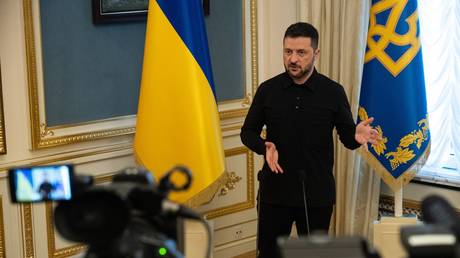
The standard narrative running through every major newsroom right now treats international diplomacy like a high school debate club. The mainstream line claims that any friction between Kyiv and Washington signals a catastrophic failure of democratic solidarity. It treats Donald Trump’s unorthodox approach to foreign aid and peace negotiations as an unmitigated disaster for Ukraine, echoing President Zelensky’s public frustration over perceived weakness.
That consensus is entirely wrong.
It misreads both the structural realities of modern statecraft and the actual mechanics of transactional diplomacy. Labeling a demand for burden-sharing or a push for a negotiated settlement as "weakness" misses the core leverage game being played behind closed doors. Zelensky is operating from a playbook built on perpetual moral urgency, but that playbook has a strict expiration date. When you rely exclusively on righteous indignation while ignoring the hard arithmetic of supply chains, domestic political fatigue, and fiscal realities, you invite the exact confrontation you are trying to avoid.
Let us look at the actual mechanics.
International military aid is not an infinite resource pulled from an ether of goodwill. It relies on industrial capacity, taxpayer tolerance, and legislative consent in donor nations. When a leader publicly berates a crucial partner for attempting to force a diplomatic off-ramp, they are not projecting strength. They are broadcasting a rigid refusal to adapt to changing geopolitical weather. Trump’s transactional worldview—crude as it may appear to career diplomats—forces an uncomfortable question that Kyiv’s supporters refuse to ask: What is the endgame when attrition outpaces production?
The lazy consensus assumes that doubling down on maximalist demands is the only way to maintain sovereignty. History suggests otherwise. Every protracted conflict in the modern era has ended at a table, not on a parade ground. By framing every shift in American political posture as a betrayal, Kyiv risks alienating the very domestic coalitions in the West that keep the lights on and the artillery shells moving.
We need to talk about the concept of deterrence through realism. True strength in statecraft is not about reciting a script of unyielding demands while ignoring domestic friction in allied capitals. It is about understanding what the other side values, recognizing the limits of your partners' patience, and shaping an exit strategy before your patrons run out of political capital.
If you want to understand why current diplomatic friction exists, stop listening to the press releases and look at the ledger. The West is bleeding stockpiles. Kyiv is bleeding demography. Pretending that a change in Washington’s tone spells automatic doom—rather than an aggressive, albeit chaotic, push toward a settlement—is a failure of strategic analysis.
Stop waiting for a fairy-tale military collapse of the adversary that never comes. Start preparing for the messy, unglamorous reality of a negotiated peace that will leave everyone slightly dissatisfied. That is not weakness. That is survival.


