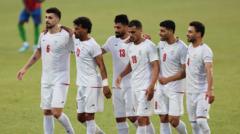
The United States just approved visas for the Iranian national soccer team. It happened overnight, a mere 10 days before Team Melli walks out onto the pitch at Los Angeles Stadium. On paper, it sounds like standard sports bureaucracy getting resolved at the literal eleventh hour. In reality, it is a massive geopolitical anomaly.
For the first time since the tournament started back in 1930, a World Cup host nation is opening its borders to athletes from a country it is actively engaged in a state of war with. You might also find this related story insightful: The Anatomy of Fan Hydration Logistics: A Brutal Breakdown of FIFA's Stadium Policy Shifts.
Sports usually pretend to exist in a vacuum. FIFA loves to preach about keeping politics out of the game. But when the US, Mexico, and Canada won the bid to host the 2026 World Cup, nobody predicted the games would kick off under the shadow of a direct military conflict between Washington and Tehran. The visa approval is not just a logistical victory for a soccer tournament. It is a high-stakes diplomatic tightrope walk where a single misstep could trigger a security nightmare on American soil.
The Border Commute and the Tijuana Plan
Let's look at how messy this situation actually is. Iran didn't just wait around in Tehran for the State Department to click approve. The Iranian Football Federation had to completely scrap its original preparation strategy. As reported in recent articles by FOX Sports, the results are notable.
Originally, the team planned to set up its home base in Tucson, Arizona. That plan died weeks ago when the visa approvals stalled out in the US Embassy in Ankara, Turkey. Sensing that Washington was dragging its feet, Iranian officials scrambled. They negotiated a frantic, last-minute deal to move their entire base camp to Tijuana, Mexico.
The squad lands in Tijuana on Sunday. Think about the logistics here. Instead of staying in luxury hotels near their match venues, the Iranian team will essentially be commuting across the US-Mexico border for their games.
- June 15: Group G opener against New Zealand in Los Angeles.
- June 21: Group Stage match against Belgium in Los Angeles.
- June 26: Group Stage match against Egypt in Seattle.
This cross-border arrangement isn't just about administrative delays. It reflects a deep, mutual paranoia. The Iranian government explicitly stated they wanted the squad's physical presence on US soil kept to an absolute minimum. They don't want their players lingering in America, and frankly, the US government feels the exact same way.
Drawing the Line at the Revolutionary Guards
You might wonder why the visas took so long. It turns out the US government wasn't just stalling; they were vetting every single name against intelligence databases.
Secretary of State Marco Rubio made the administration's stance clear during congressional testimony. The US would not permit anyone with ties to the Islamic Revolutionary Guard Corps (IRGC) to enter the country under the guise of a sports delegation. The IRGC is a designated foreign terrorist organization by the US government, and it is the main driving force behind Iran's current military operations.
This caused an immediate clash. Soccer and state power are completely intertwined in Iran. Take Mehdi Taj, the president of Iran's football federation. He is a former commander in the Revolutionary Guards. Back in December, the US flatly denied Taj entry to Washington for the official World Cup draw.
While the players themselves cleared the security screening, the administrative battle rages on. The semi-official Fars news agency reported that the US embassy has still refused to issue visas for several key members of Iran's technical, medical, and executive staff.
Imagine trying to play Belgium in a World Cup match when your head physiotherapist or chief video analyst is stuck at a border checkpoint in Mexico because of their military service history. That is the reality Team Melli faces.
Real Security Risks Facing the Matches
This tournament is a powderkeg for local law enforcement and federal agencies in Los Angeles and Seattle. The security apparatus will have to be unprecedented, far beyond the typical policing of a high-profile sports event.
First, you have the threat of direct international spillover. The US and Iran are trading military strikes in the Middle East. That makes the team a high-value target for various political actors, and conversely, turns the delegation itself into a source of extreme scrutiny for US counterintelligence.
Second, the domestic dynamic in California is incredibly tense. Southern California is home to the largest Iranian diaspora outside of Iran, often referred to as "Tehrangeles." This community is deeply divided. You have passionately patriotic fans who want to support the players, alongside fierce opponents of the Islamic Republic who view the national team as a propaganda tool for a brutal regime.
During the 2022 World Cup in Qatar, we saw intense clashes in the stadiums between pro-government fans and activists sporting "Woman, Life, Freedom" shirts. In Los Angeles, with a massive local population and global TV cameras watching, those protests will be magnified tenfold. Security teams at Los Angeles Stadium will be tasked with preventing political brawls in the stands while federal agents secure the perimeter against international threats.
What This Means for the Tournament
Iranian Ambassador to Mexico Abolfazl Pasandideh tried to spin the visa approvals as a sign of diplomatic goodwill. Speaking from Mexico City, he claimed that Iran's insistence on playing in the tournament—even on the soil of its enemy—proves that Tehran ultimately seeks a peaceful resolution to the war.
Don't buy the idealism. This is political posturing at its finest. Both Washington and Tehran know that blocking a qualified nation from competing in the World Cup would have triggered a massive backlash from FIFA, potentially jeopardizing future hosting duties or commercial sponsorships. The US granted these visas because the alternative was a historic sporting scandal that would derail the entire tournament's branding.
If you are traveling to Los Angeles or Seattle for these Group G matches, pack your patience. Expect perimeter security checks to start miles out from the stadiums. Expect massive delays at the gates, heavily armed federal presence, and strict bans on political banners or signs inside the venues.
The soccer will happen, but the tension in the air will remind everyone that a game is never just a game when the players' home country is at war with the host. Focus on the pitch, but keep your eyes on the sidelines. The real drama is happening off the ball.