Football is everything in Mexico, but a historic night on the pitch just turned into a nightmare on the streets.
The national team didn't just win a match on Tuesday night. They broke a 40-year-old curse. By defeating Ecuador 2-0 at the iconic Estadio Azteca, El Tri booked a ticket to the FIFA World Cup Round of 16. It was their first knockout-stage victory since 1986, the last time the country hosted the tournament. For another look, see: this related article.
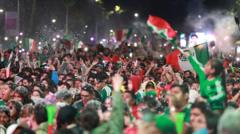
The final whistle triggered pure euphoria. More than one million ecstatic fans flooded downtown Mexico City, converging on Paseo de la Reforma and the landmark Angel of Independence monument.
But when that many people cram into a tight urban space, joy can turn hazardous in seconds. Further insight on this matter has been provided by Al Jazeera.
By Wednesday morning, the capital's health secretariat confirmed a devastating reality. The massive crowd surge killed three people. They didn't die from violence or rioting. They died from suffocation.
The Anatomy of a Crowd Crush
This wasn't a riot. It was a crowd crush. When a million people pack the streets around the Angel of Independence, individual control vanishes. You move where the mass moves.
Mexico City health officials reported that emergency teams found three unconscious individuals at separate points near the main celebration hub. Medics performed advanced resuscitation efforts and CPR, but it wasn't enough.
The victims represent a tragic cross-section of the fan base. A 19-year-old woman, a 44-year-old man, and a 48-year-old woman all lost their lives to asphyxiation. They were simply squeezed so tightly by the surrounding mass of people that their lungs couldn't expand.
Before the match even kicked off, Mexico City Mayor Clara Brugada warned fans to avoid the immediate area around the Angel monument due to overwhelming numbers. The warning went largely unheeded.
In a massive metropolitan area home to over 20 million people, managing spontaneous street parties is an absolute logistical nightmare. Following the tragedy, Brugada urged the public to "always celebrate with responsibility, care, and empathy."
Why Tragedies Happen When the National Team Wins
Football victories feel personal in Latin America. Winning a World Cup knockout match creates a collective adrenaline rush that makes people drop what they're doing and run into the streets.
Julian Quiñones and Raúl Jiménez scored two quick first-half goals to seal the win against Ecuador. That performance ended decades of tournament frustration. Thousands of fans who didn't have tickets to the Azteca wanted to create their own stadium atmosphere in the heart of the city.
The problem is infrastructure. The historic streets intersecting Paseo de la Reforma, like Hamburgo and Lancaster, are not built to handle static, densely packed crowds of that scale. Once fireworks start going off and the crowd pushes forward to get a better view or join a chant, the physical pressure builds exponentially.
Experts in crowd dynamics often point out that in these scenarios, people don't realize they're in danger until it is too late. The density reaches a tipping point where a minor stumble can create a domino effect, trapping people under the weight of others.
How to Stay Safe During Massive Football Celebrations
The World Cup is far from over. Mexico moves on to face either England or the Democratic Republic of the Congo this weekend. The celebrations—and the crowds—will likely get even bigger if the team keeps winning.
If you plan on hitting the streets for the next round, you need a strategy to keep yourself safe. Relying entirely on city police to manage the perimeter won't protect you in the middle of a surge.
Check the Exit Routes Early
Never walk into a dense crowd without identifying at least two ways out. Look for side streets, open plazas, or building entryways. If you see people tightly packed from wall to wall, do not enter that street.
Monitor the Density Around You
If you feel your shoulders pressing against strangers, or if you can no longer raise your arms freely, you are in a high-risk zone. Start moving backward or diagonally toward the edges of the crowd immediately.
Keep Your Feet and Protect Your Chest
If you get caught in a surge, keep your feet planted firmly. Do not fight the wave; move with it while maintaining your balance. Hold your arms up in front of your chest like a boxer. This creates a vital pocket of space, protecting your lungs from being compressed by the people around you.
Stay Away from Bottlenecks
Monuments, narrow alleys, and blocked intersections are natural traps. The Angel of Independence is a beautiful symbol, but celebrating two blocks away on a wider stretch of the boulevard offers the exact same party atmosphere with a fraction of the physical risk.