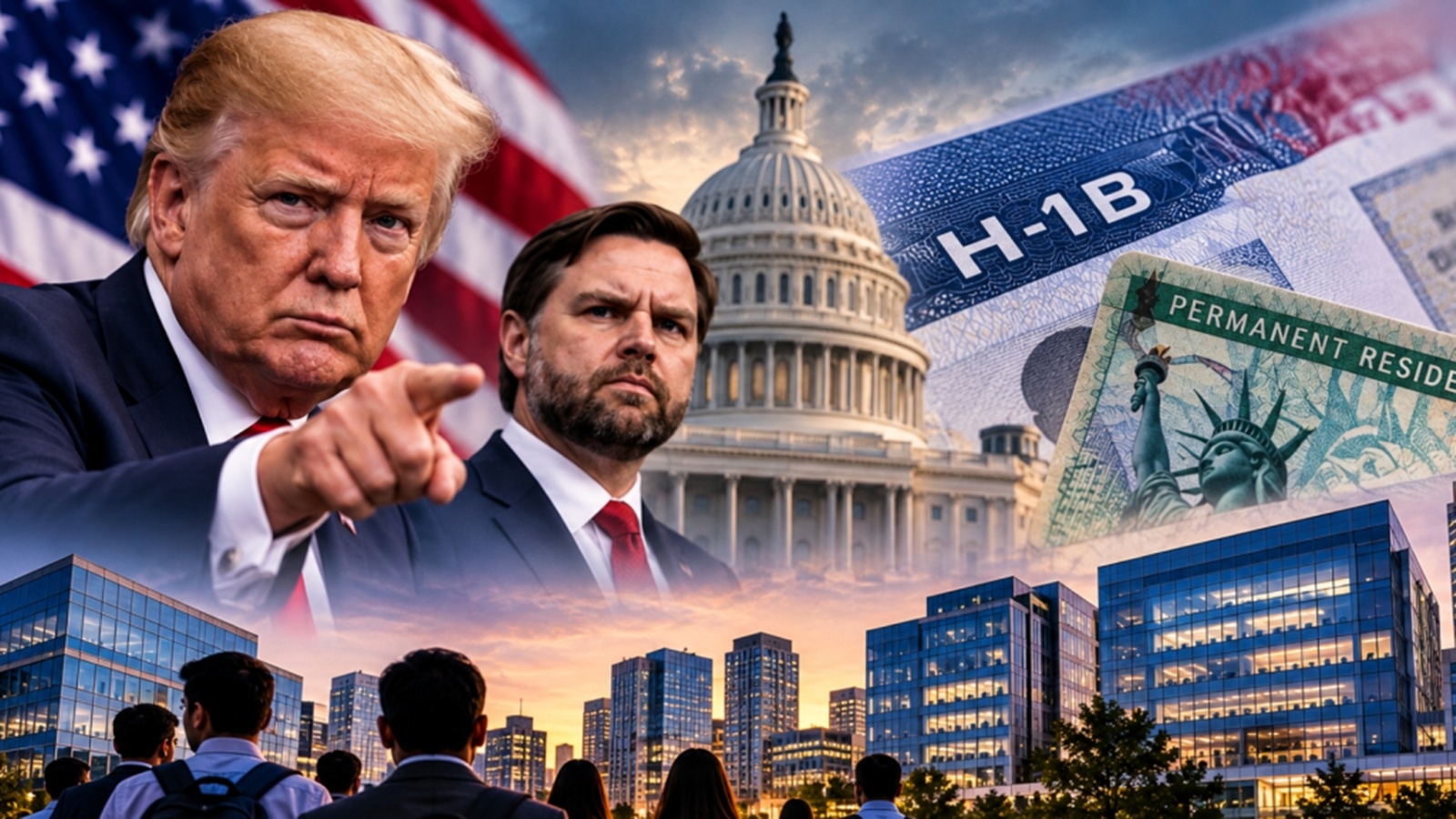
Wipro broke its silence after the US suspended green card filings for eight major tech employers by insisting the ban won't have a material impact on its business.
When Washington moved on October 8, 2026, to halt Permanent Labor Certification (PERM) filings for Wipro, TCS, Infosys, HCLTech, Cognizant, Capgemini, Microsoft, and Adobe, shockwaves ran straight through the tech sector. For a week, silence hung over several named companies. Then Wipro spoke out alongside its quarterly numbers, framing the freeze as non-material to financial performance while reporting 9.1% year-over-year second-quarter revenue growth to 247.5 billion rupees (about $2.60 billion).
That reassurance makes sense on a balance sheet. It feels a lot thinner if you're an engineer on an H-1B visa waiting on a PERM case to start.
What the US Green Card Freeze Actually Stopped
Let's clear up the biggest point of confusion right away. The government didn't cancel existing green cards or revoke current H-1B visas. What the Department of Labor halted was PERM processing—the first step required for most employer-sponsored green cards—blocking new filings and freezing pending ones for the eight named firms.
Acting Labor Secretary Keith Sonderling announced the freeze alongside Vice President JD Vance, pointing to federal scrutiny and alleging that foreign-worker recruitment programs had undercut American workers. Officials cited figures showing the eight companies together had requested nearly three million foreign workers since 2009, won over 230,000 H-1B approvals, and secured more than 100,000 permanent labor certifications. For Microsoft and Adobe, Sonderling cited active federal investigations. Cognizant had already faced an earlier suspension in September 2026 before the broader October wave hit.
Notice what officials haven't laid out cleanly: a firm end date, a published list of covered legal entities, or court-tested findings of wrongdoing. Immigration attorneys note that DOL's PERM regulations under 20 CFR 656.31 allow processing holds tied to fraud investigations—often starting around 180 days or tied to pending proceedings—though exact written notices and legal mechanics haven't been publicly spelled out for every employer.
Why PERM Is Different From an H-1B Visa
On paper, H-1B and PERM are separate tracks. An H-1B lets specialty workers stay in the US temporarily, typically up to six years. PERM requires the employer to test the US labor market and show hiring a foreign worker won't harm wages or working conditions for US workers before moving toward permanent residency.
In real life, those two tracks collide. Past the six-year H-1B mark, workers generally rely on a timely PERM filing or an approved Form I-140 immigrant petition to keep extending status. If your PERM hasn't been filed yet, a freeze on new filings can stall the clock you need to stay put long-term.
Why Wipro Downplayed the Impact
From an executive seat, Wipro's message wasn't just spin—it reflects how modern IT delivery works. Major IT firms have spent years shifting delivery toward local US hiring, global capability centers, and offshore teams. TCS similarly signaled that the green card action wouldn't derail its workforce plans, while other named firms pushed back on narratives around US job displacement.
Honestly, quarterly revenue doesn't move overnight because PERM filings pause. Client contracts are billed on milestones, managed services, and delivery outcomes, not on how many labor certifications cleared DOL last month.
Where the Real Friction Hits
Even if revenue holds steady, friction shows up in three places:
- Talent pipelines: Recruiters lose a major long-term retention perk when sponsorship is frozen. Candidates weighing offers know that without PERM movement, their US timeline gets murkier.
- Expiring prep work: If recruitment steps or prevailing wage determinations were already underway before the freeze, aging deadlines can create headaches later if rules or holds shift.
- Morale and mobility: Employees stuck in limbo often start looking at transfers abroad or moves to non-suspended employers.
And there's a broader policy backdrop squeezing the entire sector. Washington has paired enforcement efforts like Project Firewall with tighter scrutiny on employment-based immigration, a renewed $100,000 H-1B fee proposal that has faced federal court injunctions, and fresh proposals in November 2026 to tighten employer-sponsored green card rules even further.
What Matters Depending on Your Green Card Stage
Not everyone at a suspended company faces the same clock. Immigration analysts point out that your exposure depends heavily on where your paperwork stands.
If you already hold an approved I-140 petition, you're generally in a stronger spot than someone with nothing filed. An approved I-140 typically lets you retain your priority date and extend H-1B status beyond six years—even if you switch employers—unless there is case-specific revocation or fraud. If nothing has been started yet, or you're approaching year four or five on H-1B without a qualifying filing window, waiting passively carries real risk.
There's also a legitimate debate over how far this crackdown goes. Critics and industry groups warn that sweeping freezes without final court findings risk hurting US competitiveness and pushing more tech work offshore. Supporters argue strict enforcement is long overdue to protect domestic workers and root out abuse. Both sides have loud voices; neither side has settled the legal dust yet.
Smart Next Steps Right Now
If you work at one of the affected companies—or plan to—don't rely on rumors or social media threads. Take concrete steps now:
- Audit your exact immigration dates. Check your H-1B max-out date, any priority date, and whether you have a pending PERM or approved I-140.
- Ask HR and company counsel specific questions. Find out whether your specific employing entity is covered and what interim options exist for employees approaching H-1B limits.
- Talk to an independent immigration attorney. Get a clear read on alternatives—such as transferring to a non-suspended sponsor or exploring self-petition routes like EB-2 NIW or EB-1A if you qualify.
- Watch official agency notices, not just headlines. Track updates from the U.S. Department of Labor and U.S. Citizenship and Immigration Services as investigations and rule changes unfold.
US suspends tech firms from green-card programme
This video breaks down the government suspension of major IT and tech firms from the green-card program and explains the key policy shifts affecting workers.