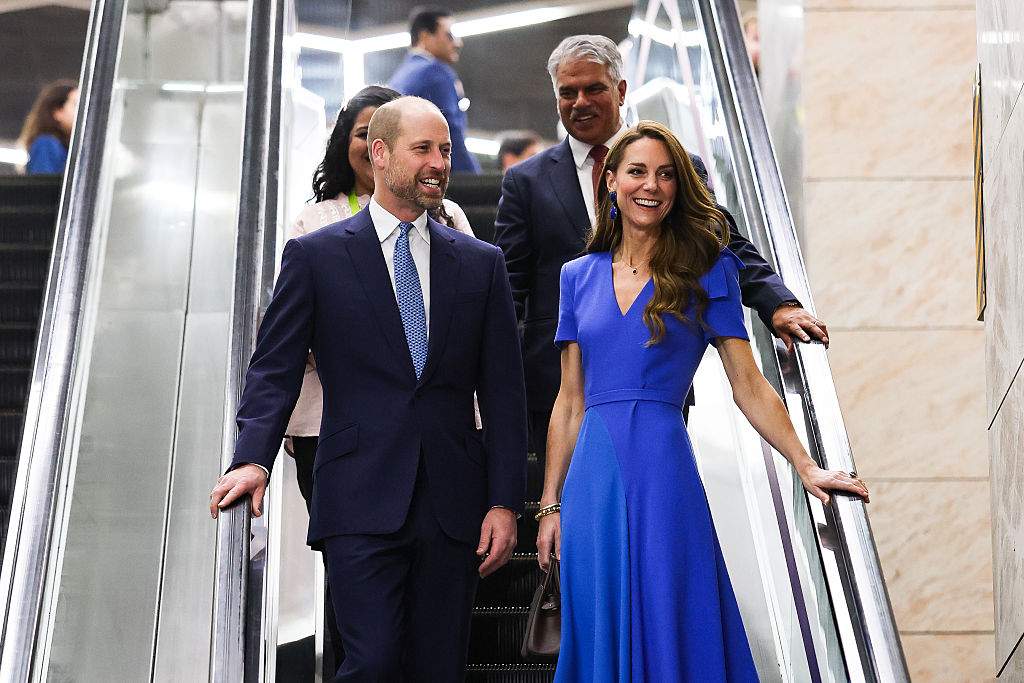
The Prince and Princess of Wales have landed in India for their first joint overseas tour since Catherine’s cancer diagnosis and subsequent chemotherapy, signaling a carefully calibrated return to international royal diplomacy. While initial headlines frame the visit as a heartwarming milestone in the Princess’s physical recovery, the underlying reality is far more strategic. Kensington Palace and the British Foreign, Commonwealth and Development Office are deploying their most potent soft-power assets to shore up bilateral ties with the world’s fifth-largest economy at a moment when the monarchy’s global relevance faces unprecedented scrutiny.
Royal tours are never accidental. Every handshake, every wardrobe choice, and every itinerary stop is negotiated months in advance between palace aides and government diplomats. When Catherine stepped back from public life in early 2024 following abdominal surgery and the discovery of cancer, the British monarchy experienced a sudden, jarring contraction. King Charles III was simultaneously undergoing his own cancer treatment. For months, the burden of maintaining the Crown's visible presence fell onto a skeletal crew of aging working royals. Now, by choosing India for their first major international outing together since that crisis, William and Kate are sending a dual message to both domestic taxpayers and foreign capitals. They are demonstrating institutional stability while attempting to modernize the mechanics of Commonwealth outreach.
The Anatomy of a Calculated Comeback
To understand why this specific trip matters, you have to look at how the palace manages medical vulnerability. For decades, the British royal family operated under a strict doctrine of opacity regarding health. Monarchs and heirs hid ailments until the very end. That playbook is dead. Both King Charles and the Princess of Wales broke centuries of precedent by disclosing their diagnoses to the public, though Catherine’s path to disclosure was fraught with intense media speculation and a poorly handled Mother's Day photograph that briefly dented Kensington Palace’s credibility.
Her gradual return to public duties throughout late 2024 and 2025 was tightly controlled. Short appearances in London. Carefully managed engagements at Windsor. A focus on early childhood development and personal thank-yous to medical staff. An overseas tour, however, operates on an entirely different scale of physical and logistical demand.
Long-haul flights, severe time-zone shifts, relentless heat, and multi-day itineraries test the stamina of completely healthy individuals. For someone who has endured preventative chemotherapy, the margin for error is razor-thin. A sudden cancellation mid-tour would dominate global front pages for all the wrong reasons, shifting the narrative back to fragility rather than resilience. Consequently, the architecture of this India visit has been stripped of the grueling, dawn-till-dusk pace that characterized royal tours of the 1980s and 1990s.
Instead of cramming six cities into five days, palace planners have built in quiet recovery windows. Public engagements are concentrated in controlled environments rather than chaotic, open-air walkabouts. This is the new blueprint for modern royal travel. It prioritizes high-impact visual moments over sheer volume of appearances, protecting the principal's health while still feeding the insatiable global media machine that justifies the institution's existence.
Soft Power and the Post-Brexit Reality
Strip away the pageantry and the human-interest angle of Catherine’s recovery, and you are left with cold geopolitical calculus. The British government does not fund international royal tours out of sentimentality. It pays for them because senior royals open doors that prime ministers and trade envoys cannot.
Since leaving the European Union, the United Kingdom has aggressively pursued bilateral trade agreements across the Indo-Pacific region. India sits at the absolute center of that strategy. With a booming domestic market, a massive demographic dividend, and growing clout as a counterweight to China, New Delhi holds immense leverage in trade negotiations. Yet talks between the UK and India have repeatedly stalled over thorny issues like immigration visas for Indian workers, tariffs on Scotch whisky and British automobiles, and intellectual property rules.
Politicians come and go. British prime ministers have turned over with dizzying speed over the past decade, leaving foreign counterparts wondering who will actually be in Downing Street six months from now. The monarchy offers the exact opposite. Prince William represents continuity across decades. When he sits down with Indian business leaders, tech innovators, or government officials, he is projecting a long-term British commitment that transcends partisan election cycles.
Furthermore, the visual optics of the Prince and Princess of Wales engaging with Indian culture, sustainability initiatives, and youth entrepreneurship generate billions of media impressions globally. A trade minister holding a press conference in New Delhi might warrant a three-paragraph brief on page fourteen of a financial newspaper. William and Kate visiting a community project or attending a state banquet commands front-page coverage from Mumbai to Manhattan. That attention creates diplomatic goodwill, softening the ground for the civil servants hammering out the fine print of trade deals behind closed doors.
Navigating the Colonial Shadow
Sending heirs to the British throne to India is never without historical friction. Unlike visits to European allies, every royal tour of a former colony carries the heavy baggage of empire. Memories of the British Raj, resource extraction, and the bloody Partition of 1947 remain embedded in India’s political consciousness, even among younger generations.
The last time William and Kate visited India together, in April 2016, they walked a tightrope between honoring shared history and acknowledging modern Indian sovereignty. That trip is largely remembered for two iconic images. The first was the couple feeding baby elephants and rhinos at Kaziranga National Park. The second was Catherine sitting alone on a marble bench in front of the Taj Mahal, deliberately recreating—and subtly reclaiming—the famous 1992 photograph of Princess Diana that had come to symbolize her failing marriage.
Ten years later, the geopolitical landscape has shifted dramatically. India is no longer merely a rising power; it is a self-assured global heavy hitter that increasingly dictates the terms of its international relationships. The old paternalistic tone of the Commonwealth—where Britain positioned itself as the benevolent head of a global family—simply does not fly in modern New Delhi.
To avoid looking like relics of a bygone era, the couple’s current itinerary leans heavily into contemporary partnerships rather than historical nostalgia. The focus is squarely on climate innovation, mental health advocacy, and grassroots economic empowerment. By spotlighting Indian-led solutions to global problems—particularly initiatives tied to Prince William’s Earthshot Prize—the tour attempts to reframe the relationship as a partnership of equals.
Still, the underlying tension remains. Critics in both the UK and India question the optics of taxpayer-funded royals touring a nation where vast segments of the population still face acute economic hardship, even as India’s billionaire class expands. Palace aides are acutely aware of this trap. You will not see the ostentatious displays of wealth, elaborate colonial-style processions, or tone-deaf luxury that derailed the couple’s 2022 tour of the Caribbean. That disastrous trip—marred by protests over slavery reparations and viral photos of the couple shaking hands through a wire fence—served as a brutal wake-up call for Kensington Palace. The lessons learned in Jamaica and Belize are visibly dictating the muted, respectful choreography on display in India.
The Wardrobe as Diplomatic Currency
In royal journalism, coverage of what the Princess of Wales wears is often dismissed as trivial fashion reporting. That is a fundamental misunderstanding of how the institution communicates. For Catherine, clothing is a primary tool of non-verbal diplomacy, deployed with the precision of a state communiqué.
During periods of intense public scrutiny, particularly following her health crisis, every detail of her appearance is analyzed for clues about her physical and emotional state. Looking too frail sparks alarmist headlines. Looking overly glamorous risks appearing out of touch. In India, her wardrobe has to perform double duty. It must project vigor and recovery while paying calculated tribute to the host nation.
Historically, she has achieved this by pairing established British tailoring with garments created by local Indian designers, incorporating traditional motifs, colors, and textiles without crossing the line into cultural appropriation. When she steps off the plane wearing an emerald green coat or a bespoke dress embroidered by local artisans, those images immediately circulate across Indian social media and fashion outlets. It generates organic, positive coverage among demographics that might otherwise ignore royal politics entirely.
This visual strategy also serves a protective function. By giving the press pack concrete, easily digestible details to report on—the designer, the fabric, the symbolic meaning of a brooch—Kensington Palace effectively controls the narrative. It keeps the media focused on curated aesthetics rather than invasive speculation about her medical prognosis or the internal dynamics of the royal family.
The Burden of the Slimmed-Down Monarchy
The broader context of this India tour exposes a structural vulnerability at the heart of the modern British monarchy. For years, King Charles championed the concept of a "slimmed-down" royal family, arguing that a smaller core of working royals would reduce public expenditure and focus attention on the direct line of succession.
On paper, it made financial sense. In practice, it left the institution dangerously exposed when crisis struck.
With Prince Harry and Meghan Markle having stepped back from royal duties and relocated to California, and Prince Andrew permanently sidelined due to scandal, the pool of active senior royals shrank overnight. When both the King and the Princess of Wales were sidelined by cancer in 2024, the flaw in the slimmed-down model became undeniable. There simply were not enough bodies to cover the relentless calendar of domestic patronages, state visits, and Commonwealth tours.
William and Kate’s return to the international stage relieves some of that immense pressure, yet it also underscores how heavily the entire enterprise rests on their shoulders. They are the undisputed star power of the House of Windsor. Without them, royal events struggle to capture the global imagination. With them, the institution looks vibrant, relevant, and secure.
Yet relying so heavily on two individuals carries inherent risk. Catherine has made it clear through her actions and rare public statements that her priorities have permanently shifted since her diagnosis. The grueling, non-stop schedule of her early years as a working royal is over. Her health and her three young children—Prince George, Princess Charlotte, and Prince Louis—now dictate the calendar, not the demands of the royal rota or government ministers.
Balancing Family and Crown
The timing of the India trip illustrates this new boundary-setting. By scheduling the tour to align with school holidays or keeping it strictly limited in duration, the couple is enforcing a work-life separation that previous generations of royals rarely achieved. Queen Elizabeth II famously left a young Prince Charles and Princess Anne behind for months at a time during her epic 1953–1954 Commonwealth tour. William, deeply shaped by the trauma of his own fractured childhood, has flatly rejected that model.
This creates an ongoing friction between the personal needs of the Wales family and the institutional demands of the Crown. Foreign diplomats always want more time, more cities, and more engagements. Domestic charities want their royal patrons front and center at fundraising galas. Kensington Palace’s primary job over the next decade will be saying no—managing expectations and rationing the couple’s appearances so that Catherine’s long-term health is never compromised for a short-term PR win.
What Comes Next for Global Royal Tours
The success or failure of this India visit will dictate how the British monarchy operates internationally for the foreseeable future. If the trip runs smoothly, generating positive headlines about bilateral cooperation while demonstrating that Catherine can handle the rigors of long-haul travel, it will greenlight a cautious expansion of their global itinerary.
Expect future tours to look very similar to this template. Shorter durations. Fewer stops. Heavy emphasis on environmental sustainability, youth mental health, and economic innovation. The days of sweeping, multi-week royal odysseys across entire continents are effectively finished, killed off by changing geopolitical realities, tighter budgets, and the human limits of the people wearing the crowns.
At the same time, the palace cannot afford to retreat entirely into domestic isolation. The British monarchy survives because it successfully projects an image of unique global prestige that no elected president or prime minister can replicate. If the royals stop traveling, they risk becoming purely local celebrities—an expensive, hereditary heritage attraction tethered to London and Windsor.
By stepping onto the tarmac in India, William and Kate are proving that the institution still possesses the reach and resilience to command attention on the world stage, even as they quietly rewrite the rules of how that power is exercised.