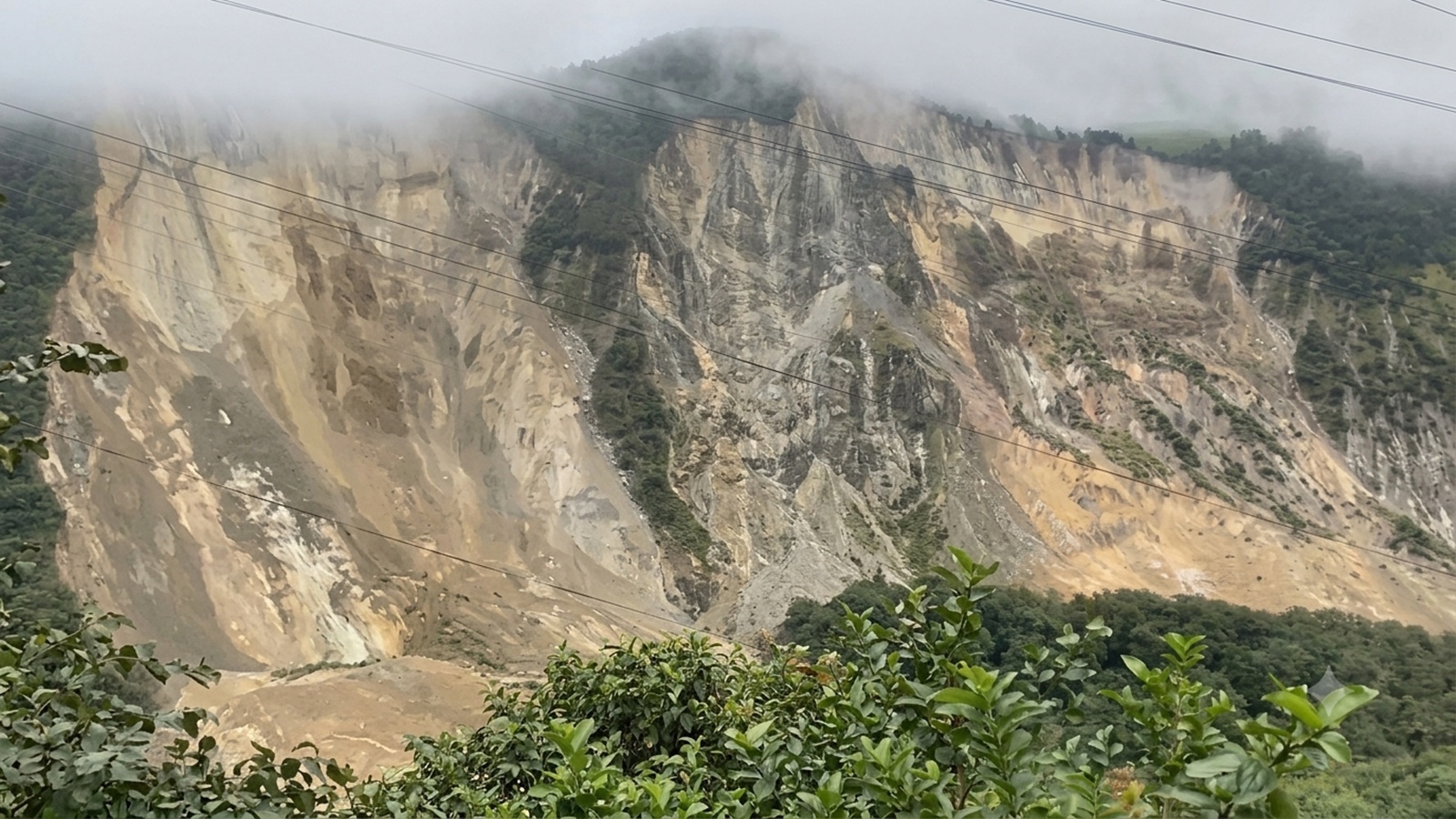
The mountain does not care about your schedule. It does not care about your permit, your carefully packed gear, your expensive boots, or the letters you left on the kitchen counter back home, promising to call as soon as you reached the ridge. To the mountain, human ambition is nothing more than a momentary friction against stone and ice—a brief disturbance in an ancient, freezing solitude.
Then the snow breaks.
It starts with a sound that defies description. Not a roar, exactly, but a deep, subterranean groan, like the tectonic plates of the earth grinding in their sleep. Then comes the wind. A compressed wall of sub-zero air races down the slope ahead of the slide, stripping frost from rock and shattering pine branches like dry glass. And finally, the white tide arrives. Millions of tons of compacted powder, jagged ice shards, and heavy scree cascade downward at highway speeds, devouring everything in their path with absolute, unthinking indifference.
In the aftermath, the quiet is terrifying.
When the white dust settles, revealing a landscape utterly rearranged, the mathematics of survival become brutally simple. Two lives are already extinguished. Twelve more are swallowed by the drift. And high up in the thin, brittle air of the Himalayas, time fractures into two distinct realities: the frantic, freezing clock of the rescue teams, and the motionless, agonizing wait of families thousands of miles away who are staring at glowing glass screens, refreshing news feeds, and praying for a miracle that rarely arrives on schedule.
Consider what happens in the first sixty minutes following an avalanche of this scale.
At base camp, or in the nearest cluster of stone-built teahouses clinging to the cliffs, the initial shock wave registers not just as sound, but as pressure. Windows rattle. The air pressure drops momentarily. Local villagers, whose families have farmed or guided these treacherous slopes for generations, step outside. They look upward. They do not need binoculars to know what has happened. They read the gray plume hanging over the upper gully like an executioner’s signature.
In modern mountaineering reports, disasters are often reduced to cold metrics. We read headlines that speak of missing persons, coordinates, and weather windows. We absorb numbers as if they were abstract statistics on a financial ledger. But numbers do not bleed. Numbers do not possess boots caked in frozen mud or pockets containing crumpled photographs of children.
To understand the human cost of the tragedy unfolding in Nepal right now, you have to look past the bureaucratic language of emergency response. You have to imagine the packs left behind in unheated tents. You have to picture the thermos flask growing stone-cold on a wooden table, its owner never returning to take another sip.
Mountaineering is often romanticized as a quest for self-discovery. Magazines and documentaries love to talk about conquering peaks, pushing human limits, and finding clarity in the thin air above the clouds. But anyone who has spent time above the tree line knows that you never conquer a mountain. At best, you negotiate a temporary truce. You ask permission with every step. You tread lightly, whispering silent bargains with the wind, knowing full well that the weather can revoke your lease on life in a single heartbeat.
The twelve missing souls in this latest disaster were not reckless thrill-seekers defying common sense. They were trekkers, guides, porters—people caught in the intricate intersection of human wanderlust and erratic meteorological shifts. Climate instability has rewritten the rules of the high peaks. Seasons are blurring. Glaciers are groaning under the strain of rising global temperatures, calving unpredictably, releasing tons of snow and ice from slopes that were considered stable decades ago.
When a mountain shifts without warning, it exposes our profound vulnerability.
Rescue operations in the high Himalayas are a masterclass in controlled desperation.
Imagine standing on a slope where every breath feels like inhaling shards of glass. The air holds barely half the oxygen found at sea level. Your lungs burn. Your fingers lose sensation within minutes if you expose them to check a radio or clear a sensor. Now, imagine searching for a human body buried beneath ten feet of dense, concrete-like avalanche debris using little more than steel probes and long, desperate hours of manual excavation.
This is not like searching for a lost hiker in a forest. An avalanche victim is encased in a freezing tomb. Every minute counts. The survival curve drops off a cliff after the first fifteen minutes of burial; beyond that, asphyxiation and hypothermia claim the vast majority of lives. By the time rescue helicopters manage to cut through turbulent mountain winds to land near the disaster zone, hours have already ticked away.
Yet, the searchers go anyway.
They are local men and women—Sherpas, mountain guides, and emergency responders—who strap electronic transceivers to their chests and march into the jaws of the white wilderness. They do this knowing the risks. They do this because in these remote mountain communities, survival is collective. If you leave a climber behind, you violate the unspoken code of the peaks. You betray the ancestors who walked these same passes before roads existed.
Watch a rescue team at work. There are no dramatic shouts. There is no Hollywood score swelling in the background. There is only the rhythmic thud of metal probes striking packed snow. Clack. Clack. Clack. Every strike tells a story. If the probe hits soft powder, they keep moving. If it hits something resistant—something unnaturally firm beneath the white blanket—the team stops instantly. Hearts hammer against ribs. Shovels flash in the pale, high-altitude sun.
Most of the time, what they unearth is just a discarded pack or a frozen boulder. But the search continues because hope, however irrational, is the only tool left against the cold.
Down in the valleys, far below the snowline, the wait has a physical weight of its own.
In Kathmandu, in small rural villages across Europe and Asia, phones sit on bedside tables, glowing in the dark. A mother wakes up at 3:00 AM, her chest tight with an inexplicable dread. She reaches for her phone. No messages. No missed calls. Just the quiet, mocking hum of a device connected to a network that spans thousands of miles of earth, oceans, and airspace, yet feels entirely useless against the barrier of a remote Himalayan ridge.
We live in an era where we expect constant connectivity. We track our Uber drivers in real-time, monitor our fitness metrics via wristbands, and chat with friends across continents with zero latency. We have fooled ourselves into believing that the world has been fully mapped, conquered, and pacified.
Then a mountain shakes. Then twelve people vanish into a white void. And in that terrifying instant, we are reminded of our profound, helpless insignificance.
The tragedy in Nepal is not an isolated anomaly. It is part of a recurring script written in ice and stone. Every year, the mountains claim their toll. Every year, we express shock, send condolences, dispatch rescue teams, and then, gradually, we forget—until the next white wall collapses and the headlines flash across our screens once more.
Why do we keep going back?
Why do thousands of travelers lace up their boots every season, boarding flights to Lukla and walking toward the roof of the world, fully aware of the statistics?
Perhaps because the alternative is living entirely safely, entirely insulated from the raw, unfiltered majesty of our planet. To stand in the shadow of giants like Everest, Annapurna, or Dhaulagiri is to experience a rare, humbling clarity. You realize how small you are. You realize how fragile your daily worries, your anxieties, and your digital squabbles truly are when weighed against walls of granite that have stood untouched for millions of years.
That beauty demands a price. Sometimes, the mountain collects it in full.
As the search enters its second day, the weather closes in again. Clouds roll up the valley like gray smoke, swallowing the ridges, turning the sky and the earth into a single, blinding expanse of whiteout. The helicopters are grounded. The rescue teams are forced to retreat to lower altitude shelters, their hands raw, their eyes bloodshot from windburn and exhaustion.
Twelve names remain unrecovered. Twelve families remain suspended in the agonizing purgatory between grief and hope.
Up on the slope, the wind howls through the gully, scouring the fresh snow clean, erasing bootprints, burying the debris fields deeper beneath the drift. The mountain reclaims its silence. It does not apologize for the lives it took, nor does it acknowledge the sorrow it left behind. It simply stands, cold and indifferent, waiting for the next traveler foolish enough—or brave enough—to test its boundaries.
And somewhere in the dark, beneath tons of ancient ice, the wind whispers across the ridge, carrying the memory of those who went looking for the horizon and found eternity instead.