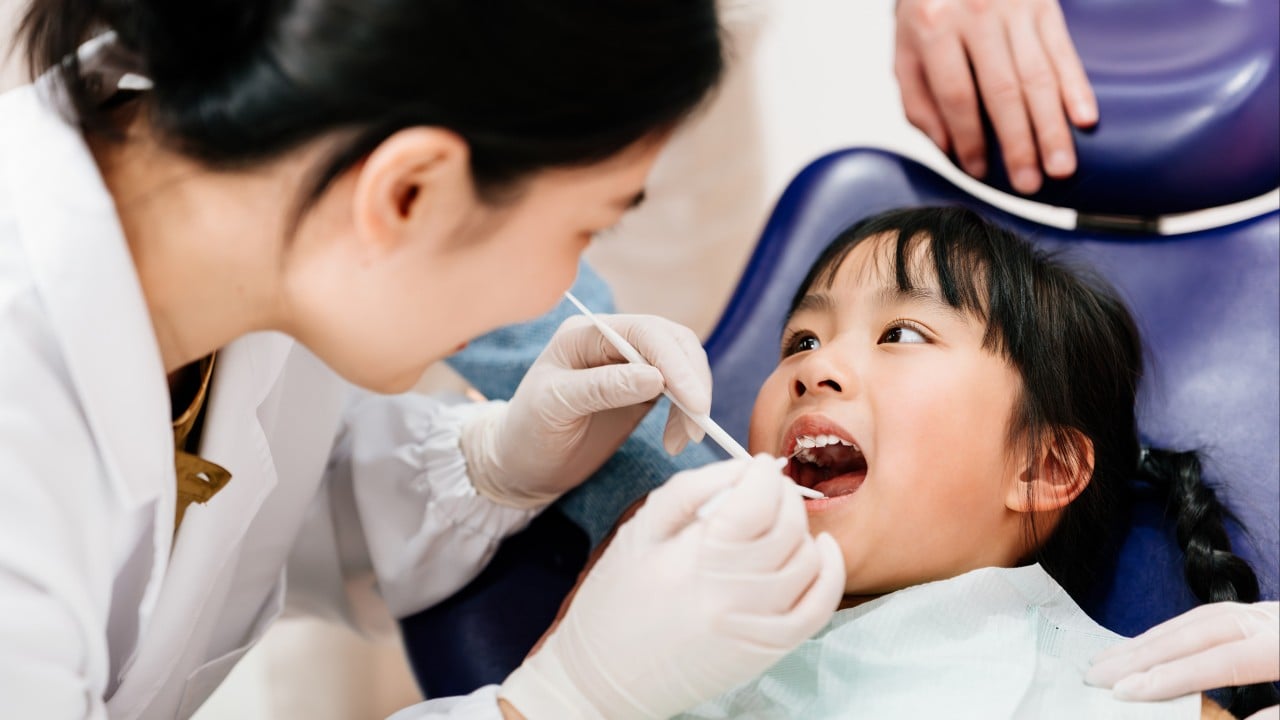
The kitchen light felt too bright for 3:00 AM. In the sterile silence of the suburban house, the only sound was the hum of the refrigerator and the rhythmic, labored breathing of a six-year-old boy named Leo. He wasn't in his bed. He was on the bathroom floor, doubled over, his face the color of wet chalk. His mother, Sarah, knelt beside him, her hand trembling as she wiped a bead of cold sweat from his forehead.
She kept thinking about the farm.
It had been a beautiful Saturday. The rolling hills of the countryside offered a picturesque escape from the processed, plastic-wrapped reality of the city. They had visited a local dairy, a place that promised "nature in its purest form." The farmer was charismatic, speaking passionately about the enzymes and "life force" stripped away by industrial pasteurization. He handed Sarah a glass of milk, creamy and unblemished, straight from the tank.
"This is how our ancestors drank it," he had said with a confident smile.
Sarah, a woman who meticulously researched organic kale and avoided red dye #40, felt a surge of pride. She was giving her son the best. The real thing. No chemicals. No heat-treated ghosts of nutrition.
She didn't know that she was handing him a ticking clock.
The Invisible Guest
We have a strange relationship with the word "natural." We equate it with "safe," "kind," and "honest." We imagine Mother Nature as a nurturing figure in a flowing robe, forgetting that she also invented the volcano, the arsenic root, and the Escherichia coli O157:H7.
When we talk about raw milk, we aren't just talking about a beverage. We are talking about a philosophy. There is a deep, modern ache to reconnect with the earth, a rebellion against the opaque machinery of Big Agriculture. It’s a valid feeling. We are tired of ingredients we can't pronounce and supply chains that span continents.
But biology doesn't care about our philosophy.
Inside that creamy, high-fat liquid, a microscopic drama is unfolding. A cow, no matter how beloved or "cleanly" kept, is a biological entity. It lives in a world of soil, manure, and skin. Bacteria like Salmonella, Campylobacter, and Listeria don't exist because a farm is "dirty"; they exist because they are part of the ecosystem of a ruminant animal.
Pasteurization, a process often maligned as a "nutrient-killing" industrial sin, is actually a remarkably simple act of defense. It is the application of heat—just enough to burst the cell walls of pathogens—without boiling the life out of the liquid. It is a shield forged in the 19th century that turned milk from one of the leading causes of infant mortality into a staple of the kitchen table.
The Cost of the Gamble
By the third day after their farm visit, Leo’s "stomach bug" had turned into something far more sinister. It wasn't just vomiting. It was the blood.
In the emergency room, the doctors didn't talk about "life forces" or "natural enzymes." They talked about Hemolytic Uremic Syndrome (HUS). They talked about kidney failure. They talked about the possibility of a permanent neurological shadow hanging over Leo’s future.
Sarah sat in the waiting room, staring at her hands. She felt like a criminal. But she wasn't a criminal; she was a victim of a very specific kind of modern misinformation. We live in an era where "anecdotal evidence"—a neighbor's story about how raw milk cured their eczema—carries more weight than a century of peer-reviewed data.
The data is cold. It tells us that raw milk is 150 times more likely to cause an outbreak than pasteurized milk. It tells us that while only a small fraction of the population drinks raw milk, they account for the vast majority of dairy-related hospitalizations.
But cold data doesn't stop the bleeding.
The tragedy of the raw milk movement is that the risks are disproportionately borne by those who cannot give consent: children. A healthy adult with a robust immune system might survive a bout of Campylobacter with nothing more than a week of misery. A child’s kidneys are not so forgiving.
The Enzyme Myth and the Reality of Heat
One of the most persistent arguments for going "raw" is the destruction of enzymes. Proponents claim that pasteurization "kills" the milk, making it harder to digest and stripping it of its medicinal properties.
Let’s look at that through a clearer lens.
Milk contains enzymes like phosphatase, but these aren't there for human health; they are biological markers of the cow's lactation process. Our own digestive systems—our stomach acid and our own endogenous enzymes—are more than capable of breaking down the proteins in milk.
As for the vitamins? Yes, a tiny percentage of Vitamin C and B12 is reduced during heating. But milk was never a primary source of Vitamin C to begin with. You would have to drink gallons of the stuff to get your daily requirement. You get more Vitamin C from a single slice of bell pepper than a whole vat of raw milk.
We are essentially trading a negligible boost in B-vitamins for the privilege of inviting a medieval pathogen into our homes. It is a lopsided trade. It is a gamble where the house always wins, and the stakes are the people we love most.
A Ghost in the Modern Machine
Why is this happening now? Why, in 2026, are we seeing a resurgence of diseases we thought we had conquered?
It stems from a breakdown in trust. When the institutions meant to protect us—government agencies, large corporations—stumble or prioritize profit over people, we recoil. We go looking for "the truth" in the opposite direction. If the "system" says pasteurization is good, then the "system" must be lying.
This contrarianism is a survival instinct gone haywire. We want to take control. We want to know exactly where our food comes from. We want to see the cow.
But looking at the cow doesn't tell you if she is shedding Listeria in her milk today. You can't see a pathogen with the naked eye, no matter how much you love the land.
The farmer Sarah met wasn't a villain. He truly believed in his product. He drank it himself. He gave it to his own kids. That’s the most terrifying part: the sincerity of the danger. Sincerity is not a substitute for safety. You can be 100% sincere and 100% wrong.
The Long Road Back
Leo survived.
He didn't leave the hospital the same way he entered it. There were weeks of dialysis. There were monitors that beeped in the night, a soundtrack to Sarah’s guilt. He eventually went home, but his kidneys will always be a point of concern. He can't just be a kid; he has to be a patient, at least in the back of his mother's mind.
The glass of milk sits on their table now, but it’s different. It’s the "boring" kind from the grocery store. It’s the kind that went through a stainless steel pipe and was held at 161°F for 15 seconds.
It lacks the "romance" of the farm. It doesn't come with a story about the "life force" of the meadow.
But Sarah watches Leo drink it, and she doesn't feel afraid. She realizes now that the most beautiful thing about food isn't its "purity" or its "raw state." It’s the fact that it allows the person eating it to keep living.
The science isn't an attack on our freedom. It isn't a corporate conspiracy to dull our senses. It is a hard-won peace treaty with a microbial world that doesn't care about our health.
We forget the lessons of the past because the past was so successful at keeping us alive. We have the luxury of debating the merits of raw milk only because we haven't seen a ward full of children dying of bovine tuberculosis in seventy years.
Progress is often invisible. It is the absence of a fever. It is the silence of a hospital wing. It is the simple, quiet act of a child finishing a glass of milk and then running outside to play, his kidneys quiet, his blood clean, his future uninterrupted.
Leo wiped a white mustache from his lip and laughed at a joke on the television. Sarah reached over and ruffled his hair, her fingers catching on the reality of his skin, warm and vibrant. The "processed" milk had done its job. It had provided calcium and protein, and most importantly, it had provided nothing else. No stowaways. No shadows. No regrets.