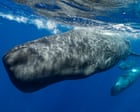
Silence in the Deep
Imagine standing in a room filled with light pitch-black darkness, three thousand feet beneath the surface of the North Atlantic.
It is cold. The pressure would crush an armored car. Yet, through the pitch black, a conversation is happening.
It sounds like a rapid-fire series of clicks, almost like an old telegraph machine hammering away in a deserted train station. These are the codas of sperm whales. For millions of years, these marine giants have used these rhythmic sequences to navigate, hunt giant squid in the abyss, and keep track of their families. They are speaking to one another in a complex dialect shaped by centuries of oceanic isolation.
Then, a low, rhythmic vibration begins to shudder through the water. Miles away, a container ship the size of a skyscraper churns forward, its massive steel propeller carving through the ocean floor. To human ears on the surface, it is a dull hum. To a sperm whale, it is a deafening, continuous roar that fills every cubic inch of their acoustic universe.
And in that moment, the ocean’s largest predators do something astonishingly human.
They change their voice.
The Subtle Shift
Marine biologists analyzing thousands of hours of hydrophone recordings off the coast of Dominica noticed something unusual buried in the audio spectrum. When the acoustic signature of cargo ships and motorized boats swept over the reef, the whales did not simply quiet down or swim away.
They altered the acoustic structure of their vocalizations. Specifically, they shifted their spectral emphasis—the marine equivalent of changing a vowel sound.
Imagine trying to speak to a friend across a crowded, music-blasting restaurant. You do not just yell louder; you change the shape of your mouth. You pitch your words higher, sharp sound edges pushing through the heavy bass pounding through the floor. You move from soft oohs and aahs to sharp, piercing eeks and aye-ayes.
That is precisely what these ocean giants are doing. When the industrial noise of human commerce invades their home, sperm whales tweak the fundamental acoustic frequency of their clicks. A subtle shift in the middle of a coda allows the acoustic signal to cut through the low-frequency rumble of diesel engines.
It is a feat of real-time acoustic engineering. But it comes at a terrible, unseen cost.
The Weight of Noise
Sound travels four times faster in water than it does in air. For a creature that relies on sound the way humans rely on sight, the modern ocean is no longer a silent sanctuary. It is a visual fog where every passing vessel throws up a massive, blinding flash of noise.
Consider what happens next: a mother whale tries to signal her calf. The calf is resting near the surface, vulnerable to vessel strikes, while the mother dives deep into the twilight zone to hunt. Under normal conditions, her coda carries miles across the basin, carrying precise information about location, identity, and intent.
When a ship passes, that delicate web of communication frays. By shifting their vocal frequencies to adapt to human noise, the whales are forced to spend critical energy just to be heard. Biologists refer to this extra exertion as the cost of living in our acoustic shadow.
Worse still, altering these vocal patterns might dilute the cultural richness of whale dialects. Different ocean pods have distinct coda patterns passed down from mother to offspring over generations. They are regional accents, oral histories written in sound waves. When human noise forces every pod to adopt the same high-pitched, exaggerated vocal tweaks just to cut through the din, we risk homogenizing the rich linguistic tapestry of the deep.
A Disturbed Sanctuary
For decades, ocean conservation focused on what we could physically see: plastic waste floating on the surface, oil spills washing up on beaches, or visible ship strikes on migratory routes. Invisible hazards were easy to ignore. Sound leaves no visible mark on the water. It creates no chemical slick, no trash gyre floating on the horizon.
Yet, acoustic pollution is fundamentally altering how marine megafauna navigate their universe.
When a whale is forced to constantly shift its vocal range, its stress levels spike. Cortisol samples extracted from whale blubber near high-traffic shipping lanes show chronic elevation. These are animals living in a perpetual state of hyper-vigilance, constantly altering their basic biology to survive the endless noise of international trade.
We built our global economy on the back of cheap maritime transport. Ninety percent of the world's goods move by sea. Every smartphone, every pair of shoes, every morning cup of coffee carries an invisible acoustic footprint left behind in the waters off the coast.
The whales are adapting because they have to. They are reshaping their ancient language on the fly to survive our rush hour.
Far below the waves, a mother whale releases a modified click into the dark water. She waits, listening intently through the mechanical drone of human industry, desperate to hear the quiet, subtle answer of her child returning through the noise.


