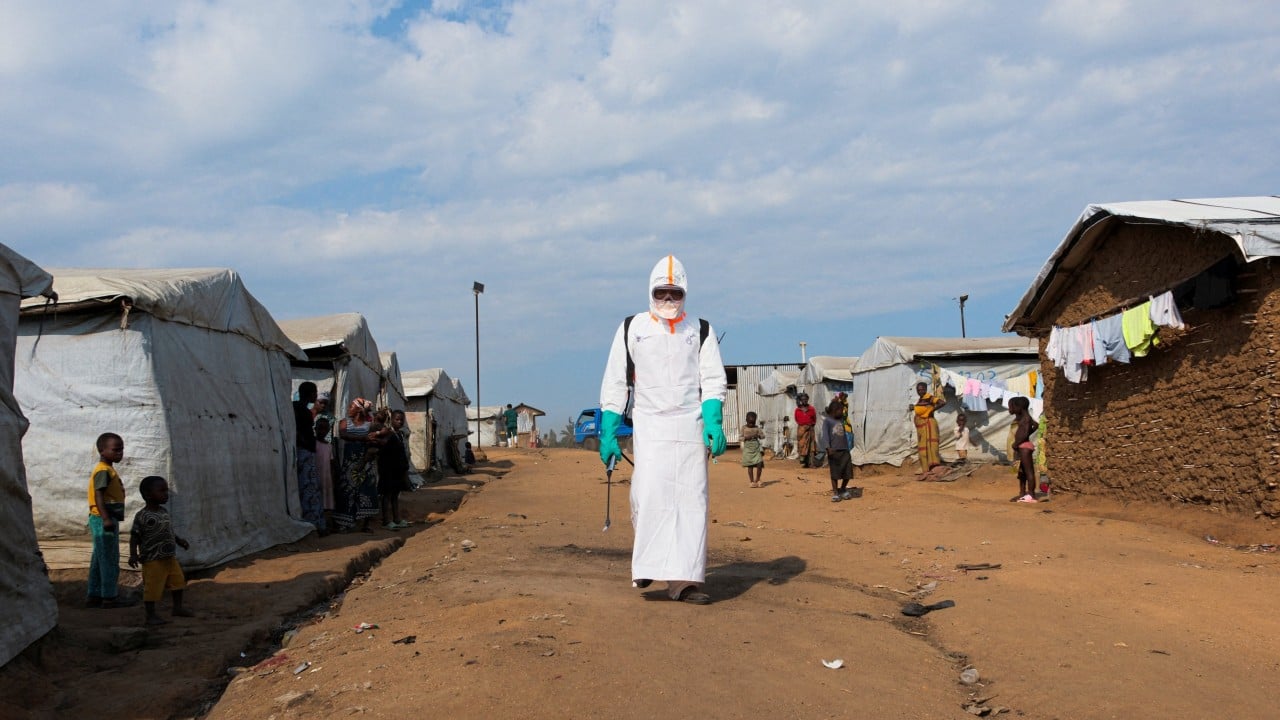
The rain in the eastern Democratic Republic of Congo does not just fall. It deafens. It turns the red earth of the displacement camps into a thick, clinging clay that anchors you to the spot, making every step an exhausting negotiation. Under the plastic sheeting of a makeshift shelter, a woman named Esperance watches the water pool near her feet. She is not thinking about the rain. She is listening to the breath of her youngest son. It is too fast. It sounds like dry leaves scraping across concrete.
When people flee violence, they leave behind their land, their livestock, and their histories. They carry only what can fit on their backs or in their arms. They seek safety in numbers, crowding into camps like the one here in Ituri province, hoping that the collective presence of thousands will shield them from the armed groups roaming the hills. But density is a double-edged sword. The very walls of plastic and wood that offer a fragile sanctuary from bullets create the perfect incubator for a far more insidious killer.
Within the span of just a few weeks, at least thirty people inside this camp have died from an illness that begins with a deceptive, everyday fatigue. Thirty lives snuffed out in the dark, away from the headlines, recorded only as numbers on a crumpled piece of paper in a local clinic.
The symptoms are a terrifyingly familiar script to anyone who knows the history of this soil. High fever. Intense muscle pain. Vomiting. And then, the signature of a virus that dissolves a body from the inside out: bleeding from the eyes, the nose, the gums.
It is Ebola. And it is moving through the crowded tents like a ghost.
The Microscopic Invader in the Crowd
To understand how a virus spreads in a place like Mambasa, you have to look past the medical terminology and look at the physical reality of a displacement camp. Imagine a space designed for a few hundred people that now holds thousands. Clean water is a luxury. Soap is a commodity traded for food. Latrines are shared by hundreds of families.
Epidemiologists talk about the basic reproduction number of a disease—the average number of people one infected person will pass the virus to. In a sanitized hospital isolation ward, that number can be kept below one, causing the outbreak to fizzle out. But in a displacement camp, the math changes drastically.
Consider a hypothetical but entirely accurate sequence of events for a family in the camp. A father falls ill. He assumes it is malaria, which is common, or perhaps just exhaustion from weeks of running. His wife cares for him, wiping the sweat from his brow with her bare hands. She has no gloves. When he vomits, she cleans the floor with a cloth and a bucket of cold water. Ebola is transmitted through direct contact with bodily fluids. By the time the father's fever peaks, the virus has already migrated to his wife's hands, and from there, to the faces of their children.
When thirty people die in quick succession in an environment like this, it is not just a tragedy. It is a mathematical alarm bell. It means the virus is no longer lingering on the fringes of the forest; it has penetrated the defenses of the community.
The War Between Custom and Survival
The tragedy of Ebola is that it weaponizes human empathy. The instincts that make us human—the urge to comfort a crying child, to hold the hand of a dying parent, to wash the body of a loved one before burial—are the exact pathways the virus uses to conquer a population.
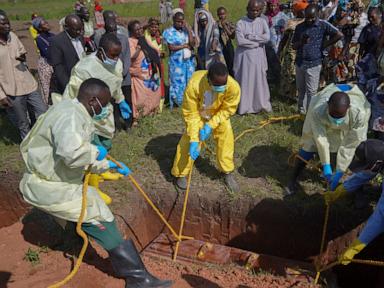
In eastern DRC, traditional burial customs are deeply ingrained and profoundly respectful. Family members typically wash the deceased, dress them in their finest clothes, and kiss them goodbye. But a body that has just succumbed to Ebola is essentially a highly concentrated reservoir of the virus. The viral load is at its absolute peak at the moment of death.
When health workers arrive in white, alien-looking personal protective equipment to claim a body, the reaction from the community is rarely gratitude. It is fear, confusion, and deep resentment. To the residents of the camp, these faceless figures in goggles and rubber suits are not saviors; they are people who steal their dead and deny them their final, sacred rights.
This cultural friction creates an invisible wall. Families begin to hide their sick. They tuck them into the darkest corners of their tents, whispering quiet comforts, hoping the fever will pass. They lie to contact tracers. They say their relatives left the camp, or that they died of something else entirely. And while the truth is hidden, the virus continues its silent, relentless march from shelter to shelter.
The Fractured Frontline
Fighting an outbreak in a stable environment is difficult enough. Fighting it in a zone of active conflict is a logistical nightmare.
The eastern region of the DRC has been plagued by violence for decades, with dozens of rebel groups fighting over land, resources, and political power. Roads are frequently cut off. Ambushes are a constant threat. For medical teams trying to deliver vaccines or set up treatment centers, every journey is a gamble.
There is also a profound, historical deficit of trust. Decades of neglect and conflict have left communities deeply skeptical of any outside intervention. When millions of dollars suddenly pour into a region for Ebola response while people are still dying of hunger, treatable malaria, and violence, suspicion festers. Rumors spread like wildfire: The virus was brought here by foreigners. The treatment centers are where people go to die. The politicians are making money off our blood.
This mistrust is the real fuel of the epidemic. It turns a manageable medical emergency into a runaway train. If a team cannot safely enter a camp to track down everyone who interacted with the first thirty victims, the chain of transmission remains unbroken. Each unmonitored contact is a burning match thrown into a dry forest.
The Shadow of 2018
We have been here before. The memory of the 2018 to 2020 Ebola outbreak in the same region still haunts the local population and global health authorities. That outbreak lasted nearly two years, claimed more than 2,200 lives, and became the second-largest Ebola epidemic in history.
It was a conflict that taught the world a brutal lesson: medical science is useless without community trust. We have highly effective vaccines now. We have experimental treatments that can dramatically increase survival rates if administered early. The science is solved. The human element is not.
The current spike of deaths in the Ituri camp is a grim warning that the lessons of the past are being forgotten or ignored under the pressure of ongoing humanitarian crises. The local healthcare system, strained to the breaking point by measles, cholera, and malnutrition, cannot absorb the shock of an Ebola resurgence without immediate, intensive support.
But support means more than just dropping crates of supplies from an airplane. It means sitting down with the elders in the camp, listening to their fears, and finding ways to honor their dead without fueling the spread of disease. It means training local youths to do the contact tracing, because a neighbor is trusted where a stranger in a rented SUV is suspected.
The Cost of Looking Away
The rain finally stops in Mambasa, leaving behind a heavy, humid heat that makes the air feel thick enough to chew. Esperance stands outside her shelter, watching a small group of people gather a few yards away. There is no shouting, just the low, rhythmic wailing of women mourning another loss. Another tent has gone quiet.
It is easy for the rest of the world to view these events as a distant, localized misfortune—a tragic but predictable occurrence in a troubled corner of the globe. That view is a dangerous illusion. In an interconnected world, an outbreak anywhere is a threat everywhere. A person infected in a camp in Ituri can walk out of the gates, board a motorcycle to a provincial capital, and be on a flight to a global metropolis before their first symptom appears.
But the primary reason to care should not be fear of export; it should be the shared weight of our common humanity. The thirty people who died in the camp were not statistics. They were mothers who knew how to stretch a handful of beans to feed five children. They were fathers who built shelters out of nothing but branches and hope. They were children who still laughed in the mud despite everything they had lost.
The virus does not care about borders, politics, or funding cycles. It only looks for a warm body and an open door. Right now, inside the crowded, muddy confines of the camp, those doors are standing wide open. The whispers of the fever are growing louder, and if we listen closely enough, they are telling us exactly what will happen next if we choose to look away.