You hear them before you see them.
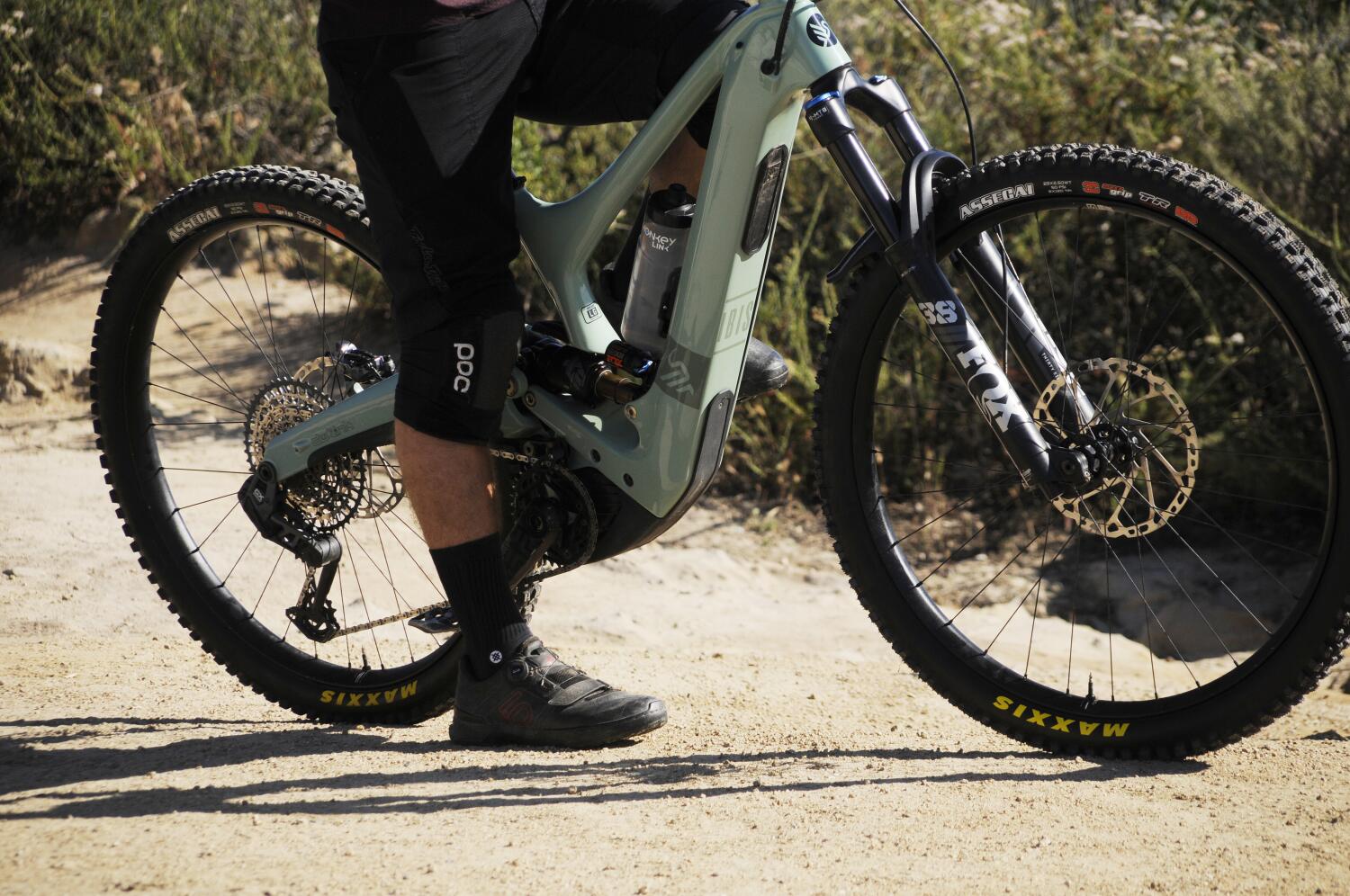
It starts as a faint, high-pitched whir—not the deep-chested roar of a Harley or the chain-slap of a ten-speed, but something slicker, ghostlier. Then, a streak of neon carbon fiber and a twelve-year-old kid wearing a flat-brimmed hat and absolute, untouchable invincibility hurtle past your driver-side window at thirty miles per hour. No pedaling. No hesitation. Just a thumb pressed against a throttle, slicing through suburban traffic like a hot knife through butter.
Welcome to the morning commute in Orange County.
For parents, it is a daily test of cardiac health. For teenagers, it is the ultimate emancipation proclamation. For local law enforcement, it has rapidly morphed into a quiet, rolling administrative nightmare. And now, municipal leaders have decided to draw a hard, uncompromising line in the sand, treating these motorized two-wheelers with the kind of severe scrutiny typically reserved for deadly weapons.
Streets. Safety. Control. The buzzwords echo through city council chambers from Newport Beach to Irvine. But beneath the bureaucratic decrees and the sudden wave of weapon-grade rhetoric lies a much messier, intensely human story about how a community scrambles to catch up to a technology it never saw coming.
Consider a hypothetical scenario, one playing out dozens of times a day across Southern California. Let us call him Leo. Leo is fourteen. His world is bounded by the perimeter of his middle school, the local skate park, and the horizon of digital screens in his bedroom. Last Christmas, Leo received an electric bike capable of hitting twenty-eight miles per hour. To Leo, it is freedom. It is the ability to ditch the school bus, meet friends three miles away without asking for a ride, and feel the rush of wind against his face.
To the driver of a Toyota Camry who suddenly slams on their brakes because Leo blew through a four-way stop while staring at his phone, Leo is a missile.
This is the friction point. The physics of our neighborhoods have fundamentally shifted, yet our infrastructure and our cultural reflexes remain stuck in the analog era. Electric bikes are heavy. They are fast. They weigh significantly more than traditional bicycles, and when combined with the kinetic energy of a growing teenager, the impact force during a collision is devastating. Hospitals in the region report a sharp uptick in collarbone fractures, concussions, and severe road rash among minors.
Panic ensues. And panic makes strange bedfellows of policy.
When Orange County officials begin treating these machines with the gravity of firearms, the language matters. It evokes images of strict registries, zero-tolerance zones, and heavy fines. Some jurisdictions have toyed with impounding bikes on the spot, handing down hefty citations to parents, and demanding mandatory safety courses. On paper, it sounds decisive. It sounds like protection.
Yet, sitting at a local coffee shop watching a frustrated mother try to decode the confusing legal classification of Class 1, Class 2, and Class 3 e-bikes, a different reality settles in. Rules alone cannot engineer a culture of responsibility.
The truth is, we are trying to legislate physics and adolescence at the same time. Both are notoriously stubborn.
For generations, the bicycle was a rite of passage. It taught us balance, spatial awareness, and the consequence of gravity. You earned your speed through sweat and sore thighs. If you wanted to go twenty miles an hour, you had to pedal until your lungs burned. That physical exertion built an innate, visceral respect for velocity.
Electric bikes short-circuit that natural evolutionary ladder. They hand high-speed capability to individuals who have not yet developed the cognitive maturity or spatial calibration to handle it safely. A teenager can easily operate a machine capable of keeping up with neighborhood traffic before they have ever spent a single hour behind the wheel of a car learning blind spots, right-of-way, or defensive driving.
Blaming the kids entirely misses the mark. We built sprawling, car-centric suburbs with wide asphalt arteries, starved our public transit systems of flexible neighborhood connectivity, and then wondered why families embraced an affordable, efficient alternative to driving their kids everywhere. The e-bike boom is a symptom of a deeper design flaw in how we inhabit our cities.
So, can a crackdown make the streets safer?
The answer is both yes and no, wrapped in a paradox.
If safety means aggressive ticket writing and impound lots, it might temporarily clear the worst offenders off the main boulevards. It will force compliance through fear. But it will also alienate the thousands of responsible riders—commuters, teenagers, and older adults—who rely on these machines to reduce carbon footprints and navigate congested coastal corridors.
Real safety requires moving past the knee-jerk theater of prohibition and entering the tedious, unglamorous work of integration.
It means redesigning our streetscapes with protected micro-mobility lanes that do not force a fourteen-year-old on an e-bike to choose between mixing it up with a forty-thousand-pound delivery truck or terrorizing pedestrians on a narrow sidewalk. It means mandatory, hands-on safety education integrated into middle and high school curricula, teaching young riders how to read traffic patterns before handing them the keys to a motorized frame.
Most importantly, it demands a cultural shift in how we talk to our children about power and responsibility.
Back on the asphalt, the afternoon sun dips low over the Pacific, casting long shadows across the palm-lined streets of Orange County. Another electric hum cuts through the air. A young rider approaches an intersection, slows down, pulls the brake levers, and looks both ways before crossing.
No sirens. No citations. Just a quiet moment of mutual recognition between a human being and the world they share.