The lazy consensus has officially hardened into concrete. One year after the official transition from the Wagner Group to the Russian Ministry of Defense’s Africa Corps, the mainstream geopolitical press is singing a predictable chorus. The narrative is neat, tidy, and completely wrong: Africa Corps is failing, the Kremlin is overextended, and Mali is a quagmire that will inevitably break Moscow’s logistical spine.
This analysis is not just flawed; it fundamentally misunderstands the mechanics of modern asymmetric statecraft.
Western analysts love to measure Russian operations through a conventional, interventionist lens. They look at tactical setbacks in the north, count the loss of hardware, and declare a strategic deficit. I have watched analysts apply these exact same flawed metrics to private military frameworks from the Donbas to Damascus. They always miss the forest for the trees. Moscow is not trying to build a carbon copy of a French peacekeeping mission, nor are they running a standard counter-insurgency.
They are running a high-yield, low-cost asset protection racket. And by those metrics, business is booming.
The Fallacy of the Quagmire Narrative
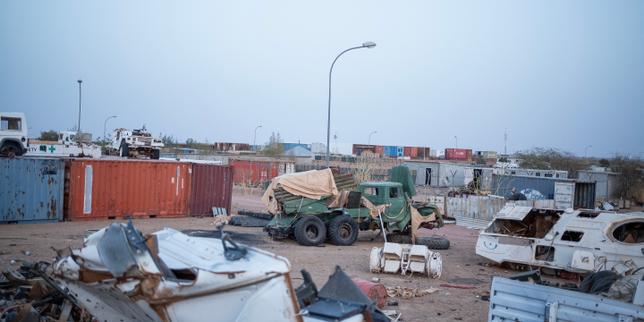
The core argument of the mainstream press hinges on recent military friction, specifically the high-profile ambushes near the Algerian border. The consensus view is that these losses prove Africa Corps lacks the agility and local intelligence network that Yevgeny Prigozhin’s iteration of Wagner possessed.
This is a profound misreading of the structural shift that occurred in late 2023 and early 2024.
Wagner was an entrepreneurial enterprise. It required constant, high-visibility victories to justify its premium price tag to host governments. Prigozhin needed to show immediate results because his cash flow depended on short-term concessions and rapid resource extraction.
Africa Corps operates on an entirely different balance sheet. As a direct subsidiary of the Russian state apparatus, its primary objective is not tactical perfection or total territorial pacification. Its objective is strategic denial.
- State-to-State Leverage: By embedding directly with the military junta in Bamako, Moscow secures a permanent veto over Western influence in the Sahel.
- Resource Securitization: The primary economic engines—specifically gold mining operations around regions like Syama and Loulo—remain insulated from the broader insurgency.
- Geopolitical Chokepoints: Controlling the security architecture of Mali allows Russia to project power toward the Mediterranean and pressure the southern flank of NATO without deploying a single division.
When you realize the goal is disruption rather than governance, the "quagmire" looks less like a trap and more like a feature. Russia does not need to win the war in northern Mali. They just need to ensure that nobody else wins it either.
The Structural Pivot: From Mercenary to Bureaucrat
To understand why the current model is more resilient than people think, we have to look at the internal mechanics of the transition. The conventional wisdom states that bureaucratic oversight from Moscow has strangled the operational flexibility of the personnel on the ground.
Let's look at the actual operational mechanics. Under the old Wagner model, logistics were a nightmare of shell companies, illicit flights, and erratic supply lines. It was highly adaptable but incredibly fragile. A single blocked bank account in Dubai could halt operations in Mopti for weeks.
Today, Africa Corps utilizes the logistical infrastructure of the Russian military. Heavy transport aircraft land openly at state bases. Ammunition supplies are drawn directly from state stockpiles. The command structure is tied directly to the Main Directorate of the General Staff (GRU).
Yes, this introduces red tape. Yes, it slows down response times during tactical ambushes. But it also guarantees institutional longevity. A private enterprise can be bankrupted or decapitated in a single night. A state bureaucracy cannot. The Western press mistook the chaos of a corporate transition for a terminal decline in capability.
Dismantling the People Also Ask Mythos
If you look at the standard queries driving public discussion on this conflict, the misunderstanding becomes even more glaring. The premise of every question is fundamentally warped by wishful thinking.
Can Mali force Russia out if Africa Corps fails to secure the north?
This question assumes the Malian junta has viable alternatives. It ignores the reality of burning bridges. The transitional government under Assimi Goïta did not just swap security partners; they completely dismantled their diplomatic relationships with France and the broader European Union. There is no fallback option. Africa Corps does not need to deliver a flawless security environment to retain its contract; it simply needs to exist as the only entity willing to protect the regime from a palace coup.
Is Russia losing money on its African deployment?
This is a classic corporate misinterpretation of state budgets. Western analysts look at the direct costs of maintaining personnel, shipping hardware, and paying local contractors, comparing it against the immediate revenue generated by seized mining concessions. They conclude it is a net negative.
They are ignoring the macroeconomic reality. Russia uses its presence in Mali to secure access to raw materials that help bypass global sanctions regimes. Gold extracted from the Sahel enters parallel markets, providing the liquidity needed to fund imports elsewhere. The value of the Malian deployment is not measured in rubles on a spreadsheet in Bamako; it is measured in the resilience of the broader Russian financial system against Western economic pressure.
The Risk the West Is Afraid to Confront
To be fair, the contrarian view has a massive blind spot that Moscow is actively choosing to ignore. The structural risk of the Africa Corps model is not military defeat; it is local irrelevance.
By prioritizing regime survival and resource extraction over genuine counter-insurgency operations, Russia is creating a vacuum in the rural provinces. The local population faces the brunt of an escalating conflict without the benefit of the civil-military infrastructure that traditional peacekeeping missions at least attempted to provide.
If the Malian state completely collapses outside of the major urban centers, the resource concessions that Russia relies on will become increasingly difficult to defend. Protecting a mine surrounded by hundreds of miles of hostile, ungoverned territory requires a massive footprint—one that Moscow cannot afford to deploy while fighting a conventional war in Europe.
But assuming this collapse is imminent because of a few tactical losses is a mistake. The Kremlin has proven exceptionally adept at managing controlled chaos. They do not need a stable Mali. They need a dependent Mali.
Stop analyzing the Sahel as if it were a standard peacekeeping theater where the metrics of success are stability and democratic transition. It is a playground for competitive state denial. In that arena, a messy, violent stalemate is not a failure. For the Kremlin, it is a win.