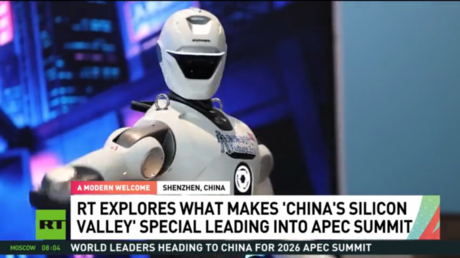
Walk through certain districts in Shenzhen, Xiong’an, or Hangzhou today, and you'll see a drone drop a lukewarm iced latte onto a designated landing pad while a robotic arm flips noodles behind a glass storefront two blocks away. It looks like sci-fi. Western news outlets love filming these exact moments, slapping a flashy headline on the clip, and calling it the ultimate city of the future.
They're missing the real story.
Most viral coverage treats China’s automated infrastructure—specifically robot chefs and drone deliveries—like a neat theme park built purely to flex technological muscle. If you actually look at how these systems operate on the ground, you realize they aren't shiny prototypes anymore. They're mundane, heavily subsidized municipal utilities designed to solve massive demographic and logistical headaches.
Why China Built the Robot Kitchen First
Everyone focuses on the spectacle of a mechanical arm tossing a wok. Honestly, the hardware isn't even the impressive part. Companies like Qianxi Robotics (a subsidiary of Country Garden) and various tech startups in Guangdong didn't build automated restaurants just to prove they could code. They built them because labor costs in tier-one Chinese cities have skyrocketed over the last decade, while the pool of young workers willing to stand over a 400-degree stove for twelve hours a day has shrunk dramatically.
Take a look at how a modern automated kitchen in Shenzhen or Guangzhou actually functions. You don't have humanoid robots walking around holding spatulas. That would be stupidly inefficient. Instead, the entire kitchen is a single, integrated machine.
Ingredients arrive pre-chopped and vacuum-sealed from centralized commissaries. Automated dispensers drop exact gram weights of oil, soy sauce, and vegetables into rotating drum woks. Induction heaters crank up the temperature with precision that human line cooks struggle to maintain during a brutal lunch rush.
- Consistency over flair: A robot chef makes the exact same Mapo Tofu at 2:00 PM on a Tuesday as it does at 8:00 PM on a Friday.
- Speed: Automated claypot rice machines can cook dozens of individual portions simultaneously in roughly 15 minutes, spitting them out onto conveyor belts.
- Hygiene: Fewer human hands touching raw ingredients means municipal health regulators love these setups, which translates directly into faster permitting.
Is the food Michelin-star quality? No. Anyone who tells you a machine beats a master Cantonese chef is lying to you. It tastes like solid, reliable fast-casual food. And for millions of office workers grabbing a quick lunch between meetings, "solid and reliable" beats "artistic" every single time.
The Reality of Drone Deliveries in Shenzhen
If robot chefs are about surviving labor shortages, commercial drone delivery is about conquering urban density.
When you hear about drone deliveries, you probably picture a quadcopter landing right on your suburban front lawn. That doesn't work in cities where 30 million people live stacked in 40-story apartment complexes. You can't fly a drone onto a tiny balcony surrounded by laundry lines and air conditioning units without causing a disaster.
Meituan, China’s massive delivery giant, figured this out years ago. Instead of door-to-door delivery, they built a network of automated kiosks—essentially smart lockers with landing pads on top—placed outside office towers, university campuses, and major apartment gates.
You order lunch on your phone. A human runner picks up the bag from the mall restaurant and walks it to a rooftop launchpad nearby. The drone flies a pre-mapped, low-altitude corridor above city streets, lands on the kiosk roof, and drops the box inside. You walk downstairs, scan a QR code, and grab your food.
By 2024, Meituan had already completed hundreds of thousands of commercial drone deliveries across Shenzhen and Shanghai, operating dozens of dedicated routes. During peak lunch hours in Shenzhen’s Nanshan District, these drones shave 15 to 20 minutes off standard e-bike delivery times simply because they ignore traffic lights and congested intersections.
The Hidden Infrastructure Nobody Films
Cameras always point at the drone descending from the sky. Nobody films the boring backend that makes it legal.
You cannot run commercial drone networks without total airspace integration. China’s Civil Aviation Administration designated Shenzhen as a primary testing zone for the "low-altitude economy," creating strict digital geofences and centralized traffic management systems. Every drone broadcasts its telemetry in real time to municipal servers. If wind speeds spike above safe thresholds, or if a sudden rainstorm rolls in off the South China Sea, the entire fleet grounds itself automatically, and orders reroute to human e-bike riders within seconds.
Xiong’an and the Blank-Slate Urban Experiment
Whenever Western journalists talk about China’s "city of the future," they eventually end up in Xiong’an New Area, located about 60 miles southwest of Beijing. Launched in 2017 under direct mandate from Xi Jinping, Xiong’an was designed from scratch to absorb non-capital functions from Beijing and serve as a blueprint for smart urbanism.
Building a city from empty farmland lets urban planners avoid the biggest obstacle in modern infrastructure: retrofitting.
In New York or London, adding autonomous vehicle lanes or underground logistics tunnels means digging up centuries-old pipes, fighting neighborhood associations, and burning billions in legal fees. In Xiong’an, planners buried the utility grids, fiber-optic networks, and autonomous freight corridors before pouring concrete for the buildings above them.
The city runs on a "digital twin" model. Every traffic light, manhole cover, power substation, and autonomous bus feeds continuous data into a centralized urban brain managed by state-backed tech firms and Baidu’s Apollo platform.
Yet Xiong’an also exposes the biggest flaw in top-down futuristic urbanism. Infrastructure doesn't automatically create culture. While the autonomous shuttles run on schedule and the smart buildings manage energy consumption efficiently, convincing millions of Beijing residents to uproot their lives and move to a quiet, hyper-regulated planned city has proven much harder than laying fiber-optic cable. A city needs messy, unpredictable human energy to feel alive, and you can't code that into a municipal server.
What Most Tech Analysts Miss About the Economics
Here's where people get confused. They see robot chefs and drone deliveries in China and assume these companies are printing money.
They aren't. Not yet, anyway.
Hardware-heavy automation requires massive upfront capital expenditure. Building a network of drone launchpads, maintaining batteries, replacing motors, and paying teams of remote flight monitors costs a fortune. Right now, a human delivery rider on an electric scooter in China is still cheaper per drop than a drone when you factor in equipment depreciation.
So why do companies like Meituan, JD.com, and Alibaba keep pouring billions into this?
- Data dominance: Whoever maps the low-altitude corridors and builds the regulatory standards owns the airspace for the next fifty years.
- Government subsidies: Local Chinese governments actively compete to attract tech champions by offering cheap land, tax breaks, and direct R&D grants for smart-city pilots.
- Demographic inevitability: China’s working-age population is declining rapidly. Tech executives know that within ten to fifteen years, human labor won't just be expensive—it won't exist in the numbers required to keep massive megacities functioning.
They're eating the losses today so they don't collapse tomorrow.
How This Actually Impacts Global Tech and Business
If you run a logistics company, a restaurant group, or a tech startup outside of China, you can't just copy-paste this model. Western regulatory frameworks—like the FAA's strict rules on beyond-visual-line-of-sight (BVLOS) drone flights in the United States—move much slower, and Western privacy laws prevent the kind of centralized data collection that powers Chinese smart grids.
Still, ignoring what’s happening in Shenzhen and Hangzhou is a mistake. The supply chains for LiDAR sensors, commercial drone batteries, automated cooking equipment, and edge-computing cameras are maturing in China right now. As production scales, the unit cost of this hardware drops globally.
If you want to stay ahead of how urban automation is shifting, stop watching hype videos on social media and start tracking the actual operational metrics:
- Watch unit economics, not demos: Pay attention to cost-per-delivery and kitchen throughput rates rather than flashy prototype announcements.
- Focus on "middle-mile" automation: Fully autonomous last-mile delivery to a front porch remains a logistical nightmare everywhere, whereas hub-to-hub drone drops and centralized automated food prep are already commercially viable.
- Audit your own repetitive workflows: The lesson from Chinese robot kitchens isn't to replace humans with humanoids—it's to redesign the physical environment so simple, reliable machines can handle the repetitive heat and heavy lifting while humans manage exceptions and customer service.