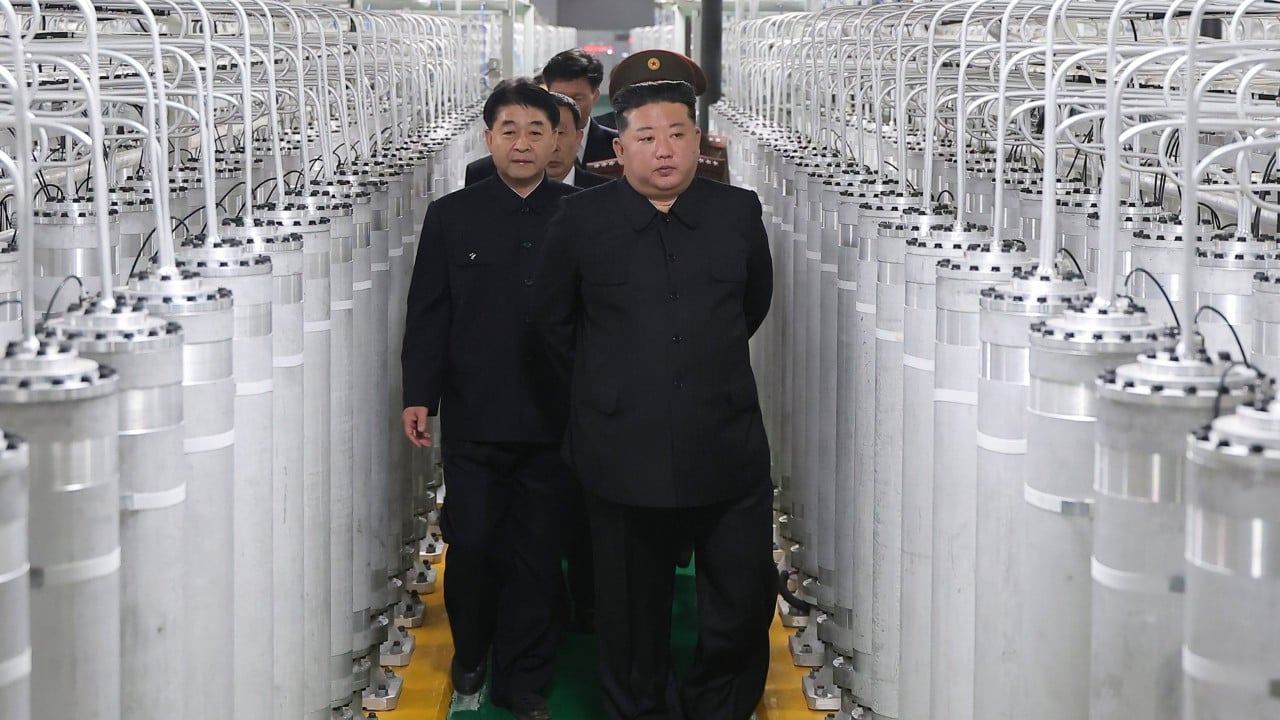
The international community loves living in a fantasy world. On June 17, 2026, the Group of Seven leaders gathered in Evian-les-Bains, France, to issue yet another joint statement demanding the complete denuclearization of North Korea. Right on cue, Pyongyang fired back. Kim Yo Jong, the powerful sister of leader Kim Jong Un, issued a blistering response through the state-run Korean Central News Agency. She called the G7 demand an act of overreach and a direct infringement on North Korea's national constitution. More importantly, she warned that trying to strip the country of its atomic arsenal would result in disaster.
Western leaders keep recycling the same old scripts. They think statements and United Nations Security Council resolutions will somehow convince a nuclear-armed state to voluntarily disarm. It will not happen. Denuclearization is dead. The sooner global policymakers accept this fact, the better they can handle the actual security threats on the ground.
The Reality Check Washington Keeps Ignoring
Pyongyang made its position perfectly clear. Disarmament is no longer open for discussion. Kim Yo Jong described the nuclear program as a line of no retreat that can never be crossed. This isn't just empty rhetoric or a bargaining chip for future sanctions relief. North Korea views its nuclear arsenal as an eternal part of its identity.
Look at the facts. Hostile states have threatened the country for decades. The regime watched what happened to countries that gave up their weapons programs or lacked a strong deterrent. They learned those lessons well. For Pyongyang, those warheads are the ultimate guarantor of survival. They are the only thing preventing outside forces from attempting regime change.
The Western approach relies on an outdated playbook. Diplomats act as if North Korea is still the isolationist state of the 1990s desperately begging for food aid in exchange for freezing a reactor. The world has changed. Pyongyang now possesses a functioning, sophisticated nuclear triad with intercontinental ballistic missiles capable of striking the United States mainland. Expecting them to walk away from that leverage because a group of wealthy nations asked nicely is completely delusional.
Why Pyongyang Enshrined Nukes in the Constitution
This isn't a temporary policy. North Korea locked its nuclear status into law years ago, and they keep tightening that legal framework. In 2022, they passed a law making their nuclear status irreversible. In 2023, they went a step further and revised their national constitution to reinforce the role of their atomic forces.
The legal changes matter. They mean that giving up the weapons would require rewriting the foundational laws of the state. Kim Yo Jong specifically highlighted this point in her June 18 statement, noting that the G7 demands directly insult the North Korean constitution.
- The 2022 Nuclear Forces Decree: This law allows for an automatic nuclear response if the leadership or command structure is attacked.
- The 2023 Constitutional Amendment: Enshrined the nuclear arsenal as a permanent pillar of national defense strategy.
- Recent Naval Expansion: Kim Jong Un has shifted focus to deploying tactical nuclear weapons on submarines and naval vessels, expanding their second-strike capability.
When a state embeds a weapons system into its constitution, it sends a clear signal. The program is non-negotiable. Trying to force disarmament means demanding the total collapse of the political system. That is why Kim Yo Jong warned of an immediate disaster for anyone attempting to cross that line.
The G7 Evian Summit and the Fading Dream of Disarmament
The timing of this diplomatic clash is particularly telling. The G7 summit in France took place against a backdrop of major shifting alliances. US President Donald Trump and other world leaders had just celebrated a major diplomatic victory by announcing a peace agreement with Iran. That deal aimed to end months of intense conflict and secure trade routes through the Strait of Hormuz.
Naturally, some Western analysts wondered if that momentum could carry over to East Asia. They hoped Trump might try to revive his old personal diplomacy with Kim Jong Un. The G7 statement was meant to set the baseline for those potential talks by reaffirming commitment to UN resolutions.
Pyongyang crushed those hopes instantly. By releasing such a sharp statement less than twenty-four hours after the G7 communique, North Korea wanted to draw a sharp line between itself and Iran. They wanted the world to know they are not looking for an Iran-style nuclear deal. They already have the weapons. They have tested them repeatedly. They see themselves as an established nuclear power, equal to the United States or Russia, not a rogue state trying to build a first bomb.
Tactical Steps for Global Security Moving Forward
Continuing to demand total denuclearization is a waste of time. It prevents real diplomacy from happening. If global leaders want to lower the risk of a catastrophic conflict on the Korean Peninsula, they need to pivot toward arms control and risk reduction.
First, stop demanding the impossible. Accept that North Korea is a nuclear-armed state. This doesn't mean endorsing their behavior or liking their political system. It simply means dealing with the world as it exists in 2026.
Second, establish reliable communication channels. The current lack of direct communication between Washington, Seoul, and Pyongyang is dangerous. When tensions run high, a simple misunderstanding can escalate into a full-blown crisis. Establishing hotlines that operate during crises can prevent accidental escalation.
Third, focus on freezing the program rather than destroying it. Focus on realistic goals. Seek a ban on testing longer-range missiles or exporting nuclear technology to third parties. Offer targeted sanctions relief in exchange for verifiable freezes on specific production facilities.
Fourth, counter the regime's cyber activities. G7 leaders correctly pointed out that North Korea funds its military programs through cryptocurrency thefts and sophisticated cyberattacks. Dealing with this threat requires stronger global financial defenses and better tracking of illicit digital assets, rather than issuing toothless diplomatic statements about disarmament.
The old strategies have failed completely. Continuing down the same path will only produce the same empty statements and the same angry responses from Pyongyang. It is time for a drastic change in perspective. Keep tracking the cyber funds, build up regional defenses with allies in Tokyo and Seoul, and treat North Korea as the nuclear power it actually is. That is the only way to avoid the disaster Kim Yo Jong warned about.