Morning on the water smells like diesel fuel, salt-crusted iron, and damp coffee grounds. If you have ever stood on a pier watching the skeletal rise of a new warship taking shape, you know the silence that hangs over the shipyard. It is not an empty silence. It is heavy with expectation. Thousands of tons of high-grade steel, welded together by human hands, wait to become something larger than themselves. They wait to carry a name.
Names matter on the water. They are painted across sterns in block letters thirty inches high, visible through fog and salt spray. They are spoken over crackling radio channels in the middle of a black ocean where a crew has only each other and the history scrawled on the hull.
For years, the hull designated as CVN-81 held a very specific promise.
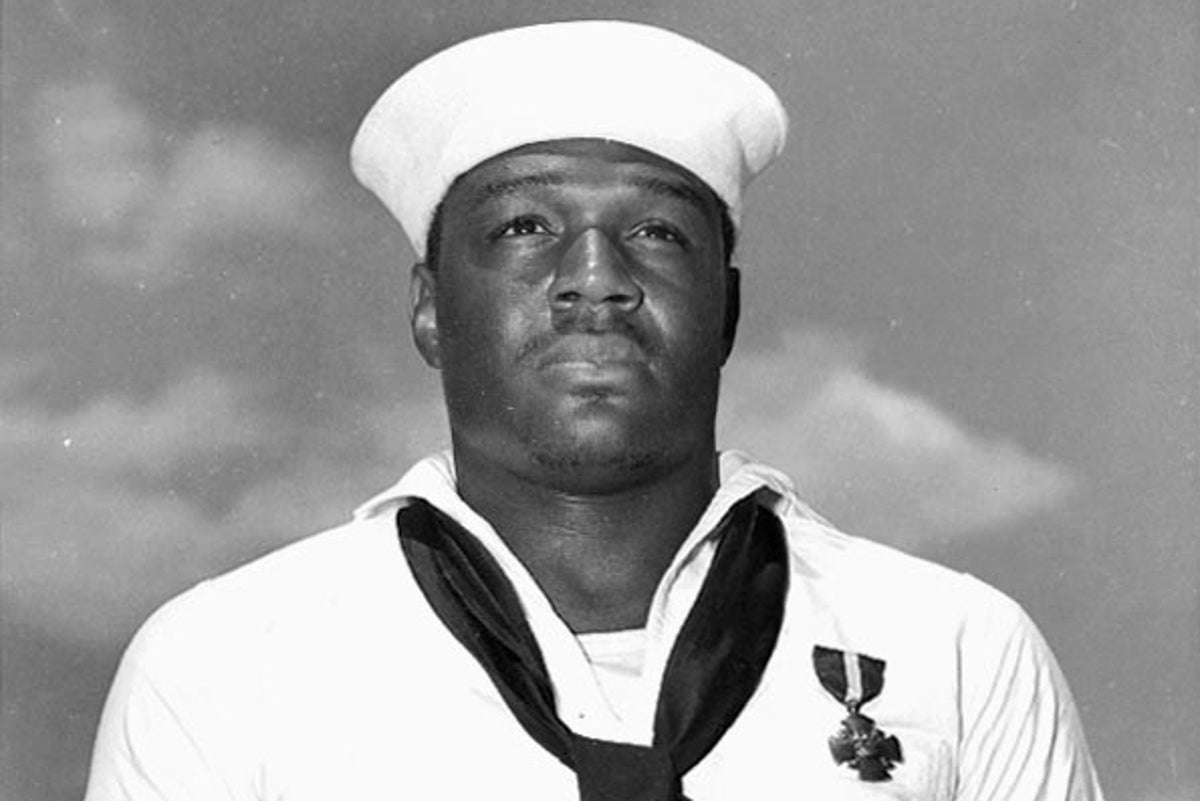
The promise was simple. It was forged in the memory of a December morning in 1941, when the sky over Oahu turned black with smoke. The bombs fell, shattering the sleeping Pacific Fleet. On the deck of the USS West Virginia, a young man named Doris Miller stood waist-deep in the wreckage of a shattered world.
Doris Miller was a mess attendant. In the Navy of that era, structured by rigid racial barriers, that rating meant he was restricted to serving food and clearing trays, barred from combat training. But history does not check a sailor's rating before it demands courage. When his commanding officer fell mortally wounded, Miller stepped forward. He dragged men to safety across a burning deck. Then, finding a .50-caliber Browning machine gun—a weapon he had never been trained to fire—he gripped the handles. He aimed at the descending enemy aircraft and pulled the trigger. He fired until the ammunition boxes clicked empty and the order came to abandon ship.
He was the first African American to be awarded the Navy Cross. He died two years later when a torpedo ripped through his ship in the Gilbert Islands, disappearing into the dark swells of the Pacific before he could ever see the nation fully live up to its own creed.
When the Navy announced in January 2020 that its fourth Gerald R. Ford-class nuclear supercarrier would be christened the USS Doris Miller, it broke a long, unbroken mold. It was the first time an aircraft carrier would ever bear the name of an enlisted sailor. It was the first time a flattop of that magnitude would honor an African American. It was a signal flare sent out across generations, acknowledging that the backbone of the fleet has always lived in the mess decks, the boiler rooms, and the repair lockers.
Consider what happens next in the quiet corridors of the Pentagon.
The shipbuilding schedules stretch outward, bogged down by industrial bottlenecks and complex engineering delays. The keel-laying ceremony approaches. And behind closed doors, the conversation shifts.
Whispers turn into internal memos. The name painted on blueprints begins to blur. Sources familiar with the discussions reveal that the Navy has quietly stopped using the name USS Doris Miller in internal communications, referring to the massive nuclear vessel solely by its alphanumeric hull designation: CVN-81.
The alternative being weighed behind those closed doors is as jarring as it is unprecedented. Officials have discussed redirecting the honor away from the Pearl Harbor hero, pivoting instead toward naming the multi-billion-dollar warship after Donald Trump.
The proposal breaks a foundational, unwritten tradition of modern American naval nomenclature. Aircraft carriers are named for presidents, statesmen, and legendary military commanders who have passed into history—monuments cast in bronze and nuclear power. To name a floating city of steel after a sitting or former president while active political divides cleave the country down the middle is a radical departure. It changes the nature of the ship from a universal symbol of national sacrifice into a partisan flashpoint.
The mechanics of this pivot involve bureaucratic sleight of hand. Reports indicate that planners are exploring alternative vessels to bear Miller's name, suggesting that perhaps a smaller, less monumental warship might suffice to honor the first Black sailor to win the Navy Cross. There is also talk of pushing for a posthumous Medal of Honor, an accolade long overdue, though it arrives tangled in the optics of substitution.
Think of the family in Waco, Texas. Thomas Bledsoe, Doris Miller's great-nephew, learned of the shifting tides not through an official delegation from the Department of the Navy, but through media inquiries. For years, his family has fought to keep the memory of a kitchen messman alive against the quiet erosion of institutional amnesia. They had looked toward 2034, the year the carrier was slated for delivery, imagining a towering gray behemoth carrying their ancestor's name across the global oceans, a testament to what an ordinary human being can do when history calls without warning.
Now, that name floats in a state of suspension.
The steel plates are being cut in Virginia. The nuclear reactors are being planned. The welding torches flare in the dark, throwing showers of white-hot sparks against the shipyard floor. But out on the water, the identity of the ship remains unclaimed.
When CVN-81 finally slides down the ways into the James River, she will carry a story. Whether that story belongs to a mess attendant who fired a gun he was never taught to use, or to the turbulent political currents of the present moment, depends entirely on the names men choose to write in permanent ink. The hull is vast enough to hold either. But it can only carry one truth.
Navy may strip Black war hero's name from ship and rename it for Trump
This video provides additional context regarding the internal discussions and public controversy surrounding the Navy's potential decision to alter the naming plans for the carrier.