The smell of a campfire is supposed to evoke memories of toasted marshmallows, acoustic guitars, and summer nights under a canopy of stars. But for the people of Lytton, British Columbia, that same scent triggers an immediate, visceral tightening in the chest. It is a sensory alarm clock that wakes up a ghost.
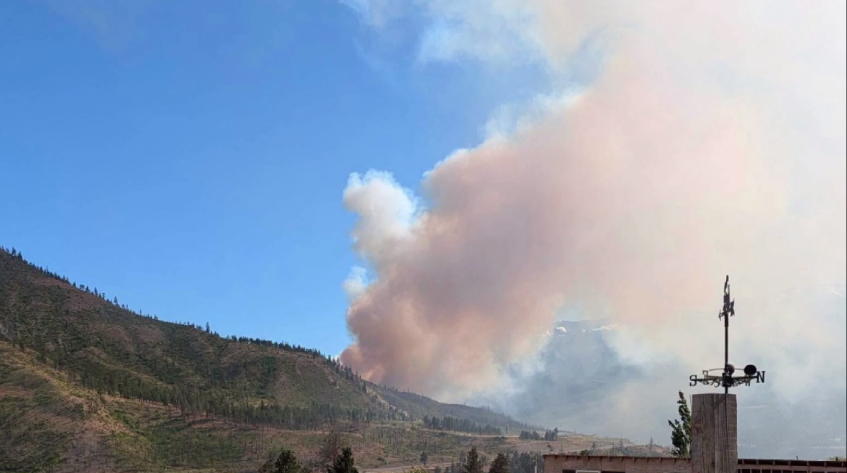
On a standard Tuesday afternoon, the air turned yellow. It wasn't the vibrant, life-giving gold of a setting sun, but a bruised, sulfurous amber that signaled trouble brewing just over the ridge. The dry needles of the pine trees, baked by days of unrelenting heat, practically vibrated with vulnerability. Then came the alert. It arrived not with a thunderclap, but with the mundane chirp of a smartphone screen lighting up. An evacuation alert. Again.
To understand what this alert means to the residents, you have to understand the geography of fear. Lytton sits at the confluence of the Fraser and Thompson rivers, a place of stunning, rugged beauty where the river canyons cut deep into the earth. It is also famously one of the hottest places in Canada. In late June of 2021, the town broke national temperature records three days in a row, peaking at a staggering 49.6 degrees Celsius. One day later, a catastrophic wildfire swept through the village, destroying roughly ninety percent of the town in a matter of minutes. Two people lost their lives. The rest lost their history, their family photos, and their sense of safety.
So, when the provincial authorities issue a new evacuation alert because a fresh blaze is chewing through the nearby timber, it is not just a logistical inconvenience. It is a psychological assault.
Consider a hypothetical resident named Sarah. She didn't grow up in Lytton, but she chose it. She loved the dry heat and the way the canyon walls caught the morning light. After the 2021 disaster, she stayed. She lived in a temporary trailer, watched the slow, agonizingly bureaucratic process of rebuilding, and finally felt like she was catching her breath. Now, she stands in her living room with a cardboard box in her hands, staring at a shelf of books.
What do you grab when you have already lost everything once before?
The first time, you grab the irreplaceable heirlooms. The second time, you realize you don't have many heirlooms left to save. You grab the passport, the laptop, the cat crate, and the medication. The process becomes mechanical, stripped of romance, dictated by survival math.
The local wildfire service reports that the nearby fire is burning out of control, driven by shifting winds and fueled by terrain that makes direct attack incredibly difficult for ground crews. Helicopters dip giant buckets into the muddy waters of the Fraser River, rising into the hazy sky to drop columns of water onto the advancing flames. The sound of their rotors is a constant, rhythmic thumping that echoes off the rock faces. It sounds like a giant, mechanical heartbeat, keeping the valley alive on life support.
An evacuation alert is a strange, purgatorial state of existence. It is not an order to leave immediately, but a command to be ready to sprint at a moment’s notice. You live in a state of suspended animation. You leave your boots by the front door. You keep the gas tank of your truck completely full. You listen to the radio with one ear while trying to make dinner with the other. Every sudden gust of wind outside makes you freeze, head tilted, testing the air for that sharp, acrid bite of burning pine.
The uncertainty is a heavy weight. If the order comes, you run. If the wind shifts, you might get to sleep in your own bed. Living under this kind of pressure changes a community. It creates a quiet, unspoken bond among neighbors. When Sarah walks down to the local store to grab a gallon of milk, no one talks about the weather in casual terms. They exchange quick, knowing looks.
"You packed?"
"Yeah. You?"
"Truck's loaded."
There is a profound exhaustion in that dialogue. It is the exhaustion of a boxer who has survived a knockout blow, dragged themselves back onto their feet, and now sees the opponent stepping back into the center of the ring.
The reality of wildfire management in Western Canada has shifted dramatically over the past decade. It used to be that fire season was a distinct period, a few weeks in late July and August when everyone held their breath. Now, the season creeps earlier into the spring and stretches deeper into the autumn. The forests are drier, the winters are shorter, and the snowpack melts away with terrifying speed. The landscape is locked in a cycle of thirst, and when the lightning strikes or a human spark catches, the earth responds with fury.
But the real problem lies elsewhere, far beyond the immediate line of fire. It rests in the collective exhaustion of rural communities that bear the brunt of these seasonal crises. When an evacuation alert is issued, businesses close. Tourists turn around. The local economy takes another bruising hit, compounding the financial strain of previous years. For a town trying to rebuild its identity from the ashes of a total loss, these repeated alerts are like stepping on a broken ankle that has barely begun to heal.
Look at the statistics from recent years, and the scope of the problem becomes clear. Thousands of square kilometers burn annually across British Columbia. Millions of dollars are spent on suppression efforts, air tankers, and seasonal crews. Yet, the numbers fail to capture the quiet moments inside a home under alert. They don't measure the sleeplessness of a parent watching the glow on the horizon from a child's bedroom window. They don't account for the anxiety of a rancher wondering if they will have to cut their fences to give their cattle a fighting chance to outrun the smoke.
The response from the community, however, is not one of despair, but of stubborn resilience. It is a quiet defiance. Voluntarily, people step up to check on elders who might not have access to social media updates. Local community centers prepare to pivot into emergency shelters at a moment's notice. Neighbors share resources, offer up space in their trailers for someone else's livestock, and keep an eye on empty properties.
This resilience is beautiful, but it shouldn't be romanticized. It is born of necessity, not choice. The people of Lytton would much prefer a boring, uneventful summer where the only news is the height of the river or the price of cherries at the roadside stand. They are tired of being a symbol of climate vulnerability. They just want to be a town.
As evening falls, the wind begins to die down, offering a temporary reprieve. The smoke settles into the valley floor like a thick, grey blanket, obscuring the jagged peaks of the mountains. From a distance, the fire looks like a jagged red scar cut into the dark slope of the ridge. It is a reminder that the danger hasn't passed; it is just waiting for the morning sun to heat the valley up again.
Sarah sits on her porch, her packed boxes visible through the window behind her. She looks out at the hazy silhouette of the hills. There is an undeniable terror in this environment, but there is also a deep, rooted love for the land that keeps people tied to it despite the risk. They know the rivers, they know the trails, and they know the names of the people down the road. You don't abandon that easily, even when the air turns to ash.
The alert remains in place through the night. The smartphones stay on the nightstands, fully charged, volume turned up to the maximum setting. In the dark, the town waits, listening to the distant drone of the helicopters settling down for the night, and the quiet, unpredictable rustle of the wind through the dry grass.