The sirens do not sound the same when you are standing on the other side of the yellow tape. To the city, they are a distant wail, an electric scream slicing through the humid summer air of a Philadelphia night, signaling an inconvenience or another statistic for the morning paper. But to the families waiting at kitchen tables with coffee cups growing cold, that sound is a falling sky.
It was supposed to be a routine shift. Those three words are the most dangerous lie in public safety. They imply a quietude that never truly exists in a sprawling metropolis, a temporary truce between the city's undercurrents of desperation and the men and women who stand between them. On this particular night, in the neighborhoods of Philadelphia, the thin blue line stretched out against the dark, bearing the quiet, crushing weight of a society's unresolved fractures.
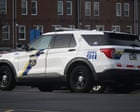
Consider what happens in a split second. A vehicle stop. A foot pursuit. A flash of silver metal, a deafening crack, and the fundamental physics of a community change forever.
One officer down. Another wounded.
We read these headlines with a numbing regularity. We scroll past them on our phones while waiting for the subway or standing in line for morning espresso. The names blur. The badge numbers become abstract data points. Yet behind every uniform is a human being who laced their boots before sunrise, kissed a spouse or a child goodbye, and stepped out the door into a world that can turn lethal without warning.
The violence that erupted on that Philadelphia street was not born in a vacuum. It was the explosive collision of illegal firearms, frayed community trust, and split-second human terror. When a suspect with a gun makes the irrevocable choice to fire upon peace officers, they shatter more than bone and tissue. They tear open the fragile social contract that allows millions of people to walk the streets without looking over their shoulders.
Think about the surviving officer. Not just the physical trauma of the hospital bed, the sterile smell of antiseptic, the rhythmic beep of monitors tracking a heart trying to comprehend grief. Think about the psychological aftermath. How do you return to that street? How do you look into the eyes of a nervous driver during a routine traffic stop when your nervous system remembers the exact pitch of gunfire?
Bravery is not the absence of fear. It is the agonizing decision to put your boots back on after you have already seen what the dark can do.
In communities across America, the relationship between law enforcement and the neighborhoods they patrol remains tense, complex, and desperately in need of repair. Yet in the immediate aftermath of a tragedy like this, the ideological debates fade into the background, replaced by the raw, universal language of mourning. A precinct is draped in black bunting. Flags drop to half-mast. Grown men and women who have stared down criminals weep openly in hospital corridors because they have lost a brother, a partner, a protector.
We must ask ourselves hard questions about how easily lethal weapons find their way into the hands of those willing to use them against the very people sworn to keep the peace. But we must also reckon with the human cost of wearing the badge in an era of unprecedented volatility. Every shift is a gamble where the house holds a loaded weapon.
The street where the gunfire echoed has long since been washed clean. The news vans have packed up and moved on to the next breaking crisis. But in the homes of the fallen and the wounded, time has stopped entirely.
Night falls again on Philadelphia. The sirens still wail in the distance. And somewhere out in the dark, another officer steps out of a cruiser, closes the door, and walks into the shadows, carrying the weight of us all.