The warehouse floor hummed with a low, bone-deep vibration. Dust motes danced in the pale shafts of light cutting through high, industrial windows. Stacked crate upon crate, row after endless row, rested the steel sinews of modern power. To walk down these aisles is to feel a strange, paradoxical quiet. This is where abstract numbers on a budget spreadsheet transform into cold, heavy reality.
For months, the headlines had beaten a steady, frantic rhythm of depletion. We were told the cupboards were bare. We were led to believe that the grand storehouses guarding the peace of nations were echoing chambers, empty save for dust and rusted hinges. Pundits furrowed their brows on television screens, warning of a precipitous cliff, a moment when the shelves would flip upside down to reveal absolute nothingness.
Then came the voice from the podium.
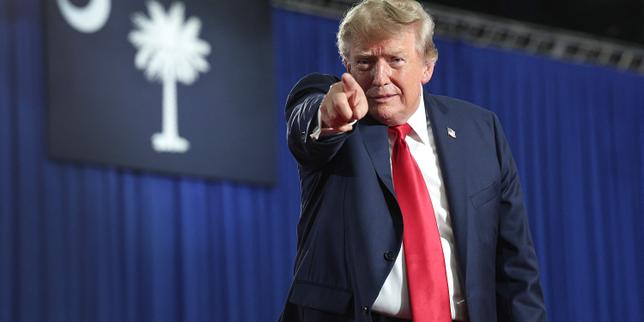
Donald Trump pushed back against the narrative with characteristic bluntness, asserting that the nation possesses more than enough military material. No shortage. No empty vaults. Just an immense, sprawling inventory sitting quietly in the shadows, waiting for someone to acknowledge its actual scale.
Consider the cognitive dissonance. How can two realities exist simultaneously? How can the public consciousness be gripped by a narrative of acute lack while the physical depots groan under the sheer weight of surplus?
The answer lies not in mathematics, but in perception.
Military logistics is a peculiar beast. It operates on margins so vast they defy ordinary human comprehension. When a defense analyst looks at a stockpile, they do not see a pile of artillery shells or precision guidance systems. They see burn rates. They calculate conflict projections in worst-case scenarios, measuring days of sustained high-intensity combat down to the final decimal point. By those hyper-cautious metrics, a massive reserve can suddenly look precarious. If you plan for a global conflagration tomorrow, yesterday's abundance feels like tomorrow's famine.
Yet, stepping inside the perimeter of these facilities reveals a different truth. The inventory is staggering. It stretches beyond the horizon of immediate need.
Imagine standing before a pallet of ordnance that cost millions to manufacture, encased in protective polymer, tagged with serial numbers that trace back through complex supply chains spanning continents. This is not casual hardware. It is geopolitical leverage cast in iron and titanium. To claim it is scarce requires a very specific kind of accounting, one that measures adequacy not by what is present, but by what might conceivably be required in an apocalyptic future.
When leaders clash over these numbers, the argument quickly escapes the realm of cold facts and enters the theater of political optics. Scarcity is a powerful rhetorical tool. It opens wallets. It fast-tracks bureaucratic approvals. It creates an urgent sense of necessity that bypasses the sluggish machinery of peacetime governance. If the public believes the shelves are empty, the public will nod along as new fleets of steel roll off the assembly lines.
Conversely, admitting to abundance invites a different kind of scrutiny. It raises awkward questions about allocation, waste, and fiscal stewardship. If we already have enough, why are we buying more? Where does the line blur between preparedness and excess?
To understand this dynamic, one must look past the press releases and examine the machinery of industrial-scale defense. Modern manufacturing does not stop on a dime. Factories designed to churn out tactical equipment maintain a relentless inertia. Once the assembly lines are hot, shutting them down is perilous. Lose the engineers, lose the specialized toolmakers, and you lose the capability entirely. Therefore, production continues, feeding into reserves that are already robust, creating a continuous loop of accumulation.
The tension between what is consumed on distant fields and what sits rusting or resting in domestic depots is the invisible fault line of modern strategy. Every shell fired abroad triggers a debate at home about replacement velocity. But velocity is often confused with capacity. A temporary bottleneck in production is not the same thing as an empty warehouse.
We live in an era allergic to nuance. We prefer our crises neatly packaged. Either the vaults are overflowing or they are barren. Reality, as usual, refuses to cooperate with such tidy binaries. The reserves are substantial, massive even, yet the anxiety surrounding them is equally real, born of a world growing increasingly volatile and unpredictable.
Walk past the crates one last time. Hear the faint hum of climate-controlled air keeping the electronics dry. The steel does not care about the political theater playing out in the capital. It rests in the dark, heavy and silent, waiting for a command that everyone hopes will never come.