The morning air in the valley carries the scent of damp earth and woodsmoke. To an outsider standing on a ridge overlooking the demilitarized zone, the silence is startling. It is a quiet that feels heavy, pregnant with a tension so old it has fossilized into the hills themselves.
Here, history is not written in textbooks. It is written in concrete, in razor wire, and in the synchronized rhythm of boots hitting asphalt miles to the south. For an alternative look, consider: this related article.
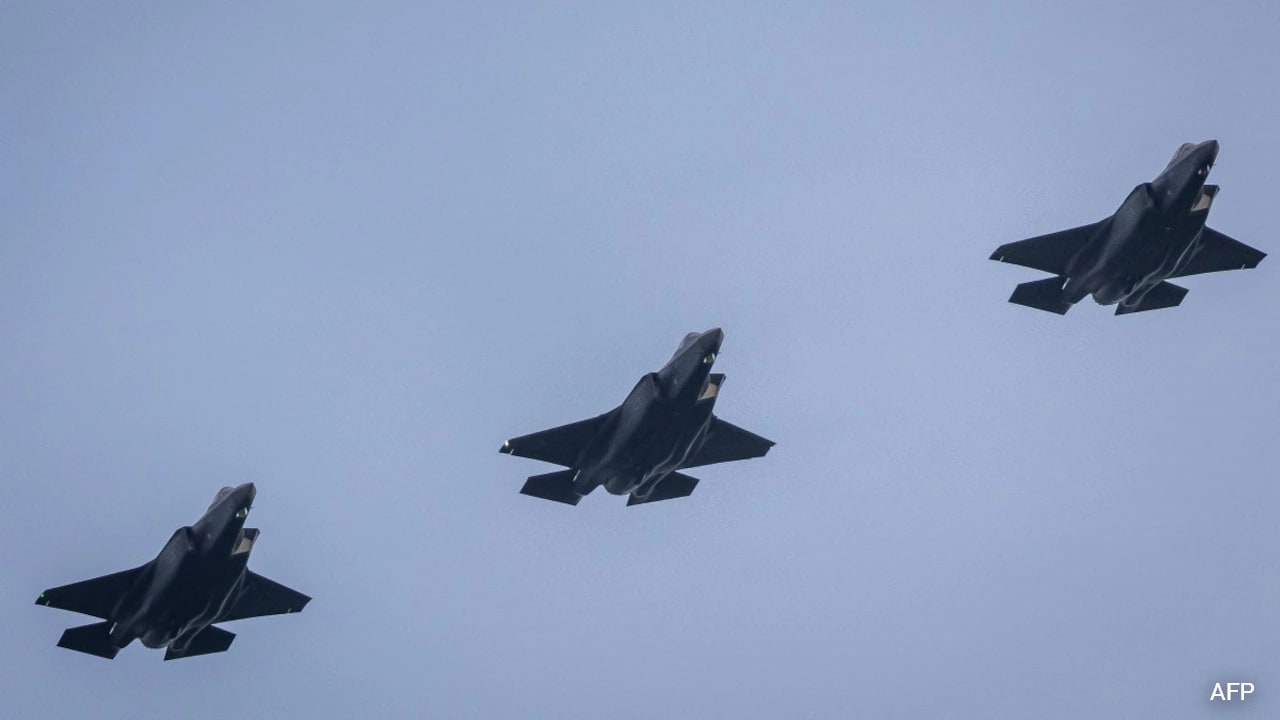
Every few months, the calendar turns and the machinery wakes up. Across the Pacific and deep into the command centers of the south, planners coordinate movements of steel and digital code. Ships slip out of naval bases, their hulls cutting gray water. Jets scream down runways, lifting heavy payloads into the stratosphere. These are the joint military exercises, designed to test readiness, signal deterrence, and reassure allies. To the military planners in Washington and Seoul, they are routine diagnostics. They are the maintenance checks of an alliance forged seventy years ago in fire and ice.
But across the demarcation line, beneath portraits that watch from every public wall, the view is entirely different. Similar insight on this trend has been provided by NPR.
When the rumble of distant engines reaches the northern capital, it is not interpreted as routine. It is read as an existential rehearsal. It is viewed as the prelude to an invasion packaged as practice. And so, the machinery responds in kind. Statements are drafted in rooms stripped of softness, laden with warnings of preemption and retaliation. The latest dispatches from state media do not just condemn the drills; they promise a escalation, a shift toward what is ominously termed a more offensive posture.
Words like this travel fast. They bounce across satellite feeds, fill cable news segments, and settle into the quiet anxieties of millions of people who live within artillery range of a border that has never truly closed.
Consider what happens next in the mind of an ordinary civilian in Seoul or a farmer in North Hwanghae Province. For them, geopolitics is not a policy paper or a strategic briefing. It is the subtle tightening of a knot in the stomach when a headline flashes across a screen. It is the background hum of an old anxiety, woven into the fabric of daily life so thoroughly that people forget it is there until a fresh threat rattles the glass.
Deterrence is a strange, paradoxical art. It operates on the premise that if you want peace, you must prepare for total destruction. You build bigger walls, sharper spears, and faster retaliatory loops. You conduct massive drills to prove you can strike back before the enemy even blinks.
Yet every time one side sharpens its spear, the other feels compelled to forge a heavier shield, or a sharper spear of its own. This is the spiral. It is an ancient trap, dressed up in modern technology.
The recent condemnation from Pyongyang following the joint maneuvers is just another turn of that screw. When officials in the North label the drills a direct provocation and threaten a harsher response, they are speaking a language of absolute posture. In their calculus, showing restraint is interpreted as weakness. Showing strength is the only currency that matters.
Down in the south, the calculus is mirrored. To cancel or scale back the drills in the face of threats would, from that perspective, invite greater danger. It would signal hesitation, cracking the bedrock of an alliance that relies entirely on predictability and unwavering resolve.
So the exercises proceed. And the warnings follow.
Step back from the map and look at the sheer scale of the inertia. Decades have passed since the armistice was signed in a hastily constructed tent at Panmunjom. Generations have been born, grown old, and passed away under the shadow of this unresolved conflict. The original actors are long gone. The ideologies that split the peninsula have evolved, mutated, and calcified. Yet the posture remains identical. Two heavily armed forces staring across a two-mile strip of land, locked in a permanent defensive embrace that feels increasingly like a stranglehold.
There is a rhythm to it all. A season of maneuvers, a season of rhetoric, a season of quiet diplomacy that yields little ground, followed by a return to the baseline tension. People adapt to it. They have to. Cafes stay open. Markets bustle. Children walk to school beneath a sky that might hold anything. The human capacity to normalize the abnormal is staggering.
Yet, beneath that normalization, the stakes remain absolute.
When a government promises a more offensive response to defensive drills, it introduces a dangerous variable into an already volatile equation. In a crisis, miscalculation is rarely born of grand malice. It is born of exhaustion, of misread signals, of a radar blip interpreted in the worst possible light because trust was bankrupt decades ago.
When two runners are sprinting toward each other on a narrow ledge in the dark, screaming warnings to get out of the way, the volume of the shouting does not prevent the collision. Eventually, the noise becomes background static, and only the momentum matters.
The true tragedy of the Korean Peninsula is not just the division of a people or the threat of modern weaponry. It is the tragic predictability of the loop. Every participant is trapped in a script written by their grandfathers, playing their assigned roles with grim fidelity. The West demonstrates capability. The North demonstrates defiance. The cycle repeats, hardening the lines a little further each time, making the eventual pivot toward reconciliation feel more like an impossible dream than a practical goal.
Standing on that ridge overlooking the border, looking out over the silent, scarred landscape, the wind carries a faint metallic tang. It is the smell of machinery cooling down, waiting for the next cycle to begin. The hills do not care about communiques or threat assessments. They only watch, patient and indifferent, as the descendants of a broken nation continue their endless dance along the edge of the precipice.