The room smells of old paper, damp wool, and the faint, bitter metallic tang of cold coffee. It is 3:00 AM in a nondescript government office, the kind with flickering fluorescent tubes that hum a flat, exhausting B-flat. On the laminate desk sits a map, its edges curling under the weight of three different colored highlighters. A junior analyst, let's call her Sarah, presses the heels of her hands into her eye sockets until purple sparks dance across her retinas.
She is staring at a choice. Move a convoy left, and a fragile peace holds for forty-eight hours while a civilian supply line starves. Move it right, and the trucks deliver grain, but a radical faction takes the movement as an act of war.
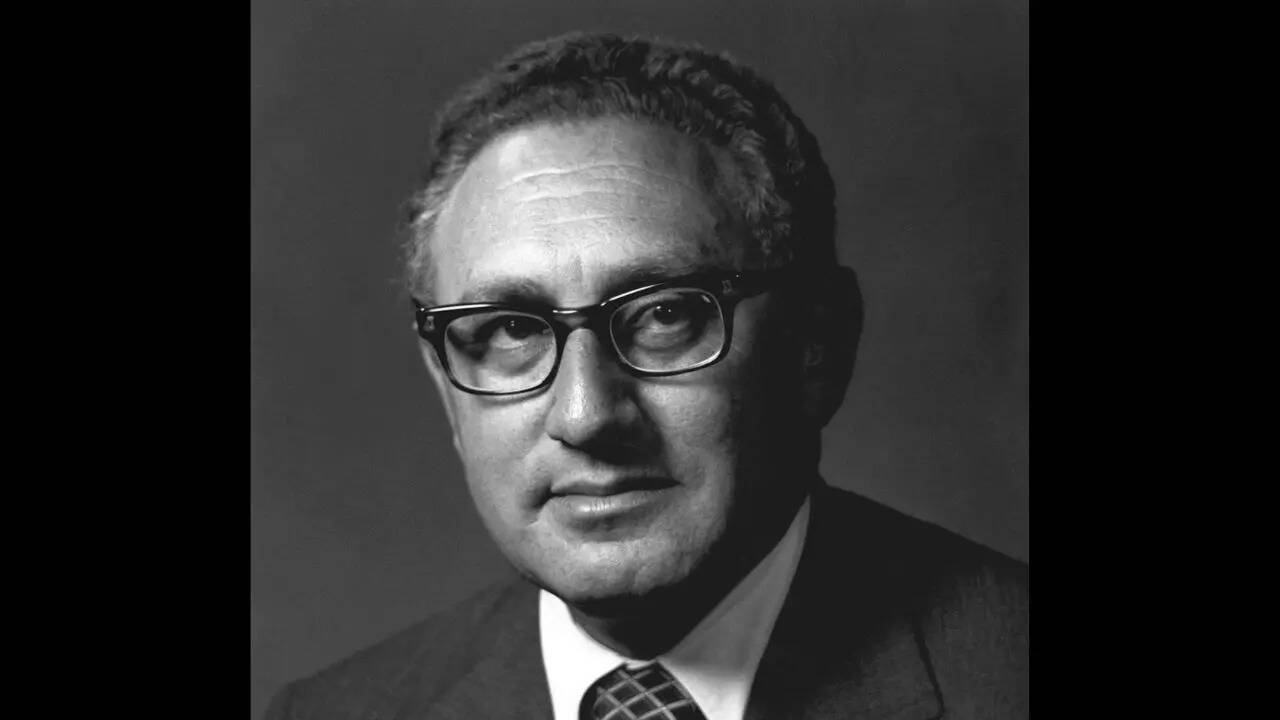
Sarah is not a president. She is not a general. But she is experiencing, in microcosm, the crushing gravity of what Henry Kissinger meant when he spoke his famous, unfinished fragment: "Blessed are the people whose leaders can look destiny in the eye without flinching but also without…"
The quote often cuts off there in digital archives, a fragment floating in the vacuum of internet quote-bots. The missing word is presumption. Or illusion. The full thought reminds us that the true test of leadership is the ability to face an uncertain future with absolute courage, yet without the dangerous arrogance of believing you can micro-manage fate.
We live in a culture that worships the unflinching glance. We love the myth of the lone, decisive leader who stares into the abyss, points a finger, and commands history to march. We see it in boardroom profiles, political campaigns, and cinematic historical dramas. We are told that hesitation is weakness.
But history tells a darker story. The most catastrophic errors rarely come from leaders who flinched. They come from leaders who looked destiny in the eye, smiled, and assumed they owned it.
Consider the difference between two distinct mental states: clarity and certainty.
Clarity is looking at the map and seeing the swamp for what it is—treacherous, shifting, and deep. Certainty is looking at the same swamp and declaring it a paved highway because your ideology demands a swift march. When a leader lacks flinching but possesses presumption, they stop gathering data. They stop listening to the Sarahs of the world who are smelling the damp wool and watching the real-world variables shift.
Think of a captain navigating a ship through a dense fog in the North Atlantic. An unflinching captain stays on the bridge. They do not hide in their cabin. They look into the gray soup with steady eyes. But if that captain possesses presumption, they maintain maximum speed, convinced their calculations are infallible, that the icebergs will yield to their resolve.
That is how ships sink.
The real courage is far more agonizing. It is the courage to act decisively while carrying the terrifying weight of knowing you might be wrong. It is the willingness to make the call at 3:05 AM, sign the order, and then spend the rest of the night staring at the ceiling, haunted by the human cost of your limitations.
Our world is currently obsessed with predictive algorithms and data modeling. We try to outsource the terror of destiny to software. We want to believe that if we just feed enough data points into a machine, the future will become a solvable equation. We want to eliminate the human element of leadership because the human element is messy, fragile, and prone to grief.
But algorithms cannot look destiny in the eye. They can only look at the past and project it forward in a straight line. They cannot account for the sudden, irrational spark of human bravery, or the chaotic ripple of a single, unpredicted choice.
When we strip away the grand language of geopolitics, the core truth of Kissinger's observation lands right on our doorstep. This isn't just about presidents or historical figures making decisions in wood-panneled rooms. It applies to a parent deciding whether to move their family across the country for a new job. It applies to a physician recommending a radical treatment plan. It applies to an entrepreneur risking their life savings on an unproven idea.
You must look at your own horizon without blinking. You cannot let fear paralyze your hands on the wheel. But the moment you lose your humility—the moment you believe you have outsmarted the inherent chaos of existence—you invite disaster.
Sarah eventually drops her hands from her face. The fluorescent light hums on. She picks up the black phone on her desk to make her recommendation. Her hand is steady, but her chest feels tight. She knows the map is just paper. She knows the real world is waking up out there in the dark, full of real people who will feel the weight of her choice.
She doesn't flinch. But she doesn't smile either. She just breathes in the cold air of the room, accepts the uncertainty, and speaks into the receiver.