The air inside MetLife Stadium did not feel like June. It felt like a pressure cooker wrapped in concrete. Eighty thousand people do not just make noise; they generate heat, a collective, vibrating humidity born of spilled beer, synthetic jersey fabric, and the terrifying realization that four years of waiting have finally evaporated.
For months, the billboards stretching down the New Jersey Turnpike promised a spectacle. They promised a global celebration. But when the fireworks finally stopped rattling the stadium glass and the smoke cleared from the pitch, the opening ceremony ceased to be about entertainment. It became a crucible.
To the casual observer scrolling through a sports feed, the final scoreline reads like an inevitability. A comfortable victory for the United States over Paraguay. A dominant opening statement. But scorelines are flat, two-dimensional obituaries of ninety minutes that were anything but simple. If you only look at the numbers, you miss the sweat. You miss the precise moment a young midfielder’s jaw tightened when he realized the grass was stickier than he expected. You miss the invisible weight that sits on the shoulders of teenagers asked to carry the geopolitical ego of a superpower on the tips of their neon-colored cleats.
The Illusion of the Easy Win
Every tournament has a script, written by pundits who have never felt their hamstrings tighten under the glare of a hundred television cameras. The script said the Americans would roll. They had the European pedigree, the home-field advantage, and the luxury of a deep bench.
But football is rarely authored by logic.
Consider the first ten minutes. The stadium is a wall of sound, a sensory overload that clogs the lungs. The American squad, heavily favored, looked momentarily paralyzed by the sheer scale of the moment. Every pass was a fraction of a second late. The ball didn’t zip across the grass; it thudded. Paraguay, playing with the desperate, feral energy of a team with absolutely nothing to lose, suffocated the spaces.
This is the hidden tax of the opening match. It is not a test of skill, but a test of nervous system management. The home crowd demands a masterpiece, but the players are just trying to remember how to breathe. When a simple five-yard square pass rolls into touch, a collective groan ripples through eighty thousand throats. It is an ugly, heavy sound. It tells the players that the grace period lasted exactly four minutes.
Then came the breakthrough, a moment born not of tactical genius, but of pure, stubborn individual will. It wasn't a beautiful sequence of tiki-taka passing. It was a recovery. A lost ball in midfield, a lung-bursting sprint backward, and a tackle that echoed in the lower bowl. That single defensive action shifted the tectonic plates of the match.
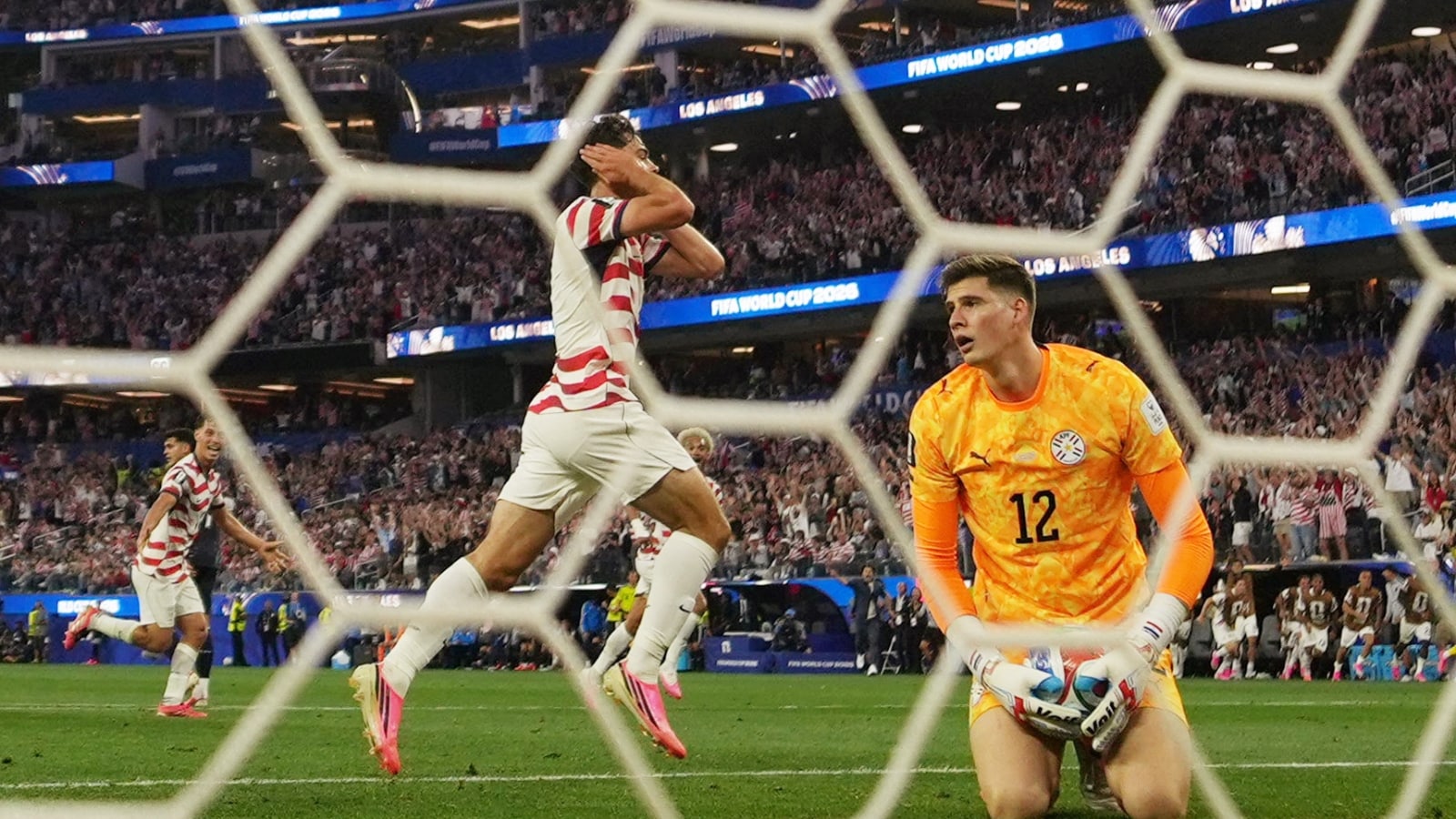
The American breakthrough followed shortly after, a clinical finish that broke the Paraguayan resistance like dry kindling. Suddenly, the spaces opened up. The ball moved faster. The nervous tension that had anchored the hosts to the turf transformed into momentum.
The Quiet Reality on the Other Side
We rarely talk about the losers of an opening night. They are treated as props, necessary extras hired to fill the frame while the protagonists celebrate under the confetti.
But watch the Paraguayan captain at the hour mark. His hands are on his hips. His jersey is darker than his teammates', soaked through with the effort of covering miles of empty space that his tired legs could no longer close. There is a specific kind of cruelty in watching a game get away from you on a global stage. You can see the exact moment the belief drains out of a team. It starts in the ankles, creeps up to the knees, and finally manifests as a blank, staring gaze toward the coaching staff on the sideline.
They did not play poorly. They simply ran out of answers for a team that could sub on Champions League veterans while they were relying on kids from the domestic league who looked entirely awestruck by the size of the screens hanging above them.
The match ended with a flurry of goals that made the result look routine. The post-game analysis will speak of tactical superiority, of expected goals, of structural flaws in the Paraguayan low block. They will call it easy.
But nothing about this night was easy. The victory was earned in those miserable, breathless first twenty minutes when the match could have tipped into disaster. The tournament is long, and far greater tests await the Americans than a brave but limited Paraguayan side. Yet, as the fans streamed back out toward the parking lots, chanting into the humid night air, the relief was palpable. The hosts had survived their own expectations.