The chlorine smell never quite leaves the skin. It settles into the cuticles, clings to the coarse fibers of heavy-duty overalls, and lingers long after the sun has dropped behind the dense canopy of the Kivu hills. For the men and women tasked with burying the dead during an Ebola outbreak, the hardest part is rarely the physical labor of turning the red earth. It is the silence.
Imagine walking into a neighborhood where every doorway is shut tight. The wooden shutters are bolted from the inside. Curtains twitch, but no eyes meet yours. Children who once ran alongside the trucks, shouting and laughing, now scatter behind mud-brick walls as if the very presence of a decontamination team could summon the virus out of thin air.
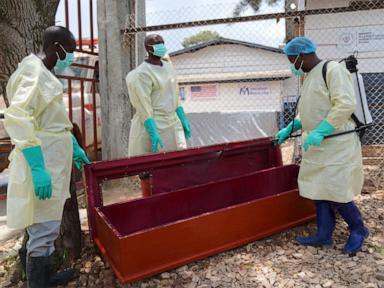
To understand what it means to be a burial worker in the Democratic Republic of Congo, you have to strip away the clinical terminology of public health reports. The statistics tell a neat, sterile story of transmission chains and epidemiological curves. They do not tell you about the stones thrown at tin roofs. They do not capture the sound of a grieving mother screaming curses at the sky because her son is being lowered into a grave by strangers in yellow plastic hazmat suits, wrapped in white plastic sheets, denied the quiet dignity of a traditional wake.
Fear is a rational actor here. When an invisible enemy turns the human body into a biohazard, cultural rituals that span centuries—washing the dead, dressing them in their finest clothes, holding an all-night vigil—become lethal traps. The Ministry of Health and organizations like the World Health Organization understood this early on. They knew that safe and dignified burials were the firewall holding back exponential contagion. If families buried their loved ones in secret, according to custom, the virus would leap quietly from the corpse to the living.
So, teams of local volunteers were recruited. They were given training, protective gear, and a nearly impossible mandate: perform safe burials while convincing traumatized, grieving communities that you are not their enemy.
Consider what happens next. A team arrives in a village where a respected elder has just passed away. The family is already exhausted from days of nursing the sick, spending what little money they had on unproven remedies, watching helplessly as the disease ran its course. Now, strangers arrive looking like astronauts, bearing sprayers filled with chlorine solution. They speak in official tones about protocols and containment.
To the family, these workers do not look like saviors. They look like an occupying army enforcing an incomprehensible decree.
Is it any wonder that community anger flares?
During the height of the outbreaks, this anger often boiled over into violence. Vehicles were smashed with rocks. Teams were chased down narrow paths with machetes. Rumors swirled through marketplaces like wildfire—absurd, terrifying whispers that the burial teams themselves were bringing the sickness, or harvesting organs, or poisoning the water wells.
Fatigue is another silent killer on these front lines. The psychological toll of working day after day in oppressive equatorial heat, sealed inside impermeable suits where sweat pools in the rubber boots, erodes the human spirit. Workers talk about the dreams. They dream of the chlorine sprayers running empty while a crowd closes in. They dream of faces distorted by grief and panic. They wake up in the damp pre-dawn hours with their muscles aching, knowing they must put the suit back on.
Yet, despite the hostility, despite the exhaustion, the most remarkable part of this story is the persistence of empathy.
The turning point in many resistant communities never came from the arrival of more police or stricter rules. It came from patience. It came when burial teams started bringing local elders into the planning process. It happened when team members began speaking the local dialects, acknowledging the profound agony of a forbidden funeral, and listening to the accusations without defensive shouting.
When a burial team stops acting like an enforcement agency and starts acting like a neighbor bearing an impossible burden, the dynamic shifts. A brave uncle steps forward to observe the process from a safe distance, verifying that his brother is treated with respect. A grandmother nods, giving silent permission for the chlorine to be sprayed.
The work is grueling, unglamorous, and fraught with danger. But every safe burial completed without a riot is a quiet victory won against both a lethal virus and the isolating terror it brings. The men and women in the yellow suits carry more than just bodies; they carry the fragile trust of communities pushed to the absolute edge of endurance.
When the sun finally sets over the hills and the last sprayer is emptied and scrubbed clean, the quiet returns. The village is still there, scarred and weary, but holding together against the dark.