The cold does not whisper. It punches.
It hits the lungs first, a sudden, brutal contraction that steals every ounce of air, leaving the chest burning as if inhaling crushed glass. Most human beings will spend their entire lives avoiding that specific brand of agony. Lewis Pugh chose to swim right into the heart of it.
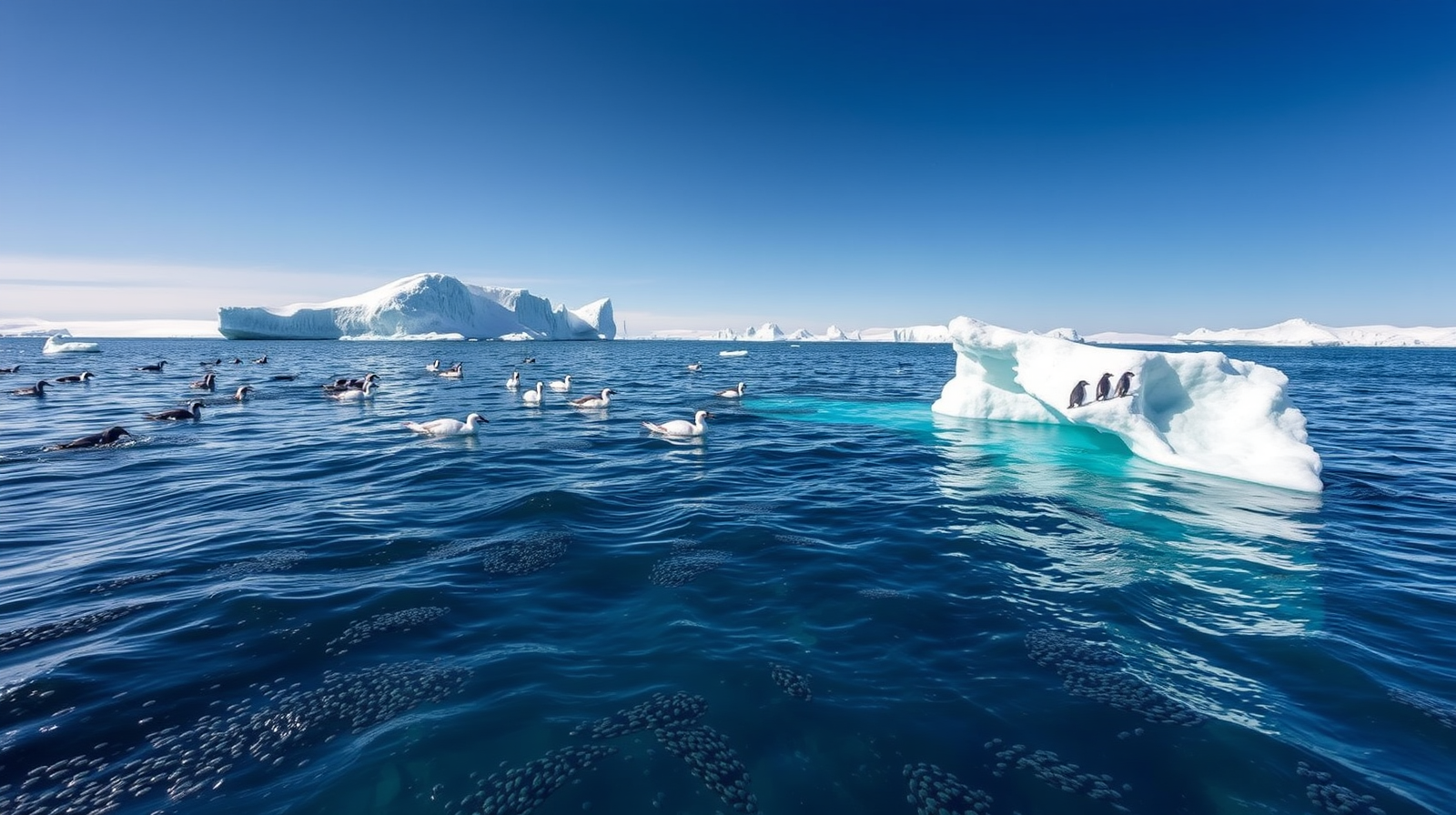
Picture a man standing at the edge of the world. Beneath his bare feet, ancient ice groans, shifting under an indifferent sky. Ahead lies the Antarctic Ocean. The water temperature hovers stubbornly below freezing, kept liquid only by the relentless salt and the violent winds roaring off the polar plateau. A single minute in this sea can trigger cardiac arrest. Ten minutes can induce terminal hypothermia.
Yet, he stepped in.
Stroke. Recovery. Breath. Stroke. Recovery. Breath.
To understand why a man would subject his body to such localized torture, you have to look past the physical endurance. You have to look at the maps.
For decades, the Southern Ocean was viewed as an infinite buffer. It was too vast, too remote, and too savagely cold for human interference to ever truly matter. Ships crossed it. Whalers hunted in it. But the deep, dark abyss of the Weddell Sea remained largely locked away behind impenetrable armor of multi-year pack ice.
Then the ice began to soften.
Science tells us that the polar regions are warming at an alarming rate, acting as an early warning system for the entire planet. But numbers on a spreadsheet rarely stop anyone from scrolling to the next video. Statistics lack a pulse. They fail to convey the terrifying beauty of a collapsing shelf or the quiet desperation of creatures whose entire evolutionary blueprint relies on a frozen floor.
Lewis Pugh did not go to Antarctica to set a swimming record. He went to serve as a biological translator. By plunging into the sub-zero brine in nothing more than a Speedo, cap, and goggles, he brought global attention to a realm most people will never see. He put a fragile human body against an immense, imperiled wilderness, creating a stark contrast that cameras could not ignore.
Consider what happens next when the world actually watches.
When leaders are forced to look at footage of a man swimming through slush ice, abstract environmental policy transforms into a visceral rescue mission. The numbers start to mean something.
In October 2016, after years of grueling diplomatic friction and high-stakes international negotiations, something extraordinary happened. The Commission for the Conservation of Antarctic Marine Living Resources met in Hobart, Australia. Twenty-five nations and the European Union sat around a table. Interests collided. Politics flared. Economies pulled in opposite directions.
Yet, agreement was reached.
They drew a line around 1.55 million square kilometres of the Southern Ocean.
One point five five million. Say it out loud. It is an area larger than France, Germany, and Spain combined, now designated as the world's largest marine protected area. Within those boundaries, industrial fishing is barred. Commercial trawlers are locked out. The fragile nurseries of krill, the hunting grounds of colossal squids, the migration paths of majestic blue whales, and the icy homes of Emperor penguins suddenly found a legal shield.
It was a victory born from cold water and relentless human stubbornness.
Pause for a moment and think about the sheer scale of that sanctuary. It is easy to look at global ecological crises as avalanches—too heavy to stop, too fast to redirect. We are fed a daily diet of doom, conditioned to believe that ordinary people are powerless spectators watching a slow-motion catastrophe.
The Antarctic sanctuary proves that premise entirely false.
Change rarely arrives via a unanimous bolt of societal enlightenment. It arrives because individuals refuse to accept the status quo. It happens because a swimmer turns his skin blue so that policymakers can see red. It happens because scientists spend decades whispering warnings into the wind until someone finally builds a megaphone out of audacity.
The treaty protecting the Ross Sea is not permanent. Portions of it have expiration dates tied to international reviews. The geopolitical winds shift constantly. Nations that agreed yesterday might look hungrily at untapped resources tomorrow. The protection is a fortress, yes, but the walls require constant maintenance.
When you look at a globe, Antarctica sits at the bottom like a heavy white anchor. If you pull it loose, the rest of the map unravels. Sea levels rise. Current patterns fracture. Marine food webs collapse from the top down.
The water in the Southern Ocean remains impossibly cold. The winds still howl across the ice shelves with a fury that humbles the strongest ships. But beneath that dark, freezing surface, millions of square kilometres of ocean breathe a little easier tonight, shielded by a line drawn on paper and forged in ice.
The swimmer climbs out of the water, shivering uncontrollably, his skin the color of a bruised plum. Assistants wrap him in heavy blankets, pouring hot liquid into his shaking hands. He looks out over the gray, rolling waves, knowing the fight is far from over.
Neither is ours.