Ice does not vanish in silence. It groans.
High above the clouds, where the air thins until your lungs feel like dry paper, the glaciers of the Tibetan Plateau are dying. For centuries, this massive geological shield—stretching across borders from the high passes of Nepal to the remote frontiers of China—has held the frozen wealth of Asia. It is the Third Pole. It is the roof of the world. And it is leaking.
If you have never stood beneath a shrinking wall of ancient blue ice, let me paint the sensory reality for you. The sound is not majestic. It is a wet, heavy crack, followed by the dull thunder of millions of tons of compacted snow sliding into an abyss. The air smells of crushing stone and absolute cold. But beneath that cold, a strange humidity hangs in the wind. The ice is sweating.
When you trace the path of those drops down the jagged slopes of the Himalayas, you realize something terrifying. Those drops are not just water. They are the daily survival of nearly two billion human beings.
The Geography of Thirst
Consider Tashi, a hypothetical farmer whose real-world counterpart exists in a hundred mountain villages across Nepal. Tashi wakes up before dawn. He walks to the glacial stream that has fed his terraced barley fields for as long as his family can remember. Ten years ago, the stream ran loud and clear through the morning mist. Today, it is a sluggish trickle of gray silt, or worse, a dry scar of grey gravel.
Upstream, the glacier that feeds him is retreating faster than scientific models predicted. Scientists tracking the region note that ice losses in the Hindu Kush Himalaya region have accelerated at an alarming rate over the last few decades. The high-altitude permafrost is thawing. The frozen anchors that hold the mountains together are turning to mud.
This is not just a localized tragedy for the sherpas and farmers of the high valleys. It is a countdown.
When a glacier melts slowly, it acts like a savings account, paying out a steady dividend of meltwater through the dry summer months. But when a glacier melts too fast, the account empties. The dividend becomes a flood, and then, nothing at all.
The Cascading Threat
To understand what happens next, we have to look past the pristine white peaks and down into the deep valleys where the geography turns violent.
As the ice vanishes, it leaves behind unstable moraine dams—gigantic, loose walls of rock and debris holding back newly formed glacial lakes. Think of them as giant, cracked earthen bowls perched precariously on the edge of a cliff. When heavy monsoon rains hit, or when too much ice calves off at once, these natural dams burst.
This phenomenon is known as a Glacial Lake Outburst Flood, or GLOF. It is a tsunami made of mud, boulders, and water rushing down a mountain chute at fifty miles an hour. Bridges vanish. Entire villages are erased in minutes. Hydroelectric plants, built to power the modernizing economies of Asia, are smashed to rubble before they can generate a single kilowatt-hour of clean energy.
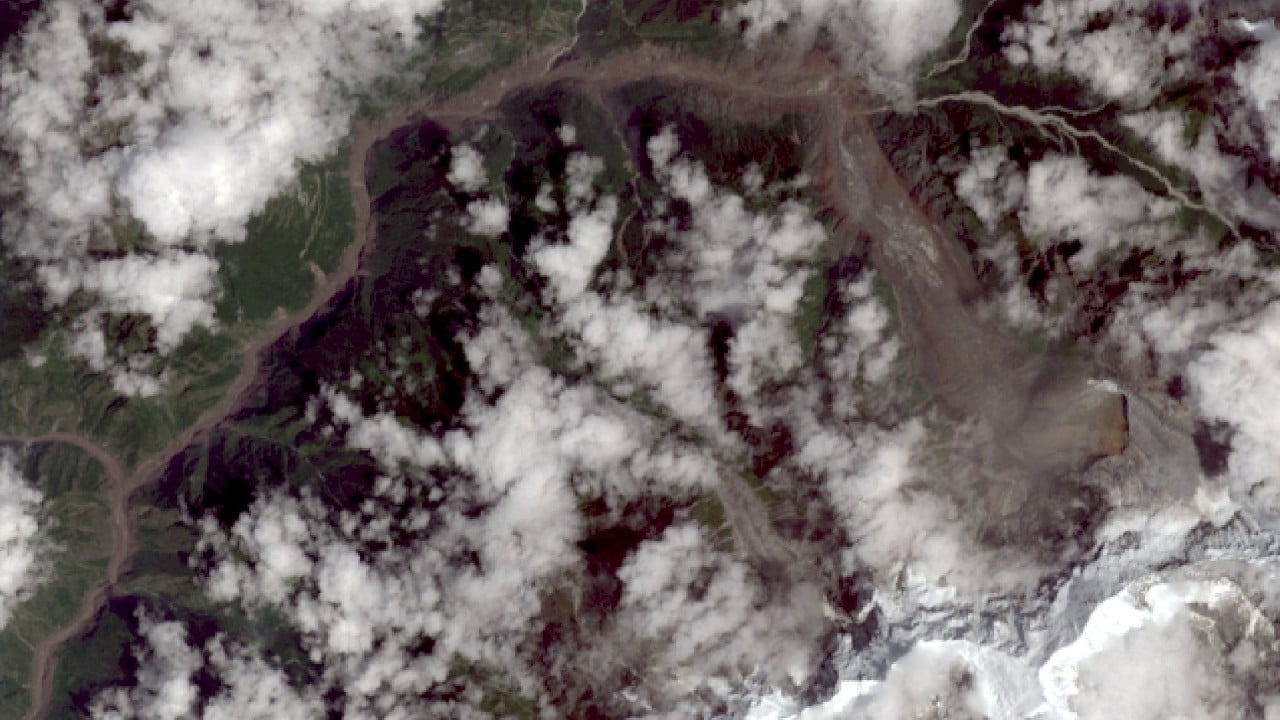
I have spoken with hydrologists who look at satellite data of the Tibetan Plateau with a profound sense of dread. They do not talk in the sterile language of statistics. They talk about tipping points. They talk about the moment a mountain slope crosses the threshold from stable to fluid.
China and Nepal share this fragile frontier, and both nations face an unprecedented engineering and humanitarian nightmare. On the northern slopes, shifting permafrost threatens roads, railways, and pipelines that took decades to build. On the southern slopes, communities that have adapted to seasonal rhythms for generations are suddenly forced to choose between abandoning their ancestral homes or watching them wash away.
The Invisible Stakes
It is easy to look at satellite photos of retreating glaciers and feel detached. The numbers are too big. Billions of tons of ice. Millions of affected people. Two billion lives tied to the Indus, the Ganges, the Mekong, the Yangtze, and the Brahmaputra.
Let me bring it down to a human scale.
Imagine turning on your kitchen tap and getting nothing. Not because a pipe is broken down the street, but because the mountain that catches the rain and stores the snow has stopped doing its job. Imagine the river that powers your city's electricity grid shrinking to a muddy puddle during the peak of the dry season.
That is the invisible stake of the Tibetan Plateau.
When the Third Pole warms at roughly twice the global average—as it has been doing—it destabilizes more than just local ecosystems. It destabilizes geopolitical security. Rivers do not care about national borders. When the water supply for downstream nations begins to fluctuate wildly between catastrophic floods and bone-dry droughts, competition replaces cooperation.
We are watching the slow-motion unravelling of a natural life-support system.
The Weight of Stone and Water
The mountains are trying to tell us something. They are shifting under our feet, shedding the weight they have carried since the last ice age. The rocks are falling because the glue that bound them—solid, ancient ice—is turning to liquid and running away.
There is a strange vulnerability in standing among these giants. You realize that human civilization, with all its concrete and steel, is entirely dependent on the simple, fragile chemistry of frozen water. When the ice goes, everything else goes with it.
The mist rises off the gorge, cold and damp, clinging to the dark rock faces where the glacier used to be. Up high, another block of ice breaks free, screaming into the valley below, adding its tiny drop to a sea of change that we are only just beginning to understand.