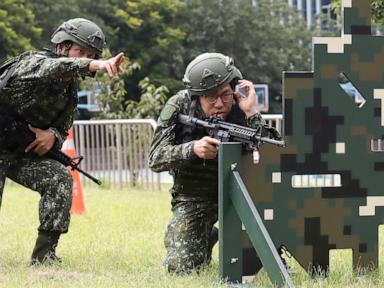
Everyone loves a neat narrative. The lazy consensus dominating international relations desks right now goes like this: Taiwan ramps up its annual Han Kuang military exercises, copies American asymmetric warfare playbooks, buys more mobile missile launchers, and therefore, lockstep alignment with Washington deepens into an unbreakable ironclad alliance.
It sounds tidy. It plays well on cable news. It is also dangerously wrong.
I have spent years watching defense bureaucracies mistake motion for momentum. What passes for strategic alignment between Taipei and Washington is actually a mismatch of operational realities disguised as shared resolve. The drills look impressive on drone footage, but beneath the choreography lies a fundamental friction point that nobody in uniform wants to say out loud: Washington wants a speed bump to bleed a rival, while Taipei wants a shield to survive. Those are two completely different missions.
The Myth of the Plug and Play Ally
Let us dismantle the core misconception driving the mainstream commentary. The prevailing view assumes military interoperability functions like a software update. Plug the tactical data link in, synchronize the coastal defense cruises, hand out shoulder-fired rockets, and presto, you have an integrated coalition.
This ignores institutional gravity.
True alignment requires shared doctrine, shared risk calculus, and a matching industrial base. None of those exist here. Taiwan operates under a personnel structure, procurement history, and command culture forged over decades of bureaucratic inertia. When foreign analysts praise recent exercise adjustments—like shifting toward decentralized command or utilizing civilian infrastructure—they treat these changes as proof of an unfolding American-style fighting force.
They are missing the internal drag.
Imagine a scenario where a brigade commander in Taichung has to choose between following an automated tactical alert generated by a US-supplied intelligence feed or waiting for political clearance from a civilian leadership terrified of premature escalation. In a seventy-two-hour conflict window, that hesitation is fatal. The hardware is modernizing, but the decision-making architecture remains stuck in the twentieth century.
The Asymmetric Trap
The entire push for a porcupine defense strategy sounds brilliant in a Pentagon briefing room. Saturate the strait with anti-ship missiles, mines, and drones until an amphibious invasion becomes mathematically unviable.
Here is the dirty secret the defense consultants leave out: porcupines do not win wars. They survive attrition.
Taiwan is being pushed into a strictly defensive crouch that strips away strategic depth. By telling Taipei to ditch heavy armor and major surface combatants in favor of hundreds of mobile launchers, Western advisors are effectively drafting a blueprint for a high-intensity demolition derby fought entirely on Taiwanese soil.
The political class in Washington calls this smart deterrence. The people living in Hsinchu call it a scorched-earth insurance policy paid for with their homes.
When you look closely at the recent exercises, the tension is palpable. The military brass in Taipei still yearn for the prestige of traditional platform warfare—frigates, fighter jets, main battle tanks. These are visible symbols of sovereignty. Asking them to trade those symbols for dispersed guerrilla logistics crates is an uphill battle against military ego and institutional identity. Pretending that annual drills resolve this friction is journalistic malpractice.
The Logistics Mirage
Let us talk about the math that nobody likes to crunch.
Every serious discussion about cross-strait contingencies assumes a massive resupply pipeline can remain open during hostilities. Look at any logistics modeling for the region. The numbers do not pencil out. An island eighty miles off the coast of a continental superpower is a black hole for ammunition, fuel, and replacement parts the moment a blockade snaps shut.
The current drills practice coastal denial, but they rarely simulate thirty days of total isolation with zero external resupply. Why? Because the results are terrifying.
When critics point to joint training initiatives as proof of deepening ties, they are confusing intention with capacity. Sharing intelligence feeds and conducting tabletop simulations in Hawaii does not magically generate fuel refineries, domestic munitions manufacturing plants, or secure port facilities under missile fire.
Alignment isn't measured by how many joint communiqués get signed or how many officers attend staff college in Virginia. It is measured by sustained sustainment. And right now, both sides are whistling past the graveyard.
What Real Integration Would Actually Look Like
If Washington and Taipei were genuinely serious about integration, the approach would look entirely different.
First, stop treating defense procurement like an overseas catalog sale. Taiwan does not need more delayed weapon systems designed for global power projection; it needs massive stockpiles of basic, attritable munitions produced locally under license.
Second, dismantle the bureaucratic stovepipes separating intelligence sharing. Real-time sensor-to-shooter integration cannot wait for diplomatic clearance protocols. If the systems cannot talk to each other without a three-tier bureaucratic sign-off, the hardware is just expensive scrap metal.
Finally, stop pretending that military exercises are a substitute for political clarity. Drills are theater. Theater satisfies domestic audiences on both sides of the Pacific, but it does not deter an adversary who can read a balance sheet and a logistics manifest better than anyone in Washington.
The next time you read a breathless headline about strategic alignment, check the parts inventory and ask who is actually paying for the runway repairs.
Stop watching the drills. Watch the supply chains.