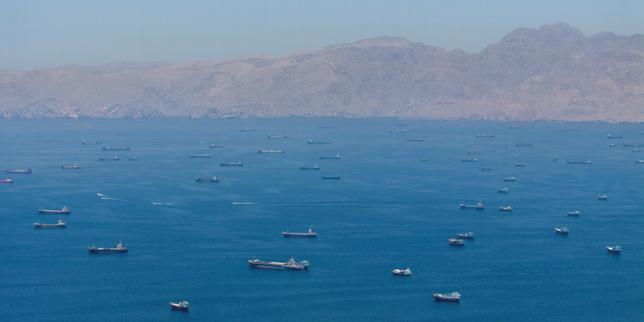
The United States is privately threatening sanctions against Oman, its oldest and most reliable neutral intermediary in the Middle East, over concerns that Muscat is permitting covert Iranian commercial activity near the Strait of Hormuz. For decades, Oman has served as the diplomatic backchannel where Washington and Tehran negotiate hostage releases and nuclear limits. That era of exceptionalism is hitting a wall. Senior Western diplomats confirm that the U.S. Treasury Department has warned Muscat that its policy of strategic neutrality will no longer shield it from economic penalties if it continues to overlook illicit maritime networks operating within its territorial waters.
This friction exposes a major shift in American foreign policy. Washington is increasingly willing to sacrifice long-term diplomatic access to achieve short-term economic containment of Iran.
The End of the Omani Exception
Muscat has long operated under a special dispensational logic. When the rest of the Gulf Cooperation Council severed ties with Tehran or funded regional proxies, Oman kept its borders, ports, and phone lines open. This was not born of ideological alignment with the Islamic Republic, but rather a deeply ingrained survival strategy. Oman shares governance of the Strait of Hormuz with Iran. Cooperation is a geographic imperative.
Washington historically tolerated this balancing act because it needed a backdoor. When the Obama administration sought early contact with Iranian officials to draft the 2015 nuclear deal, the secret meetings happened in Muscat. When American citizens were detained in Tehran, Omani aircraft flew them out.
That capital has dried up. The current political reality in Washington views Oman’s traditional neutrality not as an asset, but as a loophole. U.S. intelligence officials have tracked an increase in ship-to-ship transfers of Iranian crude oil and petrochemicals off the Musandam Peninsula, the rugged Omani enclave that juts into the Strait of Hormuz. These transfers allow Iranian vessels to spoof their automated identification systems, blend their cargo with other regional crudes, and bypass secondary American sanctions. By threatening Muscat directly, the U.S. is signaling that the logistical infrastructure of neutrality has become a liability.
Smuggling and Sovereignty in the Musandam Enclave
To understand why the U.S. threat is a massive gamble, look at a map of the region. The Musandam Peninsula is separated from the rest of Oman by a strip of United Arab Emirates territory. It sits directly opposite Iran across the narrowest point of the Strait of Hormuz.
For generations, local economies on both sides of the strait have relied on informal trade. Speedboats dart across the water daily, carrying everything from consumer electronics to cigarettes. In recent years, however, this informal network has scaled up significantly. It transformed from a local smuggling ecosystem into a highly organized, state-sanctioned parallel market for sanctioned goods.
- The Drone Pipeline: Western intelligence agencies suspect that specific dual-use electronic components, sourced from global markets, flow through Omani free zones before being moved across the strait into Iranian assembly plants.
- The Banking Buffer: Small Omani financial institutions and exchange houses, operating far beneath the compliance radar of major international banks, have been utilized to clear transactions for front companies tied to the Islamic Revolutionary Guard Corps.
- The Crude Camouflage: Deepwater anchorages near Sohar and Salalah have seen unusual bunkering patterns, where tracking data shows ships going dark for days at a time, a classic hallmark of illicit oil blending.
Oman argues that it lacks the naval capacity to police every square mile of its fractured coastline. The rugged topography makes complete surveillance impossible. Western analysts view this explanation with skepticism. They suggest Muscat is deliberately looking the other way to maintain domestic stability and avoid provoking its massive neighbor across the water.
The Fracturing of Gulf Security Architecture
The American pressure campaign against Muscat does not happen in a vacuum. It comes at a moment when regional dynamics are already highly volatile. The broader U.S. strategy relies on building a cohesive air and missile defense architecture across the Gulf States to counter Iranian influence. By alienating Oman, Washington risks creating a permanent blind spot in that very system.
Saudi Arabia and the UAE have their own complicated histories with Oman’s independent foreign policy. While Riyadh has recently mended fences with Tehran through Chinese mediation, the Emirati leadership remains deeply suspicious of any Omani leniency toward Iranian-backed networks. If Washington forces Oman to choose a side, it could drive Muscat deeper into the economic embrace of non-Western powers.
China is already the largest buyer of Omani oil. Beijing has invested heavily in the port of Duqm, positioning it as a key node in its maritime trade initiatives. If American sanctions restrict Oman’s access to the dollar-based financial system, Muscat has a ready-made alternative waiting in the wings. This reality undermines the leverage Washington thinks it possesses.
The High Cost of Closing the Backchannel
Policymakers in Washington are operating under the assumption that Oman will capitulate because it cannot afford to lose access to Western financial markets. The Omani rial is pegged to the U.S. dollar, and the country’s sovereign wealth funds are heavily exposed to Western assets. A serious enforcement action by the U.S. Office of Foreign Assets Control would devastate the Omani economy.
The counter-argument, whispered quietly by veteran diplomats in the region, is that the U.S. is trading a vital insurance policy for a minimal reduction in smuggling. If the Omani channel closes, the U.S. loses its most reliable mechanism for de-escalation during a crisis. When regional tensions spike, the ability to pass an authenticated message through Muscat within minutes has repeatedly prevented miscalculations from turning into wider military conflicts.
Furthermore, backing Oman into a corner could trigger the exact behavior Washington wants to prevent. An economically desperate Muscat would be far more vulnerable to Iranian economic statecraft and security coercion.
The threat of sanctions marks the end of an era where traditional diplomacy carried absolute immunity. Washington is betting that raw economic leverage can rewrite the geopolitical realities of the Persian Gulf. In doing so, it may find that breaking the channel is far easier than replacing the stability it once provided.