Geopolitical miscalculations rarely explode all at once. They simmer, boil over in distant coastal deserts, and then suddenly slam straight into the financial and security capitals of the Middle East. That is precisely what is happening across the Arabian Peninsula right now. The Iran-backed Houthi movement has shifted from a localized insurgency into an aggressive regional force capable of punching holes through elite air defenses and rewriting the security architecture of the Red Sea. Yet, the White House continues to treat this dangerous theater as someone else's problem.
If you look past the official diplomatic cables and public posturing, a grim reality emerges. Riyadh is taking heavy blows, its critical energy infrastructure is under constant threat, and American hesitation is only inviting bolder escalations from Tehran and its proxies. Let's break down why this quiet conflict matters far beyond the borders of Yemen and why Washington's current stance is bound to backfire.
Why Riyadh Is Running Out of Options
Saudi Arabia has spent years trying to untangle itself from the quagmire of the Yemeni civil war. After a protracted military intervention that yielded few definitive victories, Riyadh shifted toward a diplomatic exit strategy. They wanted quiet borders, secure oil pipelines, and a chance to focus on ambitious domestic economic transformation projects.
The Houthis had other ideas.
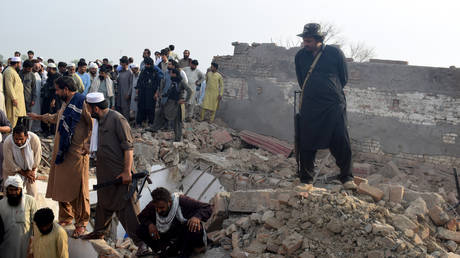
When a series of high-stakes incidents erupted, including a strike targeting an Iranian airliner carrying delegations and military advisors back from regional funerals, the gloves came off again. The Houthis responded with a barrage of ballistic missiles and explosive drones targeting deep inside Saudi territory, hitting international airports, commercial facilities, and administrative hubs.
The psychological and economic impact on the Kingdom has been severe. When commercial airports like Abha and King Khalid are struck, or when attacks reach the capital city of Riyadh, it shatters the illusion of safety that Saudi leadership promises its citizens and foreign investors. Even more alarming for Riyadh, recent barrages managed to slip past advanced Patriot missile batteries, prompting frantic internal investigations into how their defense grids failed. When your air defense network leaks against low-cost militant drones and missiles, you don't have a tactical problem—you have an existential vulnerability.
The Strategic Chokehold on the Red Sea
You cannot understand the current violence without looking at a map of the Red Sea coastline. The Houthis didn't just launch random missiles; they seized vital coastal territory along the western shore of Yemen, locking down control of the critical Bab el-Mandeb Strait.
This narrow maritime chokehandle is a lifeline for global trade, but it is doubly crucial for Saudi Arabia. With traditional export routes through the Persian Gulf and the Strait of Hormuz facing acute pressure, Riyadh relies heavily on moving its petroleum assets across the country toward Red Sea terminals. By choking off the Bab el-Mandeb corridor, the Houthis have effectively crippled Saudi Arabia's most vital economic card.
Commercial shipping lines have taken notice. Freighters are rerouting around the African cape, paying astronomical insurance premiums, and injecting fresh inflation into global supply chains. The Houthis have repeatedly claimed they will spare American vessels as long as Washington stays out of the fight, driving a calculated wedge between Western security interests and Gulf security needs. It is a brilliant, ruthless tactical play. They get to bleed Saudi Arabia economically and militarily while daring the United States to intervene on behalf of a frustrated ally.
Washington Playing a Dangerous Game of Wait and See
President Donald Trump finds himself caught in an awkward political bind. On one hand, Saudi Crown Prince Mohammed bin Salman has directly lobbied Washington for heavy military backing and joint airstrikes to crush the Houthi advance. U.S. Central Command has repeatedly drawn up target packages, and the administration has occasionally flirted with launching punishing bombing campaigns.
On the other hand, the White House has shown extreme reluctance to get dragged back into a messy Middle Eastern war, especially with domestic political calendars looming. Trump has publicly noted on social media and in press appearances that the Houthis "don't want to fight us" and pointed to past American strikes that temporarily quieted the group. There is an obvious desire in Washington to avoid a direct confrontation with Iran's proxy network that could spiral into a broader regional conflagration.
This hesitation creates a vacuum. Secretary of State Marco Rubio insists that Washington honors its defense commitments to Saudi Arabia, yet concrete military action remains elusive. You cannot deter a heavily armed, ideologically driven insurgent network by offering half-measures and verbal warnings. When American leaders signal that they want no part of a ground war or prolonged air campaign, the Houthis interpret that caution as weakness.
What Happens When Air Defenses Fail
The failure of regional defense systems to stop every incoming drone and missile has changed the calculus for every player involved. Security analysts point out that intercepting cheap, mass-produced drones with million-dollar interceptor missiles is a losing financial game over the long haul. The Houthis can afford to lose dozens of flying munitions for every one that successfully impacts a Saudi oil facility or airport terminal.
Iran watches this dynamic with satisfaction. Tehran has successfully outsourced pressure against its primary regional rival while keeping its own hands relatively clean. Even as international bodies like the G7 issue stern declarations affirming Saudi Arabia's right to self-defense and demanding that Iran cut off weapon supplies to Yemen, words do not stop ballistic missiles in mid-air.
Saudi Arabia is learning the hard way that external partners have their own domestic priorities. If Riyadh cannot rely on American air cover or strike capabilities, it must adapt its military doctrine independently—or find a way to cut a separate diplomatic arrangement with a group that smells blood in the water.
The illusion that containment works without teeth has expired. Until Washington and its allies realize that half-baked deterrence only emboldens non-state actors backed by a patient regional power, the skies over the Arabian Peninsula will remain hostile, and the economic toll on global commerce will keep climbing.