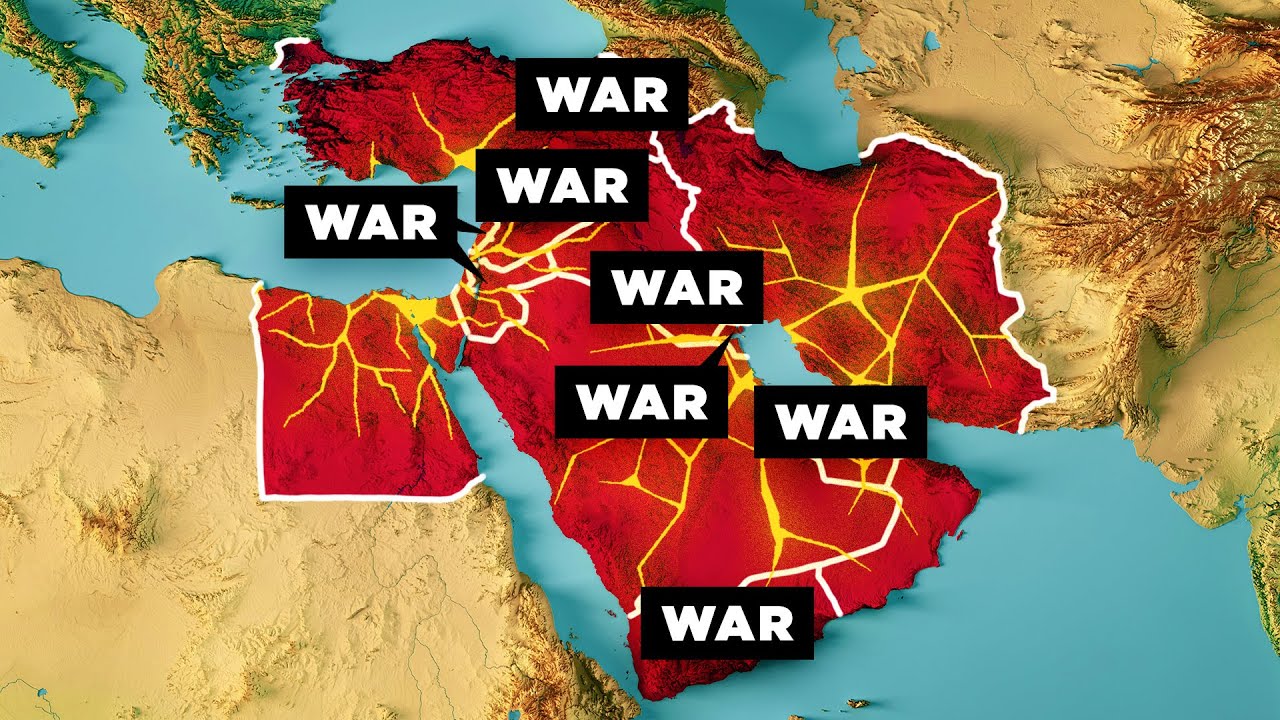
The financial press is obsessed with a fairytale. They want you to believe that every time a diplomat mentions a "truce" or a politician tweets about "ending wars," the oil market breathes a sigh of relief and prices drop. This week, the narrative is that Donald Trump’s rhetoric on Iran and the whispers of an Israel-Lebanon ceasefire are the primary drivers behind the recent dip in crude.
It is a comforting story. It is also completely wrong.
If you are selling your positions because you think "peace is breaking out" and supply will flood the market, you are being played by a surface-level consensus that ignores the structural rot in global energy production. Peace—or the vague promise of it—isn't a bearish signal. In the current macro environment, the persistent threat of conflict is actually the only thing keeping the market from realizing how broken the supply-demand balance has become.
The Geopolitical Risk Premium is a Ghost
Market analysts love the term "risk premium." They slap it on every $5 move in Brent or WTI to explain away volatility they didn't predict. The consensus claims that oil is "expensive" because of the war in the Middle East and that once the fighting stops, the premium evaporates and we head back to $60.
I’ve spent fifteen years watching traders chase these ghosts. Here is the reality: the geopolitical risk premium has been effectively zero for months. If the market were actually afraid of a major supply disruption in the Strait of Hormuz, oil wouldn't be hovering in the $70s; it would be $120.
The market has become desensitized. We have reached a point where actual missiles flying over oil fields barely cause a 2% price spike. Why? Because the "lazy consensus" assumes that the U.S. will always step in to keep the taps open and that OPEC+ is sitting on a mountain of spare capacity.
They are wrong on both counts.
The Trump Iran Deception
The media is currently buzzing about Donald Trump’s claim that the war in Iran "should" end soon. Traders are pricing this in as a bearish signal, assuming a second Trump administration would either strike a deal or crush Iranian exports through "maximum pressure," somehow leading to a more stable market.
This logic is flawed. If Trump manages to "end" the conflict through a deal, you don't get a flood of new oil; you get the legitimization of current "ghost" barrels that are already reaching China. If he goes the other way and tightens sanctions, you lose 1.5 million barrels per day (bpd) of Iranian supply that the market currently relies on.
There is no "peace" scenario that leads to significantly lower prices because the supply isn't waiting in the wings. It’s already being pumped and sold through back channels. The "peace" narrative is just a psychological anchor used to justify a sell-off that is actually driven by algorithmic trading and liquidity issues, not fundamentals.
The Spare Capacity Myth
The biggest lie in the industry is that OPEC+ has 5 million bpd of "spare capacity" ready to go.
Go ahead and look at the production data from Nigeria, Angola, or even Kuwait. These nations have consistently struggled to meet their existing quotas. The infrastructure in many of these regions is crumbling. Years of underinvestment have turned "spare capacity" into a theoretical number on a spreadsheet rather than actual oil that can be brought to market in 30 days.
Even Saudi Arabia—the supposed "central bank of oil"—is prioritizing its "Vision 2030" domestic projects. They need oil at $80 or $90 to fund their transition. Why would they ever flood the market to lower the price?
When the media tells you that a Lebanon ceasefire "lifts hopes" and lowers prices, they are ignoring the fact that Lebanon produces zero oil and its conflict with Israel has had zero impact on physical crude flows. It is a sentiment play, a distraction from the fact that the U.S. Strategic Petroleum Reserve (SPR) is at its lowest level in decades and the American shale patch is hitting a wall of diminishing returns.
Why Peace is Actually Bullish
Imagine a scenario where the Middle East actually stabilizes. If a true, long-term regional peace were achieved, the immediate result wouldn't be a price crash. It would be a massive, global economic surge.
Demand would skyrocket. Shipping costs would normalize, encouraging more trade. Airlines would expand routes. Emerging markets, currently strangled by high energy costs and dollar strength, would start consuming like it's 2004.
The "peace" that traders are selling today would create a demand monster that the current, starved supply side could not feed.
The industry has spent the last decade being told that oil is a "legacy asset." Capital expenditure (CAPEX) in new oil exploration has plummeted. We are living off the fumes of projects approved in 2012. You cannot fix a ten-year investment deficit with a two-week ceasefire.
Stop Asking if the War Will End
People always ask: "What happens to the price of oil if Israel and Hezbollah stop fighting?"
It’s the wrong question.
The right question is: "What happens to the price of oil when the world realizes that even with peace, we aren't producing enough to sustain 103 million barrels of daily demand?"
The current price drop isn't a victory for diplomacy. It's a trap for investors who think the "risk" is only on the upside. The real risk is the structural deficit that occurs when the "war distraction" is gone and we are left looking at empty storage tanks and a shale industry that is more interested in paying dividends than drilling new wells.
The Actionable Reality
If you are looking at the headlines and thinking "oil is dead because Trump said he'd end the war," you are missing the biggest supply-side squeeze in a generation.
- Ignore the Ceasefire Noise: It has no impact on physical barrels. If the price drops on "peace news," it’s a buying opportunity, not a signal to exit.
- Watch the CAPEX, Not the Tweets: Look at what Exxon, Chevron, and Total are spending on new frontier exploration. Hint: It’s not enough.
- Understand the SPR: The U.S. government has to refill the Strategic Petroleum Reserve eventually. They are currently the world's largest "short" position. They will provide a floor for prices that no "peace deal" can break.
The industry "insiders" quoting the competitor’s article are the same people who thought oil would stay at $40 forever back in 2020. They focus on the theater of geopolitics because the math of geology is too depressing to contemplate.
Conflict isn't the reason oil is expensive. It's the smoke screen hiding the fact that the era of "easy oil" is over, and no amount of handshaking in a neutral capital is going to bring it back.
Stop trading the headlines. Start trading the deficit.
The "peace dividend" you've been promised is a debt that the global energy market can't pay. When the theater ends, the lights go out, and the bill comes due, you’ll realize that the "war" was the only thing keeping the price of oil from its inevitable, violent move upward.