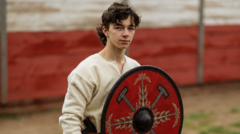
Most teenagers spend their summer holidays glued to screens or hanging out at the local park. Ryan Olsen is spending his walking over 100 miles across the north of England dressed in full Viking clothing and carrying authentic period equipment.
It sounds like a wild stunt, but the reality is deeply personal, physically punishing, and a masterclass in historical endurance.
On July 18, 2026, the 16-year-old student from Ellesmere Port set off from Whitby High School. His destination is York, a historic Viking stronghold, and he intends to get there entirely on foot within 12 days. He is not doing this for internet clout. He is marching in memory of his late history teacher, Hannah Freeman, who passed away from cancer last September. Miss Freeman was not just a teacher; she was a fellow Viking re-enactor and the person who introduced Ryan to his core friend group through her Dungeons & Dragons club.
Before she passed, she gifted Ryan and his friends a collection of D&D worldbuilding material she spent over a decade crafting. This grueling 100-mile trek is Ryan's way of honoring that legacy while raising vital funds for Anthony Nolan, a charity that connects stem cell donors with blood cancer patients.
The scale of this challenge is immense. It exposes a fascinating intersection of modern human endurance and early medieval reality.
The Hidden Physics of Viking Gear
Modern hiking gear is a marvel of engineering. Gore-Tex breathes, synthetic polymers wick sweat, and ergonomic backpacks distribute weight perfectly across your hips.
Viking gear does none of this.
Walking long distances in period-accurate clothing means dealing with heavy wool, stiff linen, and thick leather. If it rains, the wool absorbs water like a sponge, doubling in weight. If it is hot, you sweat profusely through layers designed to trap body heat during harsh Scandinavian winters.
Then there is the hardware. Ryan is carrying a traditional round shield and period-accurate gear. A standard Viking shield, typically made of planked pine or linden wood and bound with rawhide, weighs anywhere from 5 to 9 pounds. Carrying that dead weight in your hand or slung awkwardly across your back for hours shifts your center of gravity. It wreaks havoc on your spinal alignment and forces your core to work overtime just to keep you upright.
Even the footwear is a nightmare by modern standards. Period-correct turnshoes—constructed inside-out from basic leather and stitched together—offer zero arch support and no shock absorption. Walking on modern asphalt roads with flat leather soles feels like striking your heels directly against concrete with every single step.
Training for a Medieval March
You cannot just wake up, throw on a tunic, and walk across several counties. Ryan, who belongs to local re-enactment groups Unknown Vikings of Chester and Hearth of the Valkyrie, spent months building up his physical tolerance.
His preparation culminated in a brutal 23-mile training walk from Waverton to Moel Famau in North Wales. That single leg took him 12 hours to complete. It served as a harsh preview of what a multi-day trek feels like on your joints.
The strategy for a 100-mile march relies heavily on pacing and recovery. Ryan's 12-day timeline means averaging roughly 8 to 10 miles a day, navigating a route that winds through Delamere, Wilmslow, Marple, Glossop, Penistone, Barnsley, Pontefract, Leeds, and Tadcaster.
Ryan's 100-Mile Route Layout:
Ellesmere Port -> Chester -> Delamere -> Wilmslow -> Marple -> Glossop -> Penistone -> Barnsley -> Pontefract -> Leeds -> Tadcaster -> York
This path cuts directly through a mix of rugged trail terrain and hard urban concrete, demanding a high level of mental resilience.
When you walk long distances in historic kit, the primary enemy is friction. Wool rubbing against sweaty skin causes severe chafing within the first few miles. Heavy leather straps dig directly into shoulders without the luxury of modern foam padding. Veteran re-enactors know that surviving a trek like this requires specific micro-adjustments: applying anti-chafing balm liberally, wrapping feet to prevent blood blisters from the stiff leather shoes, and constant hydration to offset the heavy sweat trapped inside woolen layers.
Why Historical Reconstruction Matters
The re-enactment community often gets stereotyped as people simply playing dress-up on weekends. The reality is far more rigorous. Groups like Hearth of the Valkyrie focus heavily on experimental archaeology. They use physical replication to understand how historical people actually lived, moved, and survived.
When Ryan walks through Glossop or across the Pennines carrying this gear, he is generating real-world data on early medieval mobility. Historians often debate how quickly Viking armies or travelers could move across Anglo-Saxon England on foot. By testing the physical limits of period clothing and shields over a sustained 100-mile stretch, this trek highlights the sheer athletic capability required of historical peoples. It bridges the gap between dry textbook facts and living history.
How to Support the Mission
Ryan's march is directly funding Anthony Nolan's stem cell register, a cause that desperately needs younger donors. For patients fighting blood cancer or severe immune disorders, a stem cell transplant is often their final chance at survival.
If you want to support Ryan’s 100-mile tribute to Miss Freeman, you can take action immediately:
- Donate directly to the cause via his official platform at Ryan's Walk to York JustGiving.
- Check your eligibility and sign up for the stem cell donor register through Anthony Nolan. It requires a simple cheek swab, and if you match, you could save a life.
- Follow his daily progress and training updates on social media as he navigates the route toward York.