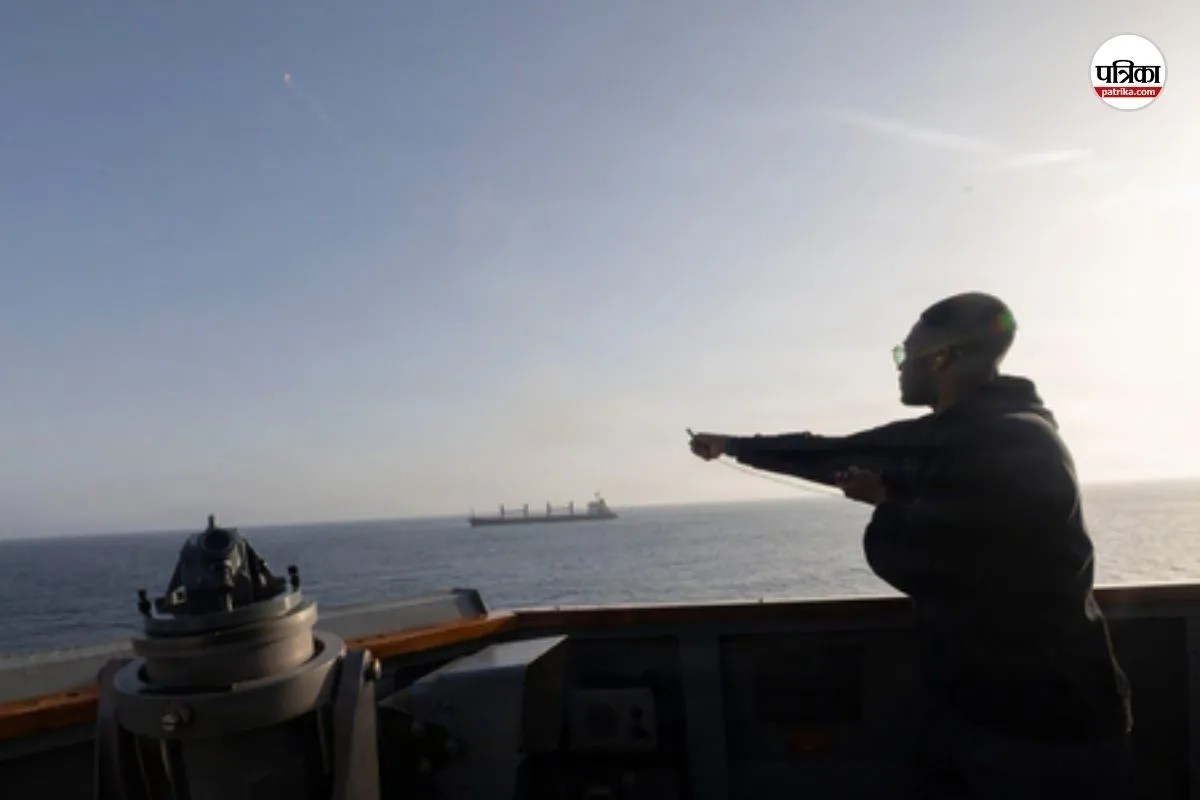
A commercial liquefied natural gas (LNG) carrier transporting fuel from Qatar to India recently became the latest casualty of maritime targeting, suffering an engine room fire after a missile strike. While all Indian crew members survived the incident without injuries, the attack exposes a glaring vulnerability in New Delhi's energy security strategy. India relies heavily on the Persian Gulf and Red Sea corridors for its energy imports. This strike demonstrates that the safety of these supply lines is no longer guaranteed by traditional maritime norms.
For months, the global focus remained fixed on container ships and bulk carriers dodging drone strikes. The targeting of an LNG carrier destined for an Indian port changes the calculus entirely. It brings the conflict directly to India’s doorstep, threatening the economic foundation of its industrial growth.
The High Cost of Vulnerable Sea Lanes
Geopolitics is messy, but the mechanics of shipping are unforgivingly precise. When a missile hits an engine room, it does not just damage steel. It spikes insurance premiums across the entire maritime sector.
India imports roughly half of its natural gas requirements, with Qatar serving as its largest supplier. Most of this volume moves through narrow choke points that are increasingly becoming shooting galleries. For decades, shipping companies viewed these routes as routine highways. Now, they are tactical combat zones.
The immediate fallout of these disruptions is financial. War risk premiums for vessels transiting these areas have climbed significantly. Shipping firms pass these expenses directly to the buyer. For Indian utilities and manufacturing plants relying on imported gas, this means higher input costs that eventually trickle down to the average consumer.
The Mechanics of an Energy Squeeze
When a vessel is disabled, the immediate concern is salvaging the cargo and securing the crew. The secondary, more prolonged crisis is logistical.
[Persian Gulf / Qatar] ---> [Vulnerable Choke Points] ---> [Indian Terminal]
                                   |
                           (Missile Strike)
                                   |
                     [Delayed Cargo & Higher Risk Premiums]
A disrupted shipment means a delayed delivery at the terminal. LNG terminals operate on tight schedules; a delay of even a few days can throw off regional distribution networks. If a terminal runs dry, power plants scale back operations, and fertilizer factories cut production. The economic ripple effect moves much faster than the replacement vessels can be deployed.
The Illusion of Neutrality in Modern Maritime Warfare
Many policy analysts in New Delhi believed that India's balanced diplomatic stance would shield its commercial interests from regional crossfire. This attack shatters that illusion.
Militant groups and state actors operating in these waters do not always verify the ownership, crew nationality, or destination of a target before pulling the trigger. Intel on the water is notoriously faulty. A ship might be flying a flag of convenience from an island nation, carrying an Indian crew, transporting Qatari gas, and owned by a European conglomerate. To a drone operator on a distant coastline, it is simply a large target moving through a crosshair.
Relying on diplomatic goodwill to protect commercial shipping is a failed strategy. The maritime domain has become asymmetric. Cheap, shore-launched drones and anti-ship missiles can disable multi-million dollar vessels in seconds, regardless of the geopolitical alignment of the nation receiving the cargo.
Securing the Flow of Blue Fuel
India cannot simply stop buying gas from the Middle East. The infrastructure is built for it, the contracts are long-term, and the proximity is geographically logical. However, the current strategy of passive transit is unsustainable.
Naval Escorts and Active Defense
The Indian Navy has already increased its presence in the Arabian Sea, deploying guided-missile destroyers and frigates to counter piracy and drone threats. But the Navy cannot escort every single commercial hull heading toward Mumbai or Mundra.
A more structured approach requires coordinated convoy systems through high-risk zones. This demands deeper operational integration between merchant fleets and naval command structures. Shipping lines must share real-time telemetry, and naval assets must be positioned close enough to provide hard-kill interception capabilities when a missile launch is detected.
Diversification Beyond the Gulf
True security lies in diversification. India has made strides in securing LNG contracts from the United States, UAE, and African nations, but the reliance on the Qatar route remains a central vulnerability.
Building out infrastructure to receive higher volumes from alternative routes takes years and billions of dollars. It requires expanding regasification terminals on both the eastern and western coasts to handle different shipping lanes. Until that infrastructure is fully mature, India remains wedded to the stability of the waters right outside its western maritime boundary.
The Harsh Reality Facing Energy Security
The engine room fire on the Qatari LNG carrier was extinguished, and the crew is safe, but the structural vulnerability remains unaddressed. Global energy markets are incredibly sensitive to shipping disruptions, and India's economic engine requires an uninterrupted flow of natural gas to sustain its momentum.
Relying on luck and the courage of merchant mariners is not a policy. Every strike that goes unanswered or unmitigated increases the confidence of regional actors looking to disrupt global trade. India must transition from a nation that merely reacts to maritime crises to one that actively secures its economic lifelines through raw naval capability and aggressive supply chain restructuring. The cost of inaction is an energy crisis dictated by external actors with zero interest in India's economic stability.