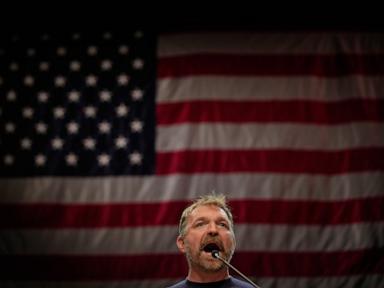
Political capital in a high-stakes legislative race behaves like a leveraged financial instrument, where ideological alignment magnifies returns but personal liabilities introduce severe down-side volatility. The impending general election for the U.S. Senate seat in Maine, currently occupied by incumbent Republican Susan Collins, serves as an empirical case study for this dynamic. The presumptive Democratic nominee, Graham Platner, an oyster farmer with no prior legislative record, enters the June 9 primary with a statistically significant polling advantage. A University of New Hampshire poll conducted in late May documented a nine-percentage-point lead for Platner over Collins. This margin exists despite a succession of compounding personal controversies that would typically trigger systemic failure in a conventional campaign infrastructure.
The structural survival of Platner’s candidacy rests on two pillars: a vacant institutional lane created by the late-April exit of his chief primary opponent, Governor Janet Mills, and a calculated risk equation managed by national progressive figures. Representative Ro Khanna’s joint appearance at a Bar Harbor rally on June 5 demonstrates a deliberate strategic decision by national Democrats to prioritize macroeconomic messaging over candidate specific risk. Understanding why these compounding liabilities have failed to alter the race requires analyzing the electoral cost functions, risk insulation mechanisms, and elite incentives governing modern asymmetric campaigns.
The Tripartite Liability Model
To understand how a candidate maintains an electoral advantage while absorbing severe reputational shocks, it is necessary to categorize the liabilities into distinct analytical buckets based on how they affect different voter segments. Platner’s controversies are not a monolithic block; they occupy three distinct domains, each with a different rate of political decay.
                  ┌──────────────────────────────────────────┐
                  │       Candidate Liability Model          │
                  └──────────────────────────────────────────┘
                                       │
         ┌─────────────────────────────┼─────────────────────────────┐
         ▼                             ▼                             ▼
┌─────────────────┐           ┌─────────────────┐           ┌─────────────────┐
│ Ideological /   │           │   Digital /     │           │ Interpersonal / │
│ Historical      │           │   Rhetorical    │           │ Behavioral      │
├─────────────────┤           ├─────────────────┤           ├─────────────────┤
│ Nazi symbol     │           │ Reddit posts,   │           │ Domestic abuse  │
│ tattoo          │           │ slurs, genocide │           │ allegations,    │
│ controversy     │           │ skepticism      │           │ explicit texts  │
└─────────────────┘           └─────────────────┘           └─────────────────┘
Historical Symbolic Liabilities
The earliest systemic vulnerability identified in Platner’s background was a skull tattoo matching a Nazi symbol, which was subsequently modified or covered. The political cost of this asset was initially minimized by the campaign through a plea of historical ignorance. The insulation cracked when a former partner reported to The New York Times that Platner had previously made light of the symbol, referring to it by the explicit historical term "Totenkopf." In a standard electoral model, historical association with extremist iconography creates an insurmountable barrier among moderate and independent suburban voters.
Rhetorical and Digital Footprints
The second category comprises archived digital interactions on the platform Reddit, including historical comments utilizing homophobic slurs and posts minimizing military sexual assault and questioning the historical reality of the Armenian genocide. Unlike contemporary public statements, uncurated digital footprints provide voters with a direct look at raw behavioral history. The political calculation here relies on the temporal distance of the behavior, allowing the candidate to issue formal apologies that frame the data points as obsolete artifacts of a past personal era.
Contemporary Interpersonal Behavioral Shock
The most recent and active category of liability emerged via reporting from The Wall Street Journal and the Associated Press details marital infidelity conducted via explicit text messaging with multiple women. This was followed immediately by allegations from a former partner detailing physical volatility, specifically arm-twisting and unlawful confinement during an argument—claims that Platner has denied. This third category carries the highest modern political cost because it occurs within the current campaign timeline, nullifying any personal redemption narrative.
The Mitigation Calculus and Campaign Cohesion
A standard political operation experiences structural failure when internal staff and external surrogates simultaneously withdraw support. The Platner campaign avoided this outcome through an aggressive internal containment strategy and a public reframing of the marital controversy.
Data from campaign reporting indicates that Amy Gertner, Platner’s spouse, identified the explicit communications on his mobile device in 2023 and briefed the campaign apparatus in August of that year to run a pre-emptive vulnerability assessment. The internal campaign leadership, which included former staffer Genevieve McDonald, classified the information as a private domestic matter rather than an existential electoral liability. This decision created an internal information buffer that prevented early staff defections.
When the text-messaging data leaked publicly, the campaign executed a rapid response strategy centered on a five-minute video broadcast featuring Gertner. The video did not refute the underlying facts; instead, it reframed the narrative from a breach of public ethics to an ongoing, private effort in marriage counseling and personal growth.
Electoral data reveals that this specific framing created an unexpected defensive shield among certain key demographic groups:
- The Private-Public Divide: A segment of the base, represented by local county officials and party organizers, applied a strict separation between private behavior and public economic policy.
- The Redemption Premium: Voters who value transparent personal development viewed the public acknowledgment of marital counseling as a sign of authenticity rather than disqualification.
- The External Betrayal Effect: Backlash was partially redirected toward the former campaign staff who leaked the internal vulnerability assessment, reframing the leak as political sabotage.
This defensive shield maintains the core progressive base but leaves the campaign highly vulnerable to independent voters in the general election, where the tolerance for behavioral volatility is significantly lower.
Coalition Incentives and National Strategic Imperatives
The willingness of national figures like Representative Ro Khanna, Senator Bernie Sanders, and Senator Elizabeth Warren to maintain public endorsements despite these behavioral data points is driven by macroeconomic calculations. The primary driver is the absolute scarcity of paths to a legislative majority.
Control of the U.S. Senate acts as the ultimate constraint on party strategy. In a highly polarized legislative environment, individual candidate attributes are subordinated to the party label, which dictates committee assignments, judicial confirmations, and control over the legislative calendar. For national progressives, the ideological value of Platner's platform—built on high-density populist themes including aggressive taxation of wealth, universal healthcare access, and localized agrarian and economic populism—outweighs the personal risk profile of the individual asset.
Khanna's appearance in Bar Harbor alongside down-ballot candidates like gubernatorial candidate Troy Jackson and congressional candidate Matt Dunlap represents an attempt to merge Platner's economic populism with a broader multi-class coalition. By framing the election as a structural war against concentrated corporate wealth, national surrogates purposefully divert public attention away from the candidate’s personal life and toward institutional economic grievances.
Long-Term Risk Profiles and Structural Vulnerabilities
While Platner is structurally insulated through the June 9 primary due to the lack of an active internal opponent, his campaign model carries significant vulnerabilities that will face intense pressure during the general election cycle against Susan Collins.
The first structural vulnerability is the constant threat of unmapped historical data. The sequential release of the Reddit logs, the tattoo history, the text messages, and the domestic volatility allegations suggests an incomplete internal opposition research process. If the campaign has not fully documented its own liabilities, it remains highly exposed to late-stage disclosures by opposition groups during the peak spending months of September and October, when the cost of counter-messaging rises sharply.
The second vulnerability lies in the volatility of the suburban independent vote in Maine. While populist economic rhetoric effectively turns out the base in working-class rural and coastal areas, independent voters in higher-density suburban sectors historically demonstrate a low tolerance for candidates with documented histories of interpersonal volatility or extremist symbolism. The nine-percentage-point lead recorded in May must be viewed as highly fluid. As opposition advertising spending increases, the cost of maintaining that lead will climb, forcing the campaign to divert resources from field operations to defensive media management.
The strategic play for the Platner campaign over the next thirty days requires a complete halt to defensive media pivoting. The campaign must transition all communications to a policy-heavy, structurally focused economic narrative, completely ignoring further character-based attacks to starve them of media attention. Simultaneously, national surrogates must shift their messaging from an endorsement of the individual to an explanation of the institutional stakes of the Senate majority. This lowers the ethical burden on moderate voters, allowing them to support the party line even if they find the individual candidate deeply flawed.



:max_bytes(150000):strip_icc()/how-many-types-of-dwarfism-are-there-2860725-v1-8dae2c531b4b47d9ae36ae404d3308a0.png)