Energy security is a comfortable lie told by politicians who can't balance a budget. The recent expansion of sanctions waivers for Venezuela isn't a masterstroke of geopolitical stabilization. It is a desperate, short-sighted capitulation that ignores the decaying reality of South American infrastructure.
The consensus suggests that by loosening the grip on PDVSA (Petróleos de Venezuela, S.A.), the U.S. can flood the market with heavy crude, suppress prices at the pump, and pull Caracas away from the Sino-Russian orbit. This narrative is a fantasy. It assumes that the global oil market is a simple faucet you can turn on with a legal memo. It isn't.
The Myth of the Quick Spigot
The most glaring flaw in the current strategy is the "Zombie Field" problem. I have spent years looking at asset depreciation in nationalized industries. When a state-run entity like PDVSA is starved of capital and parts for a decade, the reservoirs don't just sit there waiting for a Chevron technician to show up. They degrade.
Western analysts love to cite Venezuela’s massive "proven reserves." This is a vanity metric. Reserves mean nothing without the mechanical integrity to extract them. Much of the infrastructure in the Orinoco Belt is currently a graveyard of rusted valves and seized pumps.
- Reality Check: Reclaiming lost production capacity isn't a six-month project. It is a multi-year, multi-billion-dollar overhaul.
- The Diluent Crisis: Venezuelan extra-heavy crude is essentially molasses. You cannot move it through a pipeline without diluents (like naphtha). Because the local refineries are in shambles, they have to import the very chemicals they need to export their own product.
- The Debt Spiral: Any revenue generated from these "new" flows is already spoken for. It isn't going toward social programs or market stabilization; it’s going toward paying down arrears to the very companies granted the waivers.
Washington is Subsiding Inefficiency
By granting these waivers, the U.S. Treasury is effectively providing a life-support system for a failed business model. We are told this move "lowers prices." Let’s look at the math. Venezuela is currently struggling to produce even 800,000 to 900,000 barrels per day (bpd). For context, they were pushing 3 million bpd in the late 90s.
Even if these waivers miraculously added 200,000 bpd over the next year, that is a drop in the bucket of a 100-million-barrel-per-day global market. It is a rounding error. You are trading away geopolitical leverage for a price reduction that is statistically invisible to the average driver.
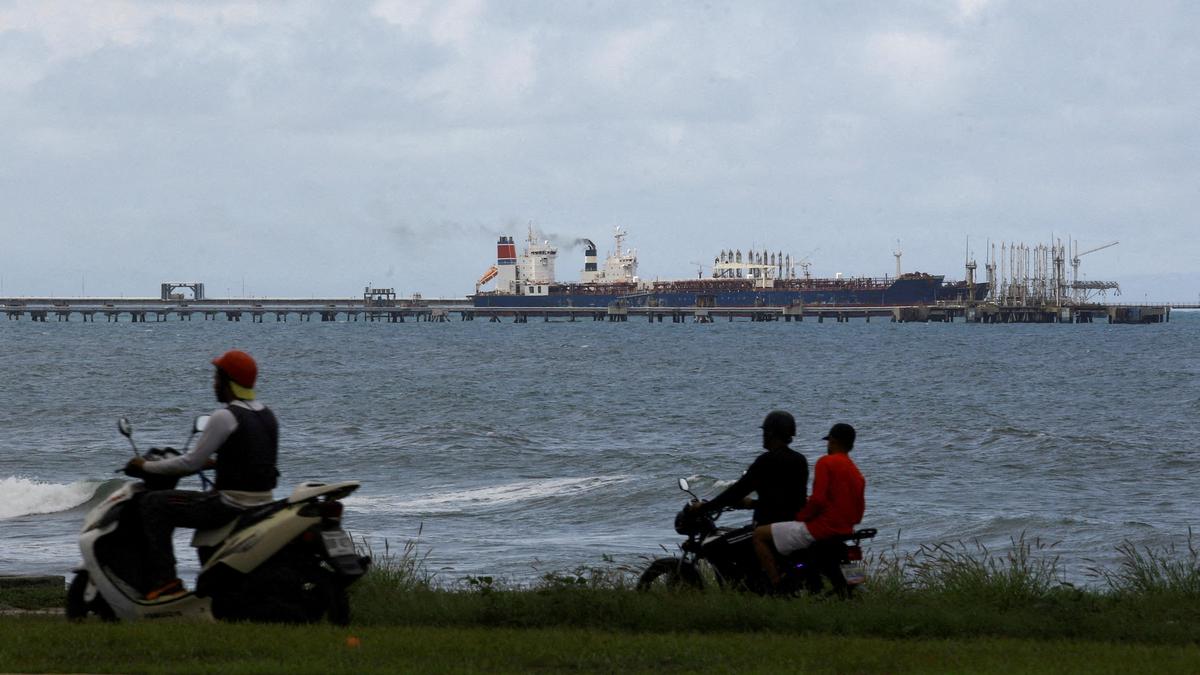
The real winners aren't the American middle class. The winners are the middlemen in the "shadow fleet"—the network of aging tankers with obscured transponders that have been moving Venezuelan oil to Asia for years. These waivers don't eliminate the black market; they just give the black market a legitimate price floor to compete against.
The China-Russia Counter-Intuition
The State Department argues that re-engaging with Caracas prevents Venezuela from becoming a permanent vassal of Beijing and Moscow. This ignores the fact that the vassalage is already complete.
Venezuela owes China billions in "oil-for-loan" deals. Every barrel that flows under a U.S. waiver is a barrel that China watches closely to ensure their debt is being serviced. We aren't "winning back" a partner. We are performing free maintenance on a Chinese collateral asset.
Furthermore, the idea that American companies can "out-invest" the geopolitical interests of the Kremlin in the Caribbean is laughable. Moscow doesn't care about the ROI of a specific well; they care about the proximity of influence to the Florida coast. A waiver doesn't change that math.
The Compliance Nightmare
For the private sector, these waivers are a poisoned chalice. I have advised compliance departments that view these "opportunities" with pure dread.
- Snapback Risk: The "General License" framework is notoriously fickle. A single political shift in Washington or a crack-down in Caracas can trigger a "snapback" of sanctions.
- Stranded Assets: Imagine a scenario where a mid-sized energy firm invests $500 million in infrastructure under a 6-month waiver, only for the license to expire. That capital is gone. It becomes a gift to the Venezuelan state.
- Reputational Damage: The ESG (Environmental, Social, and Governance) lobby hasn't vanished. Pumping oil in a region with zero environmental oversight and high human rights risks is a PR landmine that most majors aren't actually willing to step on, regardless of what the Treasury says.
Stop Asking if Waivers Work
The question "Are sanctions working?" is the wrong question. Sanctions are a blunt instrument. The right question is: "Is the alternative worse?"
By periodically loosening and tightening the screws, the U.S. creates a "Volatility Premium." We ensure that no long-term, stable investment can ever take root in Venezuela. This doesn't lead to a transition to democracy. It leads to a permanent state of "Grey Zone" economics where only the most corrupt and the most desperate survive.
If the goal is truly energy independence, the focus shouldn't be on begging a broken regime for heavy crude. It should be on the Permian Basin and Canadian oil sands—jurisdictions that don't require a daily check of the Federal Register to see if your business is still legal.
The Brutal Truth of the Barrel
Heavy Venezuelan crude is technically difficult to refine. Most of the complex refineries on the U.S. Gulf Coast were specifically built to handle this "sour" sludge. This is why the lobbyists push for waivers. It isn't about the "global price of oil." It is about the specific profit margins of a handful of refineries in Louisiana and Texas that don't want to pay to re-tool their facilities for lighter, sweeter domestic crude.
We are distorting national foreign policy to subsidize the rigid infrastructure of a few domestic refiners.
The waivers won't save the Venezuelan people. They won't tank the price of gas. They will, however, provide just enough hard currency to keep a failing regime upright while American companies take on all the risk of repairing a dilapidated state-owned oil company.
Stop pretending this is a strategic pivot. It is a panic move. If you want to play in the Venezuelan oil patch, prepare to lose your shirt when the wind shifts in D.C. or the first pipe bursts in Zulia.
Burn the playbook that says "more supply equals lower prices" regardless of the source. In the world of geopolitical energy, the source is everything. And this source is contaminated.
Go find a real hedge.
Would you like me to analyze the specific production capacity of the Orinoco Belt to show exactly how much capital is required for a true recovery?