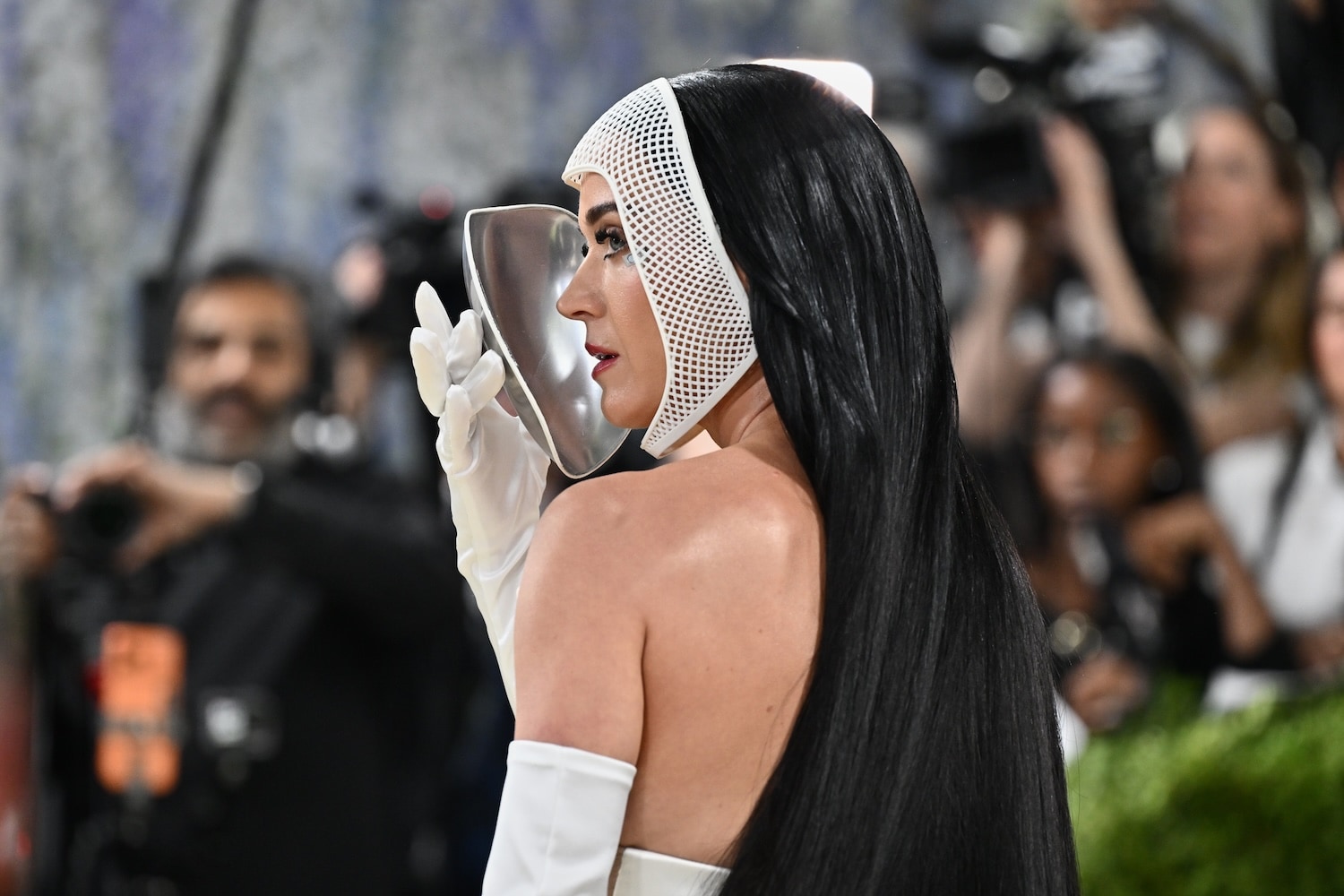
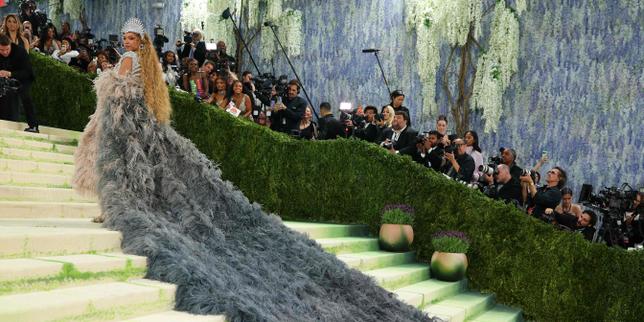
The rain over the Upper East Side didn't care about the custom silk-faille or the millions of dollars in borrowed archival jewels. It fell with a rhythmic, democratic thud against the white canvas of the tenting, a stark reminder that even the most curated evening in the world is beholden to the elements. Outside the barricades, the crowd was a sea of translucent ponchos and shivering phone screens. Inside, the air smelled of lilies and expensive tension.
We often treat the Met Gala as a slideshow of the absurd. We scroll through the "best and worst dressed" lists with a detachment that suggests these are merely mannequins in motion. But to stand at the base of those iconic steps is to witness a high-stakes psychological ballet. This year’s theme, The Architecture of Memory, demanded more than just pretty dresses. It required the attendees to wear their ghosts. In other news, we also covered: Monetizing Nostalgia and High Fashion IP The Mechanics of the 77 Million Dollar Opening.
The red carpet is not a floor. It is a stage where the currency is attention, and the exchange rate is brutal.
The Weight of the First Step
Consider the debutante. Not the literal socialite of yesteryear, but the young actress who has just come off a breakout streaming hit. Let’s call her Maya. For Maya, the 2026 Met Gala is not a party; it is a coronation or a cancellation. As she stepped out of the black SUV, her gown—a structured masterpiece of 3D-printed titanium and hand-spun lace—weighed nearly forty pounds. Deadline has provided coverage on this important issue in great detail.
She couldn't sit in the car. She had to kneel on the floor of the van to keep the bodice from crushing.
When she reached the first landing, the flashes hit. It is a physical force. A wall of white light that erases your vision for a fraction of a second. In that strobe-lit vacuum, Maya had to project an image of effortless grace while her ribcage was being squeezed by a metal exoskeleton. This is the invisible labor of the gala. We see the shimmer; we don't see the shallow breathing or the frantic mental rehearsal of "don't trip, don't trip, don't trip."
The highlights from this year weren't just about who wore what. They were about who survived the costume.
The Ghosts in the Gallery
As the night progressed, the theme began to take a literal, almost haunting shape. The 2026 exhibition explored how fashion stores our collective and personal histories. This resulted in a parade of garments that felt less like clothes and more like biography.
One veteran actor walked the carpet in a suit made entirely from upcycled ribbons and scraps from every costume he had worn in a thirty-year career. It was heavy. It was cluttered. It was a mess. But as he climbed the stairs, the cameras caught the way the light hit a patch of velvet from a Shakespearean play he did in 1994.
The highlight reels will show you the wide shots of the grand staircase, but the real story was in the textures. There was a quiet audacity in the way the attendees leaned into the "Architecture" aspect of the night. We saw silhouettes that defied gravity—cantilevered skirts that looked like the wings of a brutalist cathedral, and headpieces that incorporated actual family heirlooms encased in resin.
It was a rejection of the "disposable" era of fashion. It felt like a collective realization that if we are going to spend this much money and energy on a single evening, it should probably mean something.
The Great Table Shuffle
Once you pass the gauntlet of the stairs and the scrutinizing gaze of Anna Wintour, the world changes. The cameras vanish. The public's eye is replaced by the eye of the peer.
The interior of the Temple of Dendur was transformed into a dreamscape of moss and mirrors. This is where the real power plays happen. You have the tech mogul sitting next to the underground rapper; the aging director sharing bread with the TikTok sensation. The seating chart is a masterpiece of social engineering, designed to spark the kind of "synergy" that PR firms dream of, but which usually just results in polite, strained small talk about the difficulty of using the restroom in a hoop skirt.
But this year, there was a shift. The "highlights" captured by the grainy, forbidden cell phone leaks showed something different.
There was a moment near the center table where a legendary pop star was seen helping a younger rival adjust a snagged hem. It wasn't a PR stunt; there were no professional lenses there to capture it. It was a brief, human bridge built in a room full of walls. In a year defined by digital noise and fractured legacies, that small gesture of manual labor—one star on her knees fixing another's dress—felt more significant than the $5 million necklace draped around her neck.
The Cost of the Curated Life
We have to talk about the silence. There is a specific kind of quiet that happens at the top of the Met stairs. After the screaming fans and the barking photographers ("Left shoulder! Maya, look over your left!"), you step into the Great Hall and the sound just... drops.
It is the sound of entering history.
For the public watching the 2026 highlights on a four-inch screen, the gala feels like a peak of excess. And it is. There is no point in pretending that a million-dollar party is anything other than a display of immense privilege. Yet, there is a vulnerability in it that we rarely acknowledge. These people are offering themselves up to be mocked, meme-d, and Picked Apart by the internet's collective surgical tools.
They are the architects of our modern mythology, and the Met Gala is the one night a year they have to show up in their most honest—or most carefully constructed—form.
One of the most talked-about moments involved a designer who walked the carpet with his hands completely bare, wearing a simple, unadorned black tuxedo amidst a sea of feathers and gold. When asked about his "look," he simply pointed to the people around him. "I am the frame," he said. "The memory is what they’re wearing."
It was a reminder that behind every highlight reel is a human being who spent months, sometimes years, obsessed with a single stitch.
The Rain and the Reality
By midnight, the gala began to exhale. The after-parties started, but the true spirit of the night remained in the museum. The rain had finally stopped, leaving the pavement of 5th Avenue slick and reflective, mirroring the neon lights of the departing limousines.
Maya, the debutante, was seen leaving early. She had changed into a simple silk slip dress, her titanium armor boxed up and headed for a temperature-controlled vault. She looked smaller. She looked tired. She looked like a person who had just finished a marathon in a hall of mirrors.
We watch the highlights because we crave the spectacle, but we stay for the humanity. We want to see the crack in the porcelain. We want to see the moment where the costume ends and the person begins. The 2026 Met Gala gave us plenty of the former, but it was the fleeting glimpses of the latter—the adjusted hems, the tired eyes, the shared laughs over a heavy plate of catering—that actually mattered.
The architecture of memory isn't built from titanium or lace. It’s built from the way we felt when the lights were too bright and the stairs were too steep, and we kept climbing anyway.
The steps are empty now. The red carpet has been rolled up and stowed away, leaving only the cold stone and the lingering scent of lilies. Tomorrow, the internet will have moved on to a new scandal or a different star. But for those who were there, the weight of the evening remains—a heavy, beautiful ghost that won't be easily forgotten.