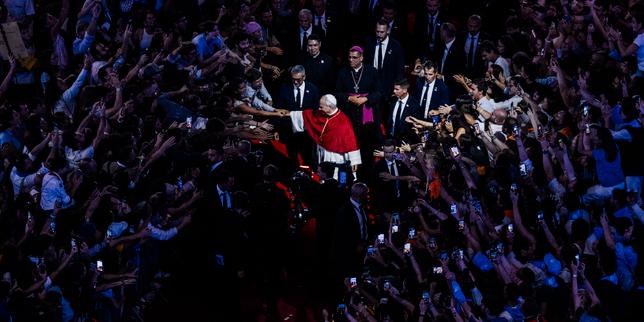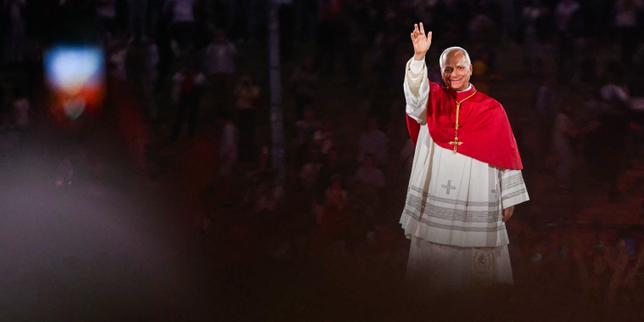
Pope Leo XIV's arrival in Paris marks a calculated shift in modern ecclesiastical diplomacy. When a pontiff bypasses standard diplomatic channels to touch down directly at a major transport hub before sweeping through the capital toward the Place de la Concorde, the choreography carries immense weight. This is not merely a pastoral visit to comfort the faithful. It is a high-stakes geopolitical maneuver executed on European soil, designed to project moral authority into the heart of a secular republic that has long guarded its laïcité with zealous suspicion.
To understand the true magnitude of this journey, one must look past the superficial splendor of the motorcades and the massive open-air masses. The Vatican under Leo XIV operates with a distinct pragmatic realism. By prioritizing closed-door meetings with migrant communities on the city's periphery before addressing the political elite, the Holy See is deliberately challenging European migration policies. The itinerary exposes a profound institutional friction between the humanitarian demands of the Church and the tightening border security frameworks championed by continental governments.
Paris serves as the ideal laboratory for this strategy. France represents the archetype of the modern European state: fiercely secular, intellectually rigorous, and culturally fractured over the integration of foreign populations. When the papal motorcade moves from the stadium peripheries into the central arteries of the city, it maps out a physical trajectory that links the marginalized working-class banlieues directly with the historical monuments of French power. This spatial contrast is entirely intentional. It forces the political establishment in Paris to confront the demographic realities they often prefer to relegate to municipal statistics.
The logistics of organizing a papal mass at the Place de la Concorde require an extraordinary synchronization of municipal resources and security apparatuses. Millions of euros and thousands of police officers are deployed to secure a perimeter that historically witnessed the guillotine, now transformed temporarily into a vast open-air cathedral. Critics within the French political sphere have routinely questioned the public subsidization of security for religious events in a nation built on the strict separation of church and state. Yet the state apparatus cannot simply turn down a papal visit without alienating a massive conservative and moderate voting bloc that views the heritage of the Church as synonymous with French identity.
Behind the public declarations of fraternity and spiritual renewal lies an intense backstage negotiation concerning diplomatic appointments, humanitarian corridors, and the legal status of undocumented workers living in European urban centers. The Vatican diplomatic corps, refined over centuries of statecraft, uses these mega-visits to apply subtle, persistent pressure on national capitals. When Leo XIV stands at the altar in the shadow of the Obelisk, his homily will be parsed by intelligence analysts and foreign ministries just as rigorously as by theologians. Every reference to solidarity, borders, and human dignity functions as a coded policy critique directed squarely at the European Union migration pact.
The domestic political fallout within France is equally complex. Traditionalist factions within the French Catholic Church view the papal emphasis on social justice and migration with skepticism, preferring a focus on liturgical preservation and identity politics. Conversely, progressive elements see validation for their tireless grassroots work in housing the homeless and advocating for refugees. Leo XIV refuses to neatly fit into either ideological box. His approach defies the simple left-right spectrum that dominates contemporary European political discourse, frustrating partisans on both sides who demand total alignment.
As the crowds disperse from the Concorde and the temporary altars are dismantled, the immediate media circus will fade, leaving behind the stubborn structural questions that prompted the journey in the first place. Governments will continue drafting restrictive asylum laws. Municipalities will continue struggling with integration. The Vatican will continue its quiet, relentless lobbying through nunciatures across the continent. The visit will not rewrite French law overnight, nor will it single-handedly solve the migrant crisis straining European infrastructure. Instead, it reasserts the Church as an unavoidable global actor capable of commanding the world's attention for a weekend while driving its moral imperatives into the legislative consciousness of modern states.