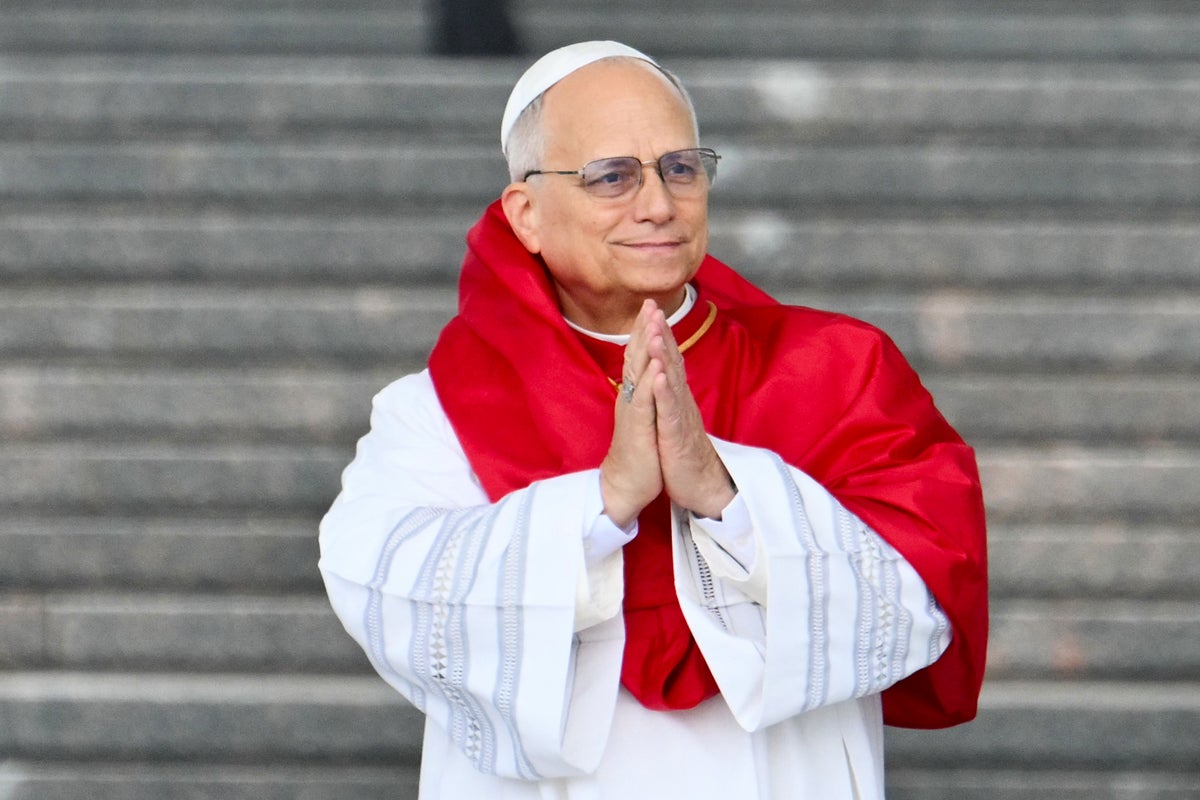
The recent pronouncements by Pope Leo regarding human sexuality have sent tremors through the ancient foundations of the Holy See. While casual observers view these remarks as a sudden burst of modernism, the reality is far more clinical. The Vatican is not suddenly "waking up." It is engaging in a desperate, high-stakes pivot to prevent a total demographic collapse in the West while simultaneously trying to keep its conservative African and Asian strongholds from open schism.
To understand these "significant" remarks, one must look past the theological varnish. For decades, the Church has operated under a rigid framework established by Humanae Vitae, a document that many historians now view as the moment the institution lost its grip on the private lives of its flock. Pope Leo’s recent shift suggests a realization that the gap between official doctrine and the lived reality of 1.3 billion people has become an uncrossable canyon. By softening the language around "irregular" unions and the moral weight of sexual acts, the Pope is attempting to replace absolute prohibition with "pastoral discernment."
This isn't just about kindness. It’s about institutional survival.
The Mathematical Crisis Behind the Doctrine
The Church is bleeding. In Europe and the Americas, the numbers are grim. Mass attendance is a fraction of what it was thirty years ago, and the priesthood is aging out with no replacement generation in sight. The primary driver of this exodus isn’t just secularism; it’s the perceived irrelevance of Catholic sexual ethics to the modern human experience.
When the Pope speaks about the "primacy of conscience," he is effectively decentralizing moral authority. This allows local bishops in liberal regions like Germany or Belgium to implement more inclusive practices without officially changing the Catechism. It is a classic bureaucratic maneuver: maintain the law on paper, but authorize a bypass in practice. This keeps the progressive wing from walking away while providing the Vatican with plausible deniability when confronted by traditionalist hardliners.
The African Counterweight
While the West cheers for reform, the Global South watches with growing horror. The Catholic Church in Africa is the fastest-growing branch of the faith. There, the culture is often deeply traditional, and the Pope’s new direction is viewed not as progress, but as a betrayal of the Gospel.
A House Divided by Latitude
The tension is palpable. Leaders like Cardinal Fridolin Ambongo of Kinshasa have been vocal about the "cultural colonization" they feel is being forced upon them by Western agendas. If Leo moves too fast toward total inclusion, he risks a formal split—a schism that would see the African Church break away from Rome. This is the tightrope the Vatican is walking. Every "significant" remark is carefully weighed to see if it can be interpreted as a step forward in Berlin and a mere suggestion in Nairobi.
Beyond the Bedroom
The focus on sex often obscures a deeper shift in how the Church views its role in the 21st century. Leo is attempting to move the goalposts of "holiness." In the past, being a good Catholic was defined largely by adherence to specific pelvic issues—contraception, divorce, and same-sex relations. Leo is trying to pivot the definition toward social justice, climate change, and economic equity.
By de-emphasizing sexual purity as the ultimate metric of faith, he opens the door for a wider demographic to feel "at home" in the pews. However, this strategy carries a massive risk. If the Church stops being the "moral absolute" in the room, what exactly is it? If it becomes just another NGO with some incense and nice architecture, it loses its unique selling proposition. The "Brutal Truth" is that many people attend church specifically because it offers a counter-cultural, rigid truth in a world of shifting sands. By softening the edges, Leo might be making the Church more likeable but less necessary.
The Invisible Architecture of Reform
The way these changes are being implemented is as important as the changes themselves. Leo isn't using "Ex Cathedra" decrees—the rare, infallible declarations of a Pope. Instead, he uses footnotes in apostolic exhortations, off-the-cuff remarks during airplane interviews, and "private letters" that happen to get leaked.
This is a deliberate strategy of "incrementalism." By normalizing a concept through informal channels, he prepares the ground for eventual formalization. It's a psychological softening of the opposition. When the official change finally comes, the shock has already been absorbed. We saw this with the discussion around the "Synod on Synodality," a massive, multi-year listening exercise that essentially crowdsourced the future of the Church. It was a masterclass in management: give everyone a seat at the table so that when the final decision is made, everyone feels a level of shared responsibility for the outcome, even if they hate it.
The Financial Undercurrent
Let’s talk about the money. The Vatican’s finances are notoriously opaque, but we know that Peter’s Pence—the global collection for the Pope’s charities—has seen significant declines. A large portion of the Church’s funding comes from wealthy donors in the United States and Germany. These two groups are diametrically opposed. American donors tend to be more conservative and are increasingly funding "shadow" Catholic media empires that openly criticize the Pope. German donors, through the "Church Tax" system, are pushing for radical reform.
Leo’s remarks are a balancing act between these two ATM machines. He needs the German money to keep the lights on in Europe, but he needs the American institutional support to maintain the Church's global infrastructure. Every word he speaks about sex is a signal to a donor.
The Clergy Shortage and the Sexual Identity
The Church cannot function without priests. The current requirement for celibacy is directly tied to the Church's sexual theology. If Leo truly shifts the stance on sexuality, the next logical step is the end of mandatory celibacy. This would solve the staffing crisis overnight, but it would also destroy the "mystique" of the priesthood that has existed for a thousand years.
Many young men who enter the seminary today are actually more conservative than the older generation of priests. They are looking for the Latin Mass, the cassocks, and the rigid rules. By moving the Church toward a more liberal sexual ethic, Leo risks alienating the very people who are willing to sign up for a life of sacrifice. He is trading his future "employees" for a more satisfied "customer base." It is a trade-off that most corporate CEOs would find terrifying.
Historical Precedent for the Pivot
We have seen this before. In the 1960s, the Second Vatican Council (Vatican II) was supposed to open the windows of the Church to let in some fresh air. It resulted in a massive drop in vocations and a chaotic "liturgy war" that is still being fought today. Leo is essentially trying to finish what Vatican II started, but he is doing it in a much more hostile, interconnected world.
In the 60s, if a Pope said something controversial, it took weeks for the news to spread and settle. Today, a remark on a flight from Mongolia is on every smartphone in five minutes, sparking a million "hot takes" that harden positions before the Vatican Press Office can even issue a clarification. This "digital distortion" makes the Pope’s job nearly impossible. He is trying to lead a global institution using 19th-century diplomatic tools in a 21st-century information environment.
The Reality of "Pastoral Care"
When a local priest is told to use "pastoral care" for a couple in a second marriage or a same-sex union, what does that actually look like? In practice, it means the priest is being given the authority to look the other way. This creates a "postcode lottery" of salvation. If you live in a liberal diocese, you are in good standing. If you move two towns over to a conservative one, you are a sinner in need of repentance.
This inconsistency is the greatest threat to the Church's authority. If the "Universal Church" isn't actually universal in its rules, it becomes a confederation of local religions. This is exactly what happened to the Anglican Communion, which has effectively fractured over these same issues. Leo knows this. He is gambling that the "Petrine Office"—the unifying power of the Papacy—is strong enough to hold the pieces together even as they pull in opposite directions.
The Biological Clock
Time is not on Leo’s side. He is an elderly man in a hurry. He has spent his papacy stacking the College of Cardinals with men who share his vision, ensuring that the next Pope will likely continue this trajectory. This is "legacy building" at its most fundamental. He isn't just making remarks; he is hardwiring a new operating system into the Church.
The opposition, however, is playing the long game. They are waiting for the "interregnum"—the period between Popes—to launch a massive counter-offensive. They are documenting every "significant" remark, every footnote, and every ambiguous interview as evidence of a departure from the faith.
The Hidden Winners and Losers
The winners in this shift are the laypeople who have felt marginalized for decades. For them, these remarks aren't just policy; they are a long-overdue validation of their dignity. The losers are the "rank and file" clergy who have to explain these contradictions to their congregations every Sunday. They are the ones on the front lines, caught between a Pope who wants to open the doors and a tradition that says the doors should be locked for a reason.
The Church is currently a giant laboratory for a social experiment that has no precedent. Never before has an institution of this size and age tried to change its core identity while under the constant, unforgiving microscope of global media.
The Institutional Inertia
Despite the headlines, the Church moves at a glacial pace. A "significant" remark today might take fifty years to become a settled practice. The Vatican thinks in centuries, not news cycles. This is why Leo’s strategy is so fascinating. He is trying to inject "liquid" modernism into a "solid" ancient structure.
The friction created by this process is what we are seeing in the headlines. It is the sound of an ancient machine grinding its gears as it tries to shift into a gear it was never designed to use.
Key Factors in the Vatican's Strategic Pivot
| Factor | Progressive Goal | Conservative Risk |
|---|---|---|
| Sexual Ethics | Inclusion and relevance in the West. | Schism in Africa and Asia. |
| Decentralization | Flexibility for local cultures. | Loss of universal doctrinal unity. |
| Pastoral Discernment | Empathy for individual situations. | Subjectivity and moral "gray areas." |
| Clergy Reform | Ending the shortage of priests. | Erosion of the "sacred" identity. |
The mistake most analysts make is assuming this is a binary fight between "good" progressives and "bad" conservatives. It is actually a fight about the nature of truth itself. Is truth a static deposit that must be guarded, or is it a living thing that evolves with human understanding? Pope Leo has clearly chosen the latter, but the institution he leads was built entirely on the former.
The tension isn't a bug; it's the main feature of his papacy. He is forcing the Church to live in the "messiness" of the world, rather than the sterilized vacuum of the ivory tower. Whether the structure can survive the exposure to the elements remains to be seen.
The ultimate test will not be a document or a decree. It will be the pews. If the pews continue to empty in the West despite these reforms, and if the African Church begins to look elsewhere for leadership, then Leo’s "significant" remarks will be remembered not as a new beginning, but as the moment the center finally stopped holding. The Vatican is out of easy moves. It has traded its old certainty for a new, precarious empathy, and in the world of global religion, empathy is a much harder currency to manage than law.
Stop looking for a single moment of change. The change is happening in the thousands of small, quiet concessions being made in parish offices around the world. The Pope hasn't changed the rules; he has simply made them optional for those who find them too heavy to carry.