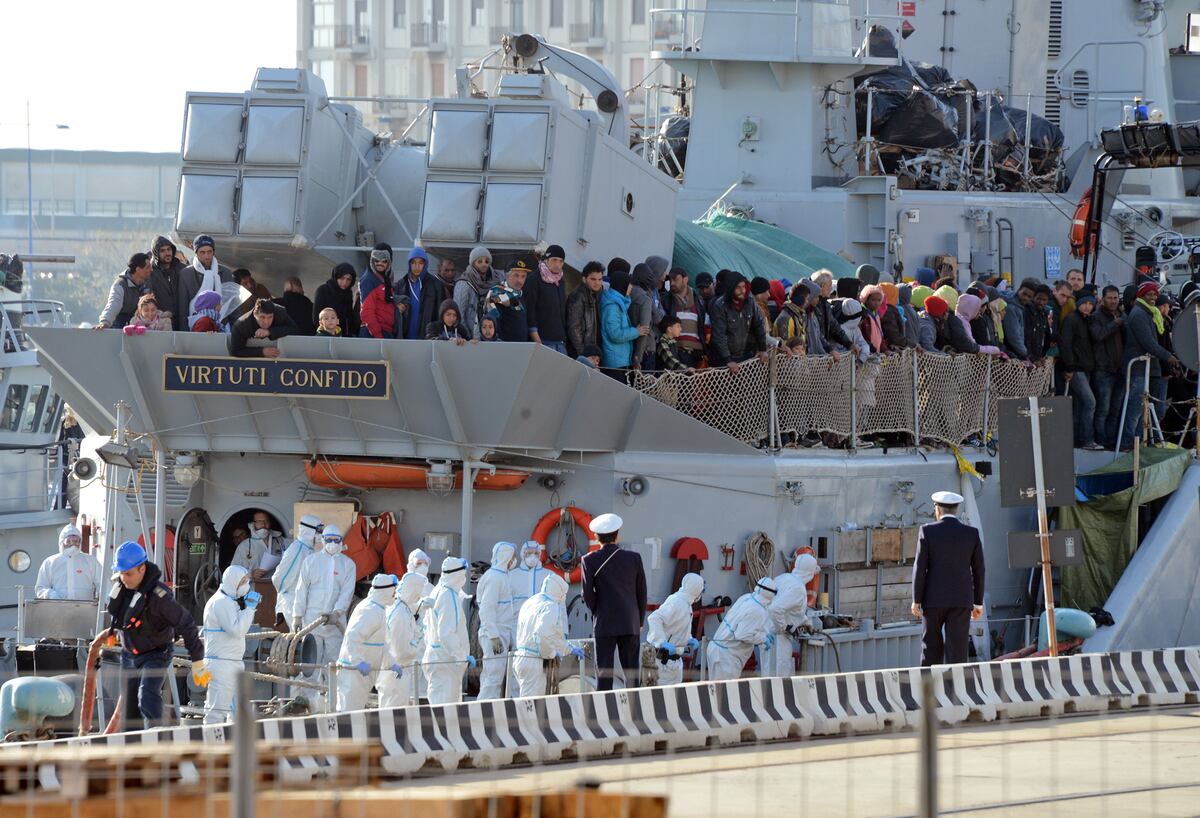
Standard journalism would have you believe Pope Leo’s visit to Algeria is a simple spiritual homecoming or a bridge-building exercise between the Cross and the Crescent. They focus on the incense, the liturgy, and the polite applause of diplomats. They are wrong. This is not a religious pilgrimage; it is a high-stakes geopolitical pivot. To view this through the lens of theology is to miss the entire board.
The Vatican operates as the world’s oldest intelligence agency and most enduring sovereign wealth fund. When a Pope touches down in a gas-rich, non-Christian North African powerhouse, he isn't just there to kiss the ground or say Mass for a tiny minority. He is there to secure the Church’s seat at the table in the post-Western energy order. Recently making news in related news: Europe is finally forcing a messy breakup with Russian gas.
The Myth of the "Small Flock"
Most reports lead with the "plight" of the 5,000 Catholics in a nation of 45 million. They paint a picture of a shepherd visiting a lonely, isolated outpost. This is sentimental nonsense. The Catholic Church does not move a multi-billion-dollar security apparatus and a global press corps for 5,000 people.
The real math is about the 200 million Catholics in Sub-Saharan Africa. Algeria is the gateway. By anchoring the papacy in Algiers, Leo is signaling a decoupling from the stagnant, secularized European center. He is positioning the Holy See as the primary mediator between the European Union—starving for non-Russian gas—and the African Union, which holds the keys to the future. Further details on this are detailed by TIME.
Soft Power is Hard Currency
In my years analyzing institutional shifts, I’ve seen organizations mask survival strategies as "moral imperatives." The Church is no different. Europe is a lost cause for the Vatican; the pews are empty, and the political influence is drying up. But in the Global South, the Church remains a massive infrastructure provider: schools, hospitals, and land holdings.
Algeria is the bridge. By celebrating Mass in a territory where the Church has no "market share," Leo is performing a masterclass in branding. He is asserting that the Church is a global arbiter, not a Western relic. He is telling the Arab world and the African continent that Rome is a neutral, sovereign power capable of brokering deals that the US and China cannot touch because they carry too much historical baggage.
The Energy Equation
Let’s talk about what the mainstream media ignores: Sonatrach. Algeria’s state-owned oil and gas giant is the real reason for the diplomatic thaw. The Vatican has long used its diplomatic corps—the Nunciatures—to facilitate quiet back-channel talks for European energy security.
Italy, the Vatican’s backyard, is desperate for Algerian gas. If the Pope can soften the cultural friction and present a unified "Mediterranean identity," he creates the social license for massive infrastructure projects. It’s "Trans-Mediterranean Solidarity" on the surface; it’s pipeline security in the fine print.
Why the Interfaith Dialogue is a Distraction
Every "expert" on your TV is talking about "interfaith dialogue." It’s a convenient distraction. Dialogue is what you do when you don’t have a concrete policy. The real work is happening in the closed-door meetings between the Secretariat of State and the Algerian presidency.
They are discussing:
- Migration Management: The Church wants to prevent the radicalization of the African diaspora, which threatens its remaining European assets.
- Investment Corridors: The Vatican Bank (IOR) is looking for stability in emerging markets as Western bonds become increasingly volatile.
- Regional Stability: Algeria is the "heavy" in the Maghreb. Rome needs a strong Algiers to keep the Sahel from exploding.
If you think this is about "peace," you’re a romantic. It’s about order. And order is the prerequisite for institutional wealth.
The Risk of the Play
There is a downside. By cozying up to the Algerian establishment, Leo risks alienating the populist movements in Africa that see the Vatican as just another colonial-era structure. If the "Algerian Gambit" fails, the Pope looks like a relic trying to stay relevant in a world that has moved past the need for a Roman intermediary.
But the Church has always been a contrarian investor. They bought land when everyone was fleeing cities. They maintained Latin when the world went vernacular. Now, they are betting on North Africa as the new center of gravity while the rest of the West treats it as a peripheral problem.
Stop Asking if it’s "Progressive"
The press is obsessed with whether this Pope is "progressive" or "conservative." Those are 20th-century Western labels that mean nothing in Algiers. Leo is a realist. He knows that the survival of his institution depends on its ability to transcend the "Christian West" identity.
This Mass wasn't a religious service. It was a flag-planting ceremony. The Vatican just claimed its stake in the 21st-century Mediterranean, and they did it while the world was busy looking at the vestments.
Quit looking for the divine in these headlines. Look for the ledger. Look for the map. Look for the gas. That is where the real "holy" work is being done.