The Ghost of the Rotunda
Marble does not care who walks across it.
Step onto the polished stone floors of the United States Capitol, and you are immediately struck by a profound sense of permanence. Columns reach upward like petrified trees. Statues of long-dead statesmen stare with unblinking, bronze eyes at the frantic scurrying of modern staffers, lobbyists, and journalists. In this ecosystem, time is supposed to move slowly. Institutional memory is currency. Presence is power. Building on this theme, you can find more in: Why Calling the PoK Elections an Election is the Ultimate Political Gaslight.
Yet, on a crisp morning in the nation's capital, permanence felt remarkably fragile.
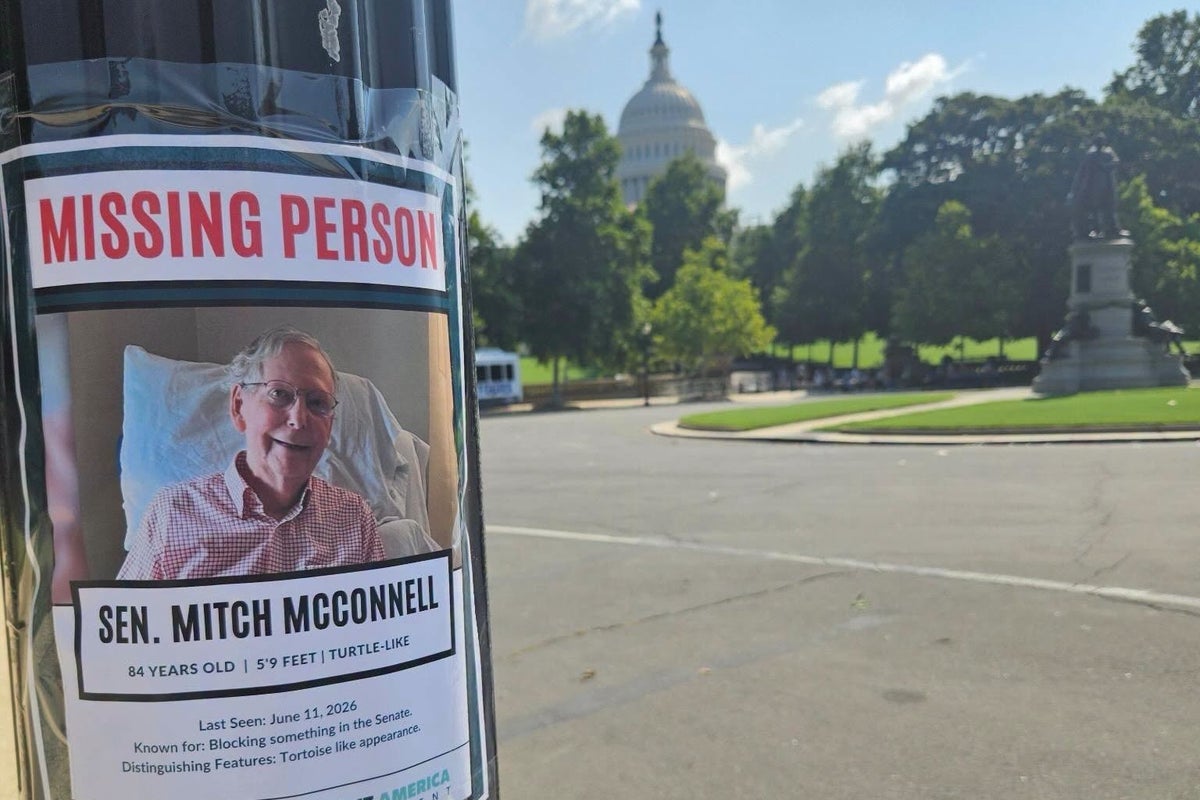
Glued to lampposts, bus stops, and concrete traffic barriers surrounding the complex, a peculiar kind of paper ghost appeared. They were neon-bright flyers, stark white against the grey morning urban backdrop, bearing a bold, impossible headline. Experts at BBC News have shared their thoughts on this trend.
Missing.
Not a lost pet. Not a runaway teenager. But a man whose face has defined the upper chambers of American governance for decades.
To walk the streets of Washington, D.C., is to understand that humor here is rarely just humor. It is a weapon. It is a form of political theater, a satirical pressure valve for a public that often feels entirely disconnected from the gerrymandered fortresses where their leaders reside. When activists or pranksters take to the concrete with wheat paste and flyers, they are not merely telling a joke. They are mapping a void.
Consider the sheer operational absurdity of it. A sitting United States Senator, a man holding one of the most exclusive titles in the free world, reduced to a black-and-white headshot taped to a utility pole next to a lost-dog notice.
Pedestrians stopped. Some smirked. Others pulled out their phones, snapping digital evidence of a very analog form of rebellion. A tourist from Ohio squinted at the paper, adjusting his glasses, trying to decipher whether this was an official public health warning or an elaborate prank.
It was neither. It was a symptom.
The Architecture of Absence
Power in Washington is built on visibility. You shake hands at the annual gala. You stand behind a mahogany podium, bathed in the soft amber glow of C-SPAN cameras, reading carefully vetted talking points about inflation, infrastructure, or foreign policy. You are seen. Therefore, you govern.
When that visibility shatters, the vacuum left behind fills rapidly. Rumors rush in to take the place of facts.
In recent years, the physical fragility of America's aging leadership class has transformed from a quiet parlor conversation into a deafening national debate. We have watched octogenarian politicians freeze mid-sentence under the harsh glare of press conferences. We have watched aides rush to their sides, gently guiding them away from microphones as the collective breath of the electorate catches in its throat.
The flyers plastered across the capital did not invent this anxiety. They simply printed it out on 8.5 by 11 printer paper and hung it at eye level.
Look closely at the mechanics of the stunt. Pranksters—operating under the cloak of pre-dawn anonymity—navigated the security perimeters of a heavily policed city to deliver a message about evasion. They targeted a specific kind of institutional silence. For months, questions had swirled regarding health episodes, public appearances, and the sheer day-to-day capacity of leadership to execute the immense duties of the office.
When answers are sparse, satire becomes the default language of accountability.
Imagine standing on Constitution Avenue at five in the morning. The air is biting, carrying the distinct metallic scent of exhaust and early spring dampness. A hooded figure approaches a steel signpost, smoothing down a sheet of paper with a swipe of a gloved hand. The adhesive grips the metal. The figure melts back into the shadows before the first Capitol Police cruiser rolls past.
It is petty, yes. It is theatrical. But it exposes a deeper truth about the relationship between the governed and the governing. When citizens feel locked out of the conversation, they find a way to tape their questions directly to the walls.
The Unspoken Compact
There is an unwritten contract we sign when we elect a representative. We trade our voice for their labor. We trust that when the heavy oak doors close behind them, they are working on our behalf, possessing the cognitive stamina and physical presence required to steer the ship.
That contract relies entirely on trust. And trust relies on transparency.
When an elected official steps back from the public eye—whether due to medical necessity, strategic calculation, or simple exhaustion—the silence speaks louder than any press release ever could. The public does not just want policies; they want proof of life. They want to know that the person pressing the voting button is fully aware of the world outside the Beltway.
The flyers in Washington were not truly about a lost person. Everyone knew where the senator was. He was inside the building, behind closed doors, insulated by a phalanx of communications directors, legal counsel, and security details.
The joke was about emotional distance.
It was about the growing chasm between the reality of aging power and the myth of eternal governance. We live in an era where politicians routinely cling to office well past the age where most citizens are enjoying retirement on a porch. They hold onto committee seats, seniority, and institutional leverage, creating a gerontocracy that leaves younger generations pressing their faces against the glass, wondering when their turn will come to shape the future.
When a prankster treats a senator like a lost cat, they are mocking that entrenchment. They are stripping away the multi-million-dollar PR campaigns, the tailored suits, and the official portraits, reducing a powerful politician to a piece of paper fluttering in the wind.
The Morning After
By mid-afternoon, the city workers arrived.
Armed with plastic scrapers and bottles of industrial solvent, they moved methodically down the avenues, peeling the neon sheets away from the lampposts. They scraped away the tape. They restored order to the streetscape. Within hours, the physical evidence of the stunt was gone, swept neatly into municipal garbage bags.
Yet, in modern politics, digital ghosts outlive physical ones.
Photos of the flyers had already migrated across social media platforms, multiplying exponentially, viewed by millions of people who had never set foot in D.C. A localized prank had instantly become a national Rorschach test.
To some, it was a cruel and tasteless mockery of an elder statesman dealing with health challenges. To others, it was a brilliant stroke of guerrilla theater, a much-needed jolt of reality delivered to an insulated political class that has grown entirely too comfortable ignoring the public's concerns.
The posters are gone now. The lampposts are clean.
But the underlying question remains taped to the back of every voter's mind, waiting for an answer that no municipal scraper can wash away.