The Middle East just hit a point of no return. If you thought the "12-day war" in 2025 was peak escalation, Day 2 of the current joint US-Israeli campaign—codenamed Operation Epic Fury by the Americans and Roaring Lion by the Israelis—has completely rewritten the script. We aren't just looking at another round of "tit-for-tat" strikes on isolated desert facilities. This is a systematic decapitation of the Iranian state.
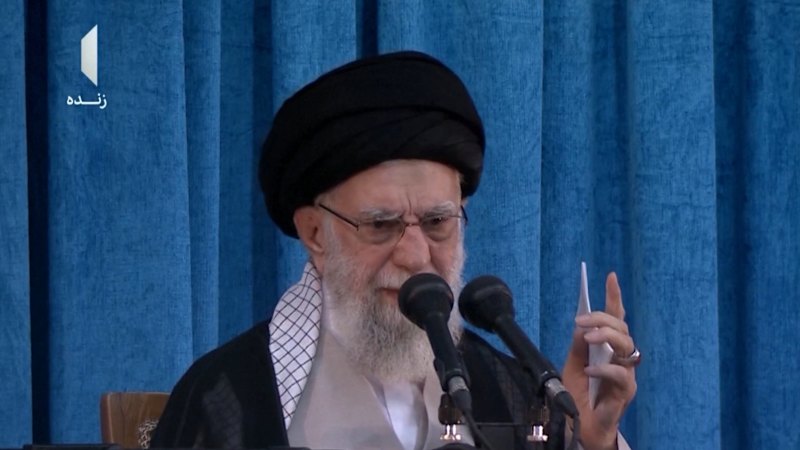
By the morning of March 1, 2026, the unthinkable was confirmed. Ayatollah Ali Khamenei, the man who ruled Iran since 1989, is dead. He was killed in a direct strike on his office in Tehran, alongside his inner circle and family members. This isn't just a military victory for the coalition; it’s a deliberate attempt to trigger a total collapse of the Islamic Republic from the inside out.
The Decapitation Strategy in Tehran
Day 2 has focused almost exclusively on the "head of the snake." While Day 1 saw the destruction of air defenses and radar arrays, Sunday has been about ending the regime's command and control.
Israeli and US jets didn't just hit military bases; they went for the Pasteur district in central Tehran. This is the heart of Iranian power. It houses the Supreme Leader’s residence, the presidential palace, and the National Security Council. Reports confirm that not only was Khamenei killed, but several other "heavy hitters" are gone. We're talking about Ali Shamkhani, a key security advisor, and Mohammad Pakpour, the Commander-in-Chief of the IRGC.
The goal here is obvious. By wiping out the top three layers of leadership in 48 hours, the US and Israel are gambling that the lower ranks of the IRGC will fracture. If there’s nobody left to give the orders, the machine stops working. Or at least, that’s the theory.
Iran Strikes Back at the Gulf
If you're wondering why oil prices just jumped 13%, look at the Persian Gulf. Iran's response hasn't been limited to firing missiles at Israel. They've decided that if they're going down, they're taking the regional economy with them.
The IRGC launched what they called a "sixth wave" of drone and missile attacks on Sunday. But they didn't just aim for US bases like Al Udeid in Qatar or Al-Salem in Kuwait. They hit civilian targets. Luxury hotels in Dubai and Bahrain were reportedly struck. Airports across the Gulf have shut down, leaving thousands of travelers stranded in a literal war zone.
Perhaps the most aggressive move was the attack on the Duqm port in Oman. This is a massive slap in the face to Muscat, which had been mediating nuclear talks between Washington and Tehran just days ago. The message from Tehran is clear: "Mediation won't save you, and hosting US assets makes you a target."
The Chaos on the Ground
Inside Iran, the situation is a mix of grief and total panic. In Tehran, explosions are rocking residential neighborhoods because many of these security institutions are tucked right next to apartment blocks.
- Civilian Toll: A strike on a girls' school in Minab reportedly killed nearly 150 people. This is the kind of "collateral damage" that fuels decades of insurgency.
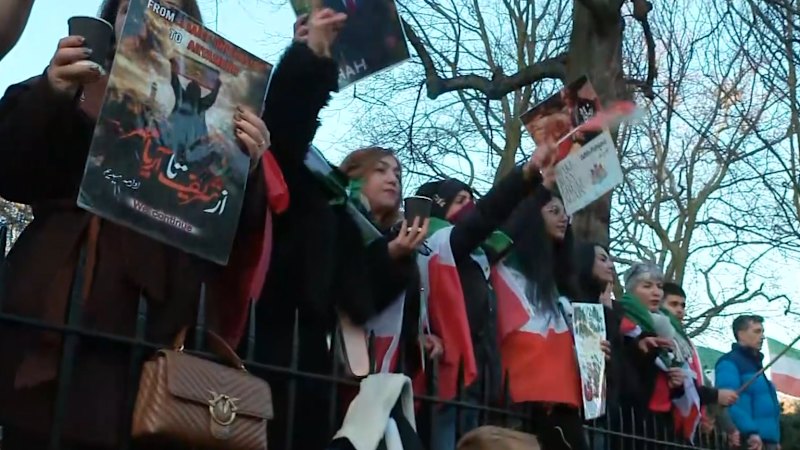
- Internal Unrest: While state media shows crowds mourning Khamenei, there are also reports of the US-Israeli side using cyberattacks to send mass messages to Iranian phones, urging the public to "free themselves" from the regime.
- The New Leadership: A temporary council has been formed to run the country, including the president and the judiciary chief. But with the IRGC's top brass decimated, it's unclear if this council has any real teeth.
This is Not a Drill
Unlike previous skirmishes, Donald Trump has been blunt about the objective: regime change. He’s already posted on social media that the aim is to "raze the missile industry to the ground" and "annihilate" the Iranian navy. This isn't about sending a message. It's about ending a capability.
The US has even deployed LUCAS drones—low-cost, one-way attack systems—which are essentially the American version of the Iranian Shahed. We’re seeing a war where both sides are using the exact same swarm tactics, but the US and Israel have the advantage of total air supremacy over Western Iran.
What You Should Watch For Next
The next 24 hours are critical. If the IRGC’s "Axis of Resistance"—specifically Hezbollah in Lebanon and the Houthis in Yemen—fully enters the fray, this becomes a five-front war. So far, they’ve been relatively quiet compared to the scale of the strikes on Tehran, but that won't last.
You should also keep an eye on the Strait of Hormuz. Iran has already started issuing radio warnings to merchant ships. If they sink a tanker or successfully mine the strait, the 13% spike in oil prices we saw today will look like a bargain.
If you're in the region or have business interests there, the best move right now is to assume the airspace stays closed for the foreseeable future. Don't wait for "official" reopening notices; they’re likely to be delayed by further missile waves. If you're tracking the markets, watch the energy sector and defense ETFs, as this conflict is now projected by some officials to last at least four weeks.