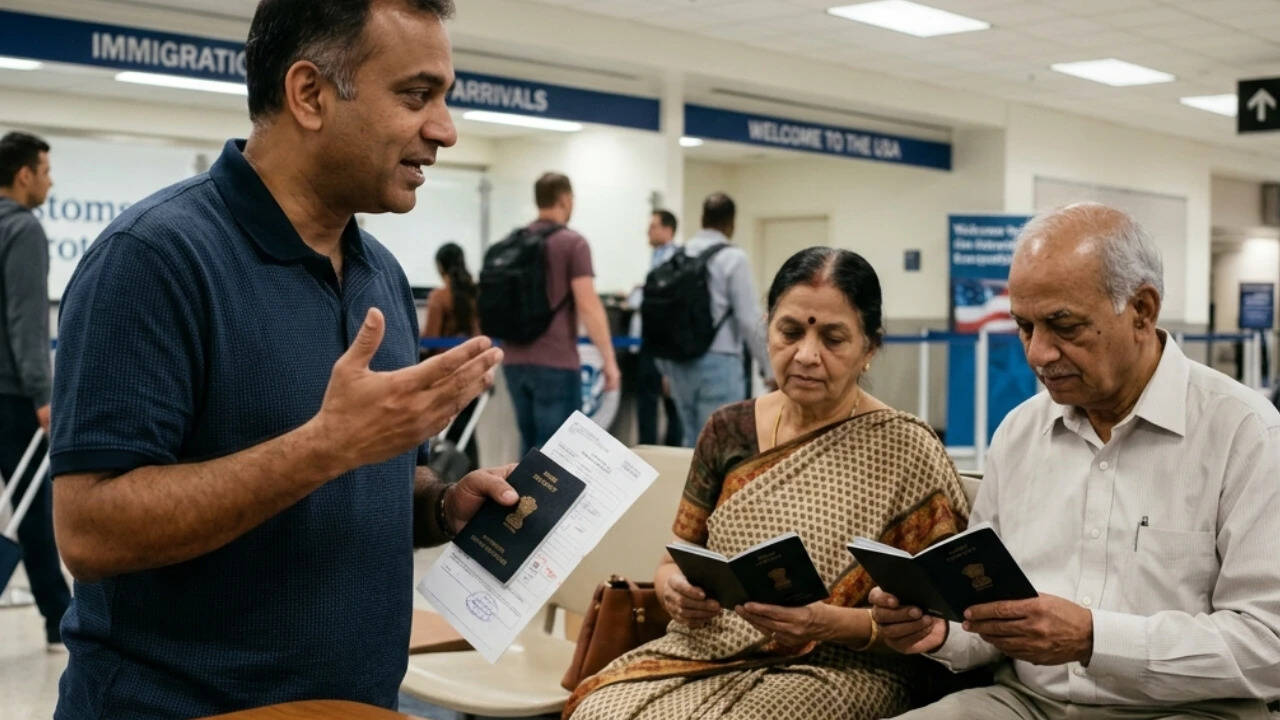
Landing at a US port of entry with a B2 visitor visa for your aging parents should feel like a relief. You've booked the flights, planned the family milestones, and set up the guest room. Then the Customs and Border Protection officer stamps their passport and grants an admit until date for just sixty days instead of the standard six months. Panic sets in. Why did this happen?
This exact scenario blindsided an NRI recently whose parents arrived expecting a five-month stay to help with family commitments. The border official sliced their authorized duration down to two months because the father admitted he had an active job waiting for him back in India. To the officer, an ongoing employment tie abroad signaled immigrant intent rather than temporary tourism. CBP officers possess absolute discretion at the desk. If anything in your parents' story triggers a fear that they plan to overstay or quietly adjust status, they will slash that arrival stamp.
You need to know how to navigate this reality before your family boards that flight. Let's break down the actual mechanics of US visitor visas, immigrant intent, and how to handle a shortened stay without destroying future travel plans.
The Problem With Ties to the Homeland
Most families misunderstand the core requirement of a B2 tourist visa. It is not an entitlement. It is a conditional privilege. When an officer reviews your parents at the primary inspection booth, they aren't just checking validity dates. They are testing the presumption of immigrant intent. US immigration law assumes every visitor wants to stay permanently until proven otherwise.
If your parents tell the officer they plan to stay for five or six months, the immediate math in the officer's head looks problematic. What job allows someone to take off for nearly half a year? Who manages their home, their bank accounts, or their daily life back in India?
When the officer in that recent viral case heard the father mention an active job in India, red flags went up. The officer reasoned that a person with a demanding job cannot realistically take a five-month vacation without abandoning responsibilities or risking employment. Alternatively, it triggered suspicion about remote work from US soil, which remains a grey area fraught with compliance traps.
You must realize that honesty is mandatory, but naive transparency can backfire. If your parents give vague answers about long stays without clear, unshakeable anchors tying them back home, officers shorten the stay to minimize immigration risk.
What Happens When the Admit Date Is Cut Short
Getting hit with a sixty-day stamp instead of a six-month stay creates an immediate operational crisis for your family. You suddenly have a ticking clock.
Your parents face three distinct choices once that short stamp hits their passport:
- Depart the United States before the electronic I-94 arrival record expires.
- File an extension of stay through Form I-539 with US Citizenship and Immigration Services.
- Risk an overstay, which triggers severe penalties, visa revocations, and future bans.
Let us be completely clear about filing an extension. It takes months to process. Meanwhile, your parents remain in a period of authorized stay while the petition pends. But if USCIS ultimately denies that extension—which happens frequently for visitor visa extensions without extraordinary circumstances—your parents accumulate unlawful presence the moment the denial lands. That ruins their ability to visit you ever again.
Rushing to file an extension just because an officer gave a short stamp is usually a bad strategy. USCIS wants to see unexpected, compelling medical or family emergencies that arose after arrival, not just a desire to hang out longer with grandchildren. Routine family support or wanting to attend a graduation rarely counts as an emergency in the eyes of an adjudications officer.
Preparing Parents for the Entry Interrogation
You cannot control the mood of the CBP officer, but you can control the preparation. Most parents wing it at the port of entry because they assume their visa sticker does all the talking. That is a massive mistake.
When your parents walk up to that desk, their answers must match the reality of a genuine tourist. They need to carry physical documentation or digital proof of their return itinerary. A confirmed return flight ticket for a date well within the requested window is non-negotiable.
If they plan to stay for several months, they need a clear narrative. Are they retired? Do they have rental income, property deeds, or elderly dependents remaining in their home country? These are the exact physical tethers that convince a border officer that your parents have too much to lose by overstaying in America.
Never coach your parents to lie. Lying to a federal officer leads to expedited removal and a permanent ban. Instead, teach them to be concise. Answer the specific question asked. Do not volunteer speculative information or over-explain mundane details. If the officer asks how long they plan to stay, state the exact departure date matching the return ticket.
Navigating the Gray Area of Remote Work
The modern dilemma centers around digital mobility. Many seniors or middle-aged parents still consult, manage family businesses, or handle remote professional tasks on their laptops. Bringing a laptop through US customs while entering on a tourist visa invites intense scrutiny.
If an officer suspects your parents plan to work remotely while visiting the United States, they may view them as violating tourist status. US immigration law does not easily accommodate casual foreign remote work on visitor stamps, even if the income originates abroad. If your parent admits to managing an active job overseas, the officer immediately worries about unauthorized labor or prolonged displacement.
To avoid this trap, ensure your parents understand that a tourist trip means a total pause on professional obligations. If they must deal with urgent work matters, they need to handle it discreetly and avoid broadcasting it as the primary purpose of their extended American holiday.
Smart Steps for Your Next Family Visit
If you are currently planning to bring your parents over, change your approach immediately to avoid short stamps and stressful border interrogations.
Book shorter initial trips. Asking for two to three months is vastly easier to justify to a border agent than demanding a full six-month stretch right out of the gate. It aligns better with normal vacation patterns.
Ensure they travel with a complete packet of supporting documents. Put together a folder containing their return flight details, proof of your legal status in the US, an invitation letter detailing the itinerary, and documents proving their financial or social ties back home.
Accept that the officer holds all the cards. If they hand your parents a short stamp, take a breath, adjust your family calendar, and book the return flights accordingly. Fighting the system at the airport or arguing with a supervisor will only land your parents in secondary inspection. Protect their long-term ability to travel by respecting the limits set at the border and planning cleaner, shorter visits in the future.