The Structural Friction of Mega-Event Hosting
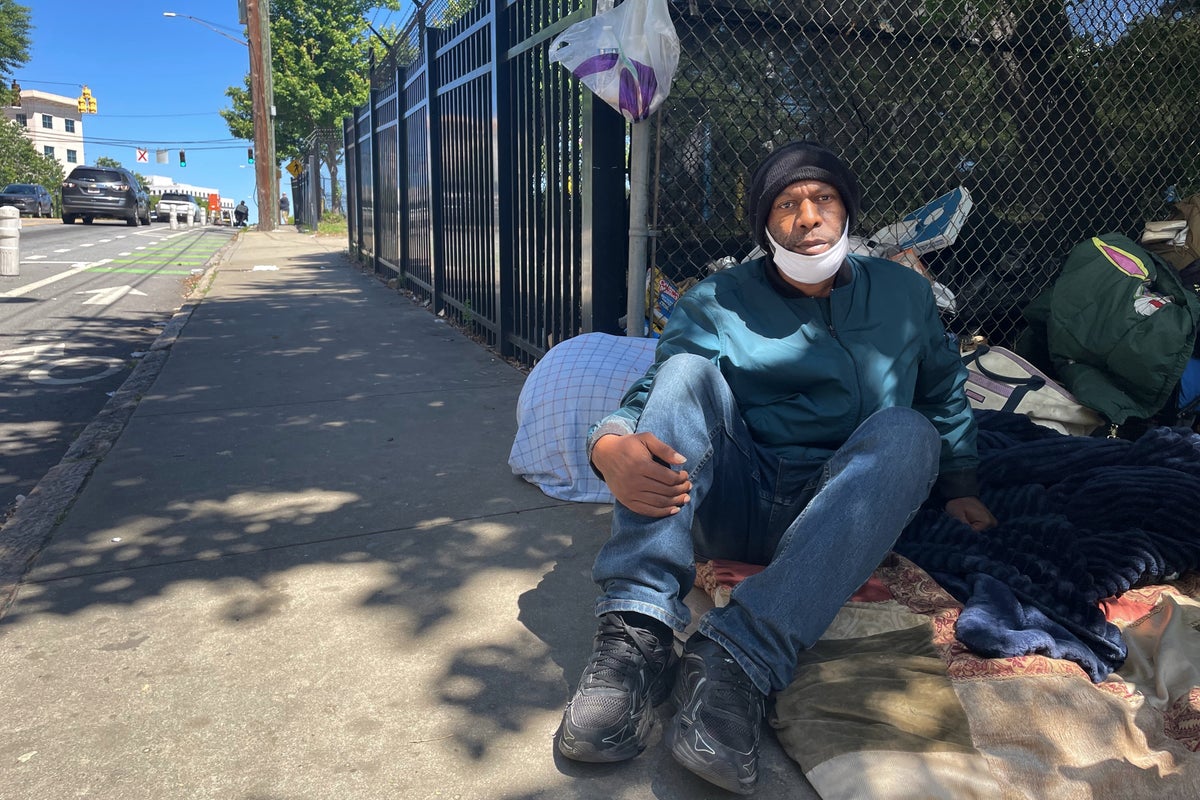
Municipalities selected to host global mega-events face an immediate, systemic contradiction: the requirement to rapidly upgrade physical infrastructure to accommodate millions of temporary visitors while managing chronic, long-term civic vulnerabilities. The primary point of friction occurs where high-visibility tourism zones overlap with areas inhabited by unhoused populations. When a city secures a tournament, it essentially triggers a fixed-deadline capital allocation cycle. This cycle prioritizes short-term aesthetic standardization over sustainable municipal resource management, routinely exacerbating housing insecurity under the guise of urban renewal.
To evaluate how host cities handle this intersection, we must move past the superficial narrative of "cleaning up the streets." The phenomenon is governed by specific economic and operational mechanisms. This analysis deconstructs the structural impacts of mega-events on vulnerable urban populations, evaluates the efficacy of current municipal interventions, and outlines a data-backed framework for equitable urban asset management.
The Three Vectors of Induced Displacement
The sudden influx of capital and regulatory scrutiny ahead of a major sporting event alters the urban ecosystem across three distinct vectors. Each vector exerts measurable pressure on low-income and unhoused residents.
                      [Mega-Event Allocation Cycle]
                                    |
         +--------------------------+--------------------------+
         |                          |                          |
         v                          v                          v
[Spatial Contraction]     [Economic Disruption]     [Jurisdictional Pivot]
  - Security perimeters     - Hyper-inflation         - Decriminalization gaps
  - Defensive architecture  - Supply-side shocks       - Relocation mandates
1. Spatial Contraction via Security Perimeters
Global sporting events require rigid, highly securitized perimeters dictated by international governing bodies. These exclusionary zones necessitate the immediate clearance of informal settlements, public encampments, and street vendors within a multi-mile radius of stadiums, transit hubs, and fan zones.
The mechanism here is spatial displacement. When municipal authorities restrict access to public squares and transit corridors, they cut off unhoused populations from their established survival networks—such as food distribution sites, community centers, and informal micro-economies. The immediate result is not the eradication of homelessness, but its dispersal into peripheral, under-resourced neighborhoods. This dispersal fractures existing social services and makes case management significantly more difficult.
2. Economic Disruption and Short-Term Rental Shocks
The arrival of a mega-event triggers a sharp, short-term demand shock in the local housing market. Landlords and property management firms frequently leverage this window to maximize yields by transitioning long-term residential units into short-term hospitality rentals.
This creates a secondary displacement vector. Low-income tenants living on the margins of affordability face sudden evictions or unsustainable rent hikes. Because the local housing supply cannot expand rapidly enough to absorb this shock, the net inflows into the homelessness system spike precisely when municipal resources are diverted toward event operations.
3. The Jurisdictional Pivot and Enforcement Mandates
In the twenty-four months leading up to an event, municipalities typically shift their policing and code enforcement priorities. Informal networks and survival strategies that were previously tolerated under standard civic management—such as sleeping in public parks or utilizing sidewalk spaces—are suddenly criminalized via emergency ordinances or accelerated enforcement of existing vagrancy laws.
This shift is driven by a desire to project an image of civic order to global media and corporate sponsors. However, using law enforcement as the primary tool for spatial management creates an operational bottleneck. It clogs local judicial systems, saddles unhoused individuals with criminal records that hinder future housing placement, and fails to address the underlying supply-side deficits in affordable housing.
Evaluating Current Municipal Interventions: Efficacy vs. Optics
Host cities generally deploy three tactical responses to mitigate visible homelessness before global broadcasts begin. An objective assessment reveals distinct variations in their long-term efficacy and systemic costs.
Temporary Shelter Expansion
The most common operational response is the rapid construction of temporary, non-congregate shelters or the short-term leasing of budget motel rooms.
- The Mechanism: Capital is quickly funneled into emergency shelter capacity to clear public view corridors.
- The Limitation: These facilities are funded through temporary event budgets rather than sustainable municipal tax revenues. Consequently, when the event concludes and the funding expires, these emergency shelters are dismantled. The unhoused population is returned to the streets, often with fewer resources than before because their original communities and support networks were disrupted.
Forced Relocation Programs
Some jurisdictions opt for direct administrative relocation, offering unhoused individuals one-way transit tickets to outlying municipalities or distant shelters outside the event's geographic footprint.
- The Mechanism: Jurisdictional shifting. By physically moving individuals outside city limits, the host municipality artificially lowers its visible homelessness metrics during the event window.
- The Limitation: This strategy creates friction between neighboring municipalities and fails to address the root causes of displacement. It merely shifts the financial and operational burden of care onto suburban or rural jurisdictions that lack the infrastructure to handle it. Furthermore, it almost always leads to a high rate of return migration once event-related enforcement eases.
Accelerated "Housing First" Initiatives
A minority of host cities attempt to leverage the event as a catalyst to accelerate permanent supportive housing initiatives, using the hard deadline to bypass bureaucratic red tape.
- The Mechanism: Blending private event sponsorship with public housing trust funds to acquire underutilized real estate (e.g., converting older hotels into permanent supportive housing).
- The Limitation: While this is structurally sound, the compressed timelines of a mega-event often lead to inflated acquisition costs and rushed construction schedules. Without long-term operational funding for case management and mental health services, these projects risk degenerating into substandard housing environments post-event.
The Host City Cost Function: A Strategic Framework
To understand why municipalities consistently default to short-term optics over long-term solutions, we must look at the host city cost function. Municipal decision-making is governed by a balance between immediate reputational risk and long-term capital liability.
Let $C_{total}$ represent the total perceived cost to municipal leadership:
$$C_{total} = R_{vis} + L_{cap} + P_{ops}$$
Where:
- $R_{vis}$ is the risk of global reputational damage caused by visible urban poverty during the broadcast window.
- $L_{cap}$ is the long-term capital commitment required to build permanent, supportive infrastructure.
- $P_{ops}$ is the immediate operational cost of enforcement, shelter construction, and relocation.
Because $R_{vis}$ spikes dramatically as the event approach, political incentives heavily favor minimizing $R_{vis}$ through rapid, high-visibility deployments ($P_{ops}$), even if it increases the long-term societal liabilities. The goal of an effective urban strategy is to invert this equation, making long-term capital investments ($L_{cap}$) the most efficient path to reducing reputational risk.
Operational Blueprint for Mega-Event Asset Management
To prevent mega-events from becoming drivers of displacement, host cities must shift from an enforcement-based model to an infrastructure-forward strategy. This requires executing an operational blueprint centered on three core principles.
1. Unified Siting and Dual-Use Infrastructure
Municipalities must mandate that any temporary facility constructed for a mega-event be designed with a clear secondary lifecycle. For example, modular media centers, athlete housing, and temporary workforce village units should be engineered from the outset to be disassembled and reconfigured into permanent supportive housing or community health clinics within 90 days of the closing ceremonies.
This dual-use approach alters the capital expenditure equation. Instead of treating event infrastructure as a sunk cost that yields only short-term utility, the expenditure is amortized over a multi-decade lifecycle as a core civic asset.
2. Regulatory Circuit Breakers for the Housing Market
To counter the supply-side shock that drives low-income tenants into homelessness prior to an event, municipal governments must implement temporary, targeted regulatory interventions. These should include:
- Eviction Moratoriums: Implementing a targeted moratorium on no-fault evictions in designated high-impact zones for the twelve months leading up to and the three months following the event.
- Short-Term Rental Caps: Imposing strict municipal caps on the percentage of residential units that can be converted to short-term commercial rentals during the event window, preserving the baseline inventory for long-term residents.
- Surtaxes on Hyper-Yield Rentals: Levying a temporary luxury surtax on short-term rentals operating during the event, with 100% of the generated revenue legally earmarked for the local municipal housing trust fund.
3. De-escalated Service Integration
Rather than deploying law enforcement to clear encampments, cities must establish multi-disciplinary crisis response teams that operate independently of police departments. These teams should be staffed by social workers, medical professionals, and housing navigators tasked with executing a phased relocation strategy over a six-to-twelve-month timeline leading up to the event.
Success here depends entirely on trust and predictability. If the unhoused population knows that relocation leads to stable, dignified, and permanent housing rather than a temporary cage or a distant shelter, the friction of spatial contraction is minimized. This reduces both operational costs and public conflict.
The Strategic Path Forward
The historical precedent set by past host cities demonstrates that relying on reactive, optic-driven enforcement is a flawed strategy. It guarantees a post-event spike in homelessness, strains municipal budgets through endless cycles of displacement and return, and creates long-term civil friction.
The definitive play for future host cities is to integrate homelessness mitigation directly into the initial bid and governance structure of the event itself. This means international governing bodies must make a host city’s securing of the event contingent upon verified, funded, and legally binding housing preservation plans.
Ultimately, a city's capability to host the world should not be measured by its ability to hide its most vulnerable citizens, but by its capacity to build an urban infrastructure resilient enough to support them. Municipalities that realize this will use the hard deadlines and capital influx of mega-events to accelerate permanent civic progress, turning a short-term logistical challenge into a long-term structural victory.