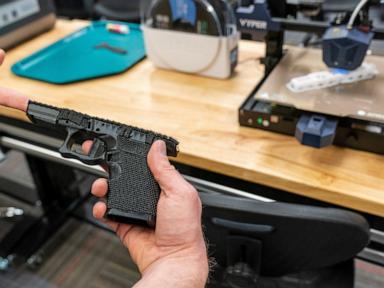
Lawmakers think they can stop a bullet with a line of code. They are wrong.
As federal and state legislators scramble to introduce bills aimed at criminalizing the distribution of 3D-printed firearm files, they are hitting an immovable wall of math, code, and constitutional reality. The primary legal strategy—blocking the digital transmission of computer-aided design (CAD) files—rests on the fundamentally flawed premise that data can be effectively contained. It cannot. The technology has evolved past the point of no return, transforming from a niche hobbyist subculture into an decentralized, global network that operates entirely outside the reach of traditional law enforcement.
The Illusion of the Digital Kill Switch
The core strategy of recent legislative efforts relies on forcing software developers and internet service providers to censor specific digital blueprints. This approach views a CAD file as a physical contraband item that can be seized at a border crossing or intercepted in transit.
Data does not work that way. A 3D-printed gun file is ultimately just text. It is a set of geometric instructions written in code, and under decades of established legal precedent, code is considered a form of protected speech. When the government attempts to outlaw the distribution of a file like the "FGC-9" (a widely disseminated, fully homemade 9mm semi-automatic firearm), it is not just fighting gun ownership. It is fighting the First Amendment.
01000110 01000111 01000011 00101101 00111001
If a government agency bans a specific file format or a file name, developers can simply alter the file signature, encrypt the data, or disguise the blueprint inside a harmless digital photograph using steganography. To successfully police these files, federal agents would need to monitor every encrypted data packet moving across the internet. That is an administrative and technical impossibility.
From Plastic Toys to Lethal Hardware
The media frequently mischaracterizes 3D-printed firearms as brittle plastic novelties that explode in the user’s hand. That narrative is dangerously outdated.
Early iterations, like the 2013 "Liberator" pistol, were indeed single-shot plastic objects with limited utility. The modern landscape is entirely different. Today’s builders use standard, commercially available $200 3D printers utilizing polylactic acid plus (PLA+), a polymer modified with additives that dramatically increase impact resistance and durability.
More importantly, the modern philosophy of homemade firearms relies on a hybrid architecture. Builders combine 3D-printed frames or receivers—the only part of a firearm regulated under federal law—with unregulated, non-firearm industrial components.
- Hydraulic Tubing: Standard seamless steel tubing, easily purchased online or at hardware stores, is converted into a rifled barrel using a process called electrochemical machining (ECM).
- ECM Kits: ECM uses a salt-water solution, a car battery, and a 3D-printed guiding jig to carve precise rifling grooves into a steel pipe in less than an hour. No industrial lathes or traditional machining skills are required.
- Hardware Store Springs: Firing pins are made from standard metal bolts filed to a point, while internal triggers utilize springs bought in bulk from ordinary industrial supply catalogs.
The result is a weapon that can fire thousands of rounds of standard ammunition without a single structural failure. By focusing exclusively on the 3D printer itself, regulators are missing the entire manufacturing ecosystem that makes these weapons viable.
The Decentralization Weapon
Traditional gun control relies on choke points. Governments regulate the licensed manufacturer, the commercial distributor, and the retail storefront. If you remove the choke points, the entire regulatory framework collapses.
3D printing operates on a peer-to-peer model that lacks any central node or authority. Files are not hosted on central corporate servers that can be shut down by a court order. Instead, they live on decentralized networks, distributed hash tables, and peer-to-peer file-sharing protocols.
When a jurisdictions bans a website hosting gun blueprints, the community reacts by creating hundreds of mirror sites within minutes. The data is mirrored across networks like Tor and I2P, making it impossible to purge from the internet.
Furthermore, the open-source community driving this development operates under a distributed contribution model similar to Linux or cryptocurrency development. An anonymous developer in Europe might design a modification for a trigger mechanism, a builder in South America tests it, and an individual in the United States refines the printing parameters. There is no corporate entity to sue, no physical factory to raid, and no CEO to indict.
The Failure of Smart Firmware
Some lawmakers have proposed a technical fix: mandating that 3D printer manufacturers install software filters that recognize the geometry of a firearm and cancel the print job automatically.
This proposal demonstrates a profound ignorance of open-source hardware. While closed-source, enterprise-grade printers could theoretically implement such restrictions, the vast majority of consumer-grade 3D printers run on open-source firmware like Marlin or Klipper.
If a manufacturer installs a restrictive software lock on a printer, a user can simply flash the machine’s motherboard with a clean, open-source version of the firmware via a USB drive. It takes less than five minutes. Furthermore, the geometric variations of a firearm frame are infinitely mutable. A developer can slightly alter the outer aesthetic of a frame to fool the software's recognition algorithms without changing the internal dimensions required to hold the mechanical gun parts.
Imagine trying to program a word processor to block the typing of an illegal manifesto. The user can simply change a few words, use synonyms, or split the text across multiple documents. The same logic applies to 3D geometry. A builder can print a firearm receiver in three separate pieces and fuse them together later with plastic welder or epoxy, completely bypassing any geometric detection algorithm.
International Proliferation and the Real Threat Vector
While American politicians debate the issue through the lens of domestic gun culture, the reality of 3D-printed firearms has already shifted globally. These weapons are appearing with increasing frequency in nations with absolute gun bans.
In Western Europe, rebel groups, organized crime syndicates, and political dissidents are manufacturing functional semi-automatic weapons in basement apartments. They do not buy parts from regulated gun shops; they create them out of raw materials using the ECM methods described above.
The focus on background checks for completed firearms becomes entirely irrelevant when the consumer is the factory. A background check cannot see a spool of plastic filament or a length of steel pipe.
This presents a paradox for law enforcement. If the tools required to build a lethal firearm are identical to the tools used to build a school science project or a custom car part, any regulation comprehensive enough to stop gun printing would also cripple the legitimate consumer manufacturing sector. You cannot ban steel tubing, salt water, and plastic wire without shutting down modern society.
The Irrelevance of Statutory Prohibition
Every historical attempt to ban a scalable, digital asset has resulted in failure. The music industry spent a decade attempting to sue peer-to-peer file sharing out of existence, only to discover that the technology mutated faster than the legal system could draft subpoenas.
The current legislative push against 3D-printed guns is repeating this exact mistake, but with far higher stakes. Passing a law that purports to cancel a print job provides a false sense of security to the public while doing nothing to alter the material reality on the ground. The information has escaped into the wild. The code is out there, it is archived across thousands of independent servers, and it cannot be un-written by an act of Congress.
Law enforcement agencies must stop pretending that digital containment is a viable strategy. Instead, resources must shift toward addressing the actual root causes of illicit violence and monitoring the physical distribution of ammunition, which remains far more difficult to manufacture at home than the firearm itself. Relying on an imaginary digital kill switch is not just ineffective; it ensures that state agencies remain completely unprepared for a world where manufacturing power belongs entirely to the individual.