The mountains do not care about your weekend plans.
They look eternal from the coffee shops on main street Canmore, frozen in jagged, majestic profile against the Alberta sky. But up close, the Canadian Rockies are alive, shifting, and deeply unpredictable. They are giant heaps of loose limestone held together by ice, gravity, and luck. On a rainy Monday afternoon, that luck ran out on a steep mountainside corridor known as Canmore Hill.
It starts with a sound. Not a roar, but a sharp, sickening crack that bounces off the limestone of the East End of Rundle. Then comes the rattle of gravel, followed by the terrifying, heavy thud of boulders fracturing as they pick up momentum.
Imagine you are a local runner, moving along the narrow shoulder of Spray Lakes Road, just trying to clear your head after a long day. The air is thick with the scent of wet pine and damp earth from days of relentless mountain rain. Suddenly, the world above you detaches. Rocks the size of suitcases shatter onto the gravel of Highway 742, throwing up clouds of dust and debris. An eyewitness watches in horror from a vehicle as a cascade of stone narrowly misses a car on the road.
Reuben Driedger, a local runner caught on the road just moments after the slide, described the environment as "another level" of dangerous. Descending the road with adrenaline flooding his system, he recorded a video to warn others, stating plainly that it simply was not safe to be out there. He had to get down, but every step felt like a gamble against an adversary that could strike from above at any millisecond.
The mountains had spoken. By Monday evening, Alberta Parks and Alberta 511 responded by pulling the emergency brake on one of the Bow Valley’s most heavily utilized recreational corridors.
The Phantom Menace Overhead
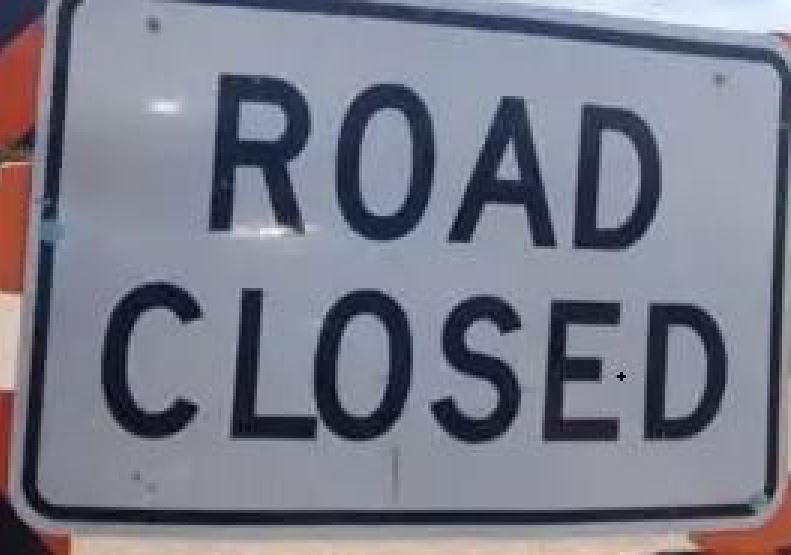
The immediate casualty of the rockfall was a crucial stretch of the Smith-Dorrien Highway. Officials locked down the artery between the Grassi Lakes parking area and the Goat Creek Day Use Area. It means the gateway to Kananaskis Country from the north is effectively severed.
But a road closure is just asphalt and paint. The real anxiety lies in what the rockfall left behind.
When a mountain sheds its skin, it rarely leaves a clean surface. Geotechnical teams assessing the slope quickly discovered that the danger had not passed with the initial slide. Massive, unsupported rock formations still hang suspended directly above the roadway, clinging to the cliff face by threads of friction. They are ticking time bombs triggered by moisture.
To understand why this happened, consider the delicate physics of mountain springtime. The Bow Valley has been enduring a perfect storm of geological stressors: days of heavy, saturated rainfall, skyrocketing groundwater levels, and a rapid thermal meltdown of high-elevation mountain snowpack. Water forces its way into the microscopic fissures of the limestone. It builds immense hydrostatic pressure, acting as a hydraulic jack that pushes blocks of stone away from the bedrock. Once the friction coefficient drops to zero, gravity claims its prize.
Because of this invisible volatility, Alberta Parks issued a blanket closure for all vehicle, pedestrian, and cycling traffic. There is no timeline for reopening.
The Cost of the Quiet
For locals and travelers alike, this is not just a logistical headache; it is a heartbreaking disruption to the rhythm of mountain life. June is the threshold of the peak summer season, the moment when the alpine world finally becomes accessible after months of winter lock.
The closure list reads like a bucket list of the region's premier outdoor destinations:
- The emerald waters of the Grassi Lakes Interpretive and Upper trails are locked tight.
- The technical singletrack of the Reclaimer trail is empty.
- Access to the iconic Ha Ling Peak trail from the north via Canmore Hill is completely blocked.
To stand at the barricades near the Grassi Lakes parking lot is to experience an eerie, unnatural quiet. On any typical June day, this staging area would be buzzing with the sounds of slamming car doors, the click of hiking poles, and the chatter of families preparing to witness the vibrant green pools above. Now, there is only the wind, the rushing water of nearby streams under high streamflow warnings, and the knowledge that the cliffs above are actively crumbling.
If you want to climb Ha Ling right now, your only option is a massive detour, driving all the way around from the south via Peter Lougheed Provincial Park. A trip that used to take minutes from downtown Canmore now requires a calculated journey.
The Friction of Hard Choices
It is easy to get frustrated by a barrier blocking your favorite path. We live in an era where we expect instant updates, estimated times of arrival, and predictable outcomes. But the geologists and safety crews working the Canmore Hill corridor cannot give an ETA. They are dealing with deep geological time and unpredictable physics.
You cannot simply send a bulldozer to clear the debris when there are thousands of tons of loose limestone hovering hundreds of feet over the operator's head. The slope must be monitored. It must dry out. In some cases, specialized crews must scale the cliffs manually to pry loose the hanging hazards with crowbars, or detonate them safely before a single vehicle can pass.
This closure forces us to confront our vulnerability. We don’t conquer the mountains; we occupy them on their terms. When the rock falls, the only logical response is to step back and let the earth settle.
The barricades remain in place, unyielding, as the rain continues to fall intermittently over the Bow Valley. The unsupported stone above Spray Lakes Road hangs in the balance, waiting for the precise moment when gravity wins again. Until then, the trails remain silent, a stark reminder that in the high country, safety is a fragile luxury bought with patience.


