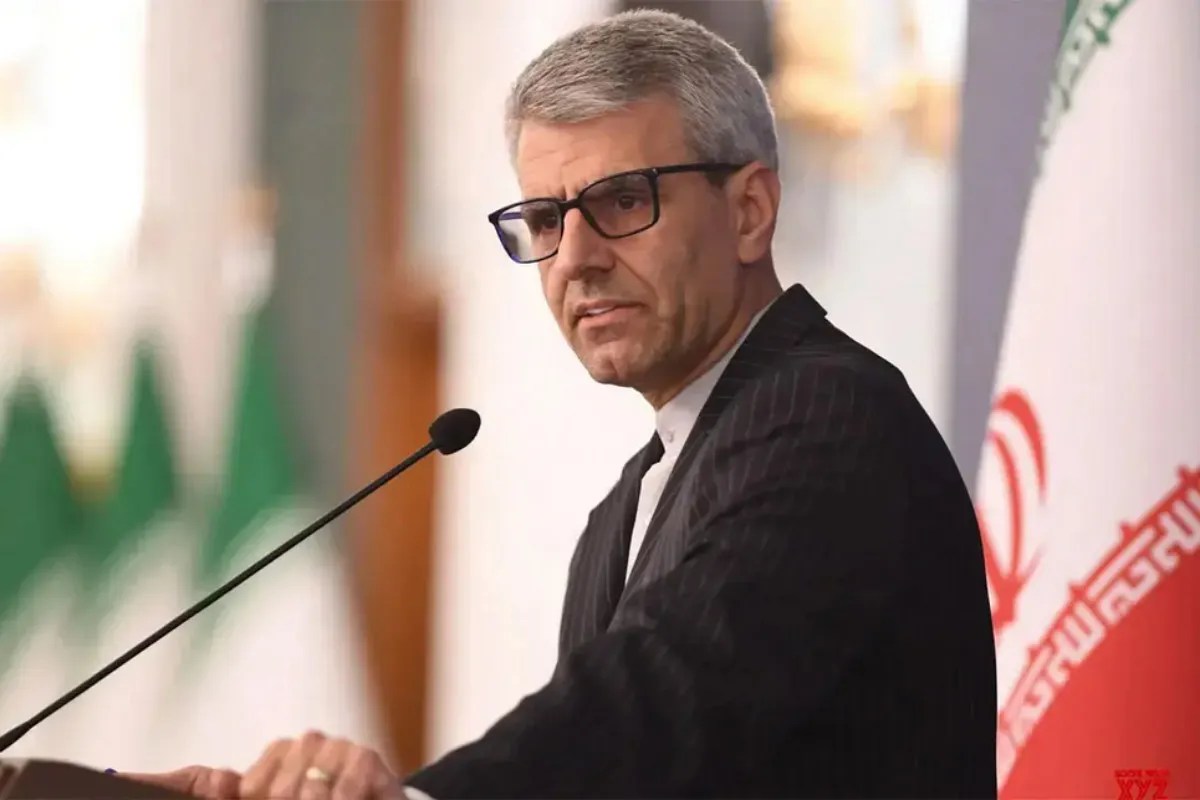
A Quiet Room in Tehran
A teacup sits cold on a polished mahogany table in the heart of Tehran. Outside, the muffled roar of urban traffic continues, indifferent to the quiet tension inside the government offices. Across the Persian Gulf, thousands of miles away, analysts in Washington pore over satellite images, measuring fuel supply trucks, tracking naval movements, and parsing statements issued by high-ranking officials.
The words spoken recently from Iran were direct and unyielding: the country stands prepared to confront the full weight of American power to defend its national sovereignty and security.
It is a declaration designed to sound absolute. Yet behind the formal press releases and rigid state media broadcasts lies a far more volatile reality. Tensions between these two powers are not merely abstract diplomatic chess moves; they carry real human weight for millions of people caught in the crossfire of geopolitical brinkmanship.
The Weight of Sovereign Lines
Sovereignty is an abstract idea until a line on a map is crossed. For state leaders, national security is framed around deterrence—the calculation that making the potential cost of an attack impossibly high will prevent the attack from ever happening.
Iran’s public stance serves a dual purpose. On the global stage, it signals to Washington and its allies that pressure tactics will not force immediate concessions. Domestically, it projects an image of strength to a population already enduring heavy economic burdens.
Warfare is rarely just about missiles and troop deployments anymore. The modern theater of conflict includes financial sanctions, cyber operations, and proxy forces scattered across regional borders. Each decision made behind closed doors reverberates through markets, alters shipping routes in the Strait of Hormuz, and shifts the price of everyday goods for families who may never understand the full complexity of the agreements broken or made.
Calculations in the Shadows
Deterrence relies heavily on perception. If an adversary believes you will hesitate, the strategy fails. If they believe you are irrational, the risk of miscalculation skyrockets.
Consider the mechanics of a standoff:
- Sovereignty Claims: A nation asserts its absolute right to defend its territorial borders and political independence without external interference.
- Economic Pressure: Opposing powers leverage sanctions to restrict revenue, aiming to force political concessions without firing a shot.
- Asymmetric Capabilities: Smaller or less conventionally powerful nations develop specialized defenses, such as drone networks or fast-attack naval craft, to counter superior conventional forces.
When diplomatic channels narrow, the space for error shrinks dramatically. A misunderstood radar signal, a delayed communication, or a localized skirmish can escalate before higher authorities have time to intervene.
The Human Margin
Governments speak in the language of strategic depth, deterrence, and sovereign rights. Citizens live in the reality created by those terms.
When tensions spike, foreign investments dry up. Currencies fluctuate. Healthcare systems struggle under restricted supply chains, and young people look at the future with growing uncertainty. The geopolitical posturing broadcast on evening news programs translates directly into the quiet anxiety of everyday life.
Standing firm against a superpower is a statement of political intent. Carrying out that stance requires balancing immediate military readiness with long-term economic survival. As speeches are delivered and warnings exchanged, the fundamental question remains unchanged: how long can strategic posturing hold before the fragile balance breaks?
The silence after a high-stakes declaration is rarely peaceful. It is simply the moment where every side waits to see who moves next.