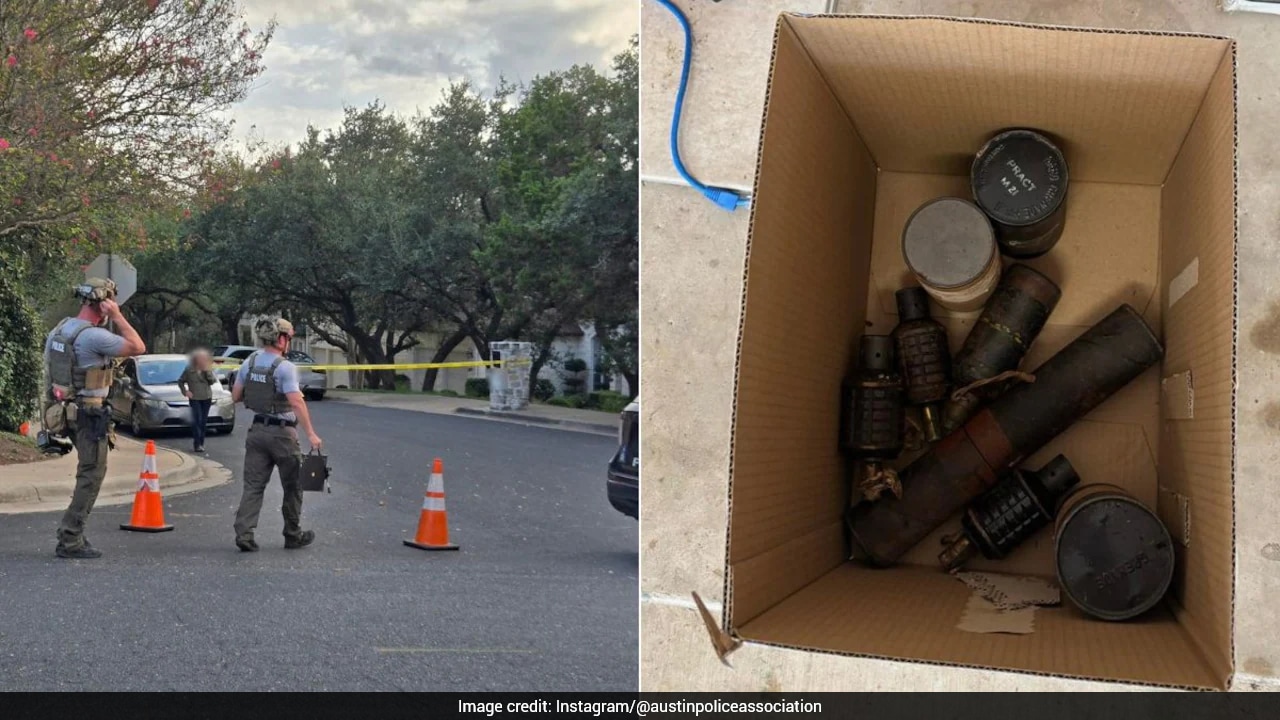
Purchasing an estate box containing World War II-era grenades exposes an acute failure in secondary-market risk allocation, turning a low-cost collectible transaction into a high-severity public safety and legal event. A rigorous analysis of this phenomenon requires separating the underlying asset economics from the physical degradation of aging munitions and the statutory liability frameworks governing accidental acquisition. While tabloid coverage frames such discoveries as quirky treasure hunts, the structural reality is a collision of information asymmetry, chemical instability, and strict legal mandates.
This article provides a structured framework for analyzing unexploded ordnance (UXO) and legacy military munitions discovered in civilian estate liquidations. It maps the risk mechanisms across four operational dimensions: information failure at the point of sale, chemical and mechanical degradation of aging ordnance, legal and liability transfer dynamics, and institutional response protocols. Every analytical claim is categorized as an established physical or legal mechanism, a known structural pattern in estate liquidation, or a hypothesis requiring empirical verification in a specific case.
Information Asymmetry in Secondary Estate Markets
Estate sales operate under conditions of severe information asymmetry. Sellers, executors, and liquidation agents frequently lack technical training to identify military ordnance, particularly items obscured by dirt, corrosion, paint, or mixed household clutter. Unlike authenticated antiques or graded collectibles, surplus military items in private estates rarely carry provenance documentation or demilitarization certificates.
This knowledge gap produces a classic adverse selection problem in reverse. Buyers shopping estate sales often look for undervalued items, while sellers price goods based on visible utility or perceived novelty rather than hazard profile. When a box contains grenades or other explosive devices, neither party typically prices in tail-risk liability because the hazard itself goes unrecognized during visual inspection.
Two distinct failure modes drive these discoveries:
- Visual misidentification: Corroded casings, practice munitions, or altered replica hardware can resemble scrap metal, paperweight curios, or harmless surplus gear to an untrained eye.
- Container opacity: Sealed tins, ammo cans, toolboxes, and stacked crates conceal contents until transport or unpacking occurs, shifting physical custody before inspection happens.
In standard retail or licensed surplus channels, regulatory oversight and inventory controls filter hazardous items before consumer exposure. Private estate liquidations bypass institutional gatekeepers, creating a channel where high-consequence hazards enter residential environments with minimal friction.
Chemical and Mechanical Degradation of Legacy Munitions
Treating vintage munitions as static metal artifacts ignores active physicochemical degradation. Over eight decades since World War II, internal explosive fillers, fuzes, primers, and casings undergo slow reactions driven by temperature cycles, humidity, and material incompatibility. This is a core physical mechanism rather than a mere hypothetical concern: aging energetics do not reliably become inert over time.
Explosive compounds such as TNT, picric acid, or composition fillers can interact with moisture and metal linings. Picric acid, for example, is notorious for forming sensitive metal picrates when in contact with certain metals, increasing sensitivity to shock, friction, or heat. Stabilizers in propellants and older energetic formulations deplete over decades, raising the probability of erratic burn or detonation behavior if disturbed.
Mechanical components fail along parallel tracks. Springs weaken or corrode, safety levers seize or deform, and fuzing elements degrade unpredictably. An external safety pin or spoon appearing intact does not guarantee a safe internal firing train when corrosion has altered tolerances or compromised retaining mechanisms.
A critical analytical distinction separates known physical principles from case-specific hypotheses. It is an established scientific fact that aging explosives and corroded fuzes can become more sensitive or unpredictable over time. By contrast, whether any specific grenade found in an estate box remains live, contains degraded filler, or retains a functional fuze is a hypothesis until certified by qualified explosive ordnance disposal (EOD) personnel.
The Cost Function and Liability Transfer of Accidental Acquisition
Standard economics models transaction costs as search, contracting, and enforcement expenses. When an estate purchase includes live or suspected ordnance, the cost function shifts abruptly from minor purchase price to asymmetric externalized costs.
Consider the components of this cost structure:
- Direct response disruption: Evacuations, street closures, emergency dispatch, and EOD rendering or disposal operations impose immediate public and private disruption.
- Property and possession exposure: Transporting an item home before recognizing its nature introduces hazards into vehicles and residences, potentially compounding risk during handling.
- Legal and regulatory friction: Unlawful possession, improper transport, or failure to report suspected ordnance can trigger statutory scrutiny, regardless of the buyer's benign intent when purchasing the box.
Liability allocation in these scenarios is rarely clean. Estate executors generally liquidate property "as-is, where-is," attempting to disclaim warranties of title and condition. Yet statutory public safety rules and strict liability principles surrounding explosives frequently override private boilerplate disclaimers when hazardous materials enter circulation.
A second structural tension arises between intent and custody. A buyer who purchases a box of mixed items acts without criminal mens rea, yet physical custody of regulated or hazardous material creates immediate compliance and safety obligations. Relying on informal assumptions—such as believing an item is "obviously a souvenir" or "too old to work"—represents a severe miscalculation of tail risk.
Operational Taxonomy of Discovery Scenarios
To move beyond anecdote, analysts can classify estate ordnance discoveries along two axes: identification timing and physical state.
Identification Timing
Discovery occurs at one of three operational stages:
- Point-of-sale discovery: The item is spotted before payment or removal. This stage allows immediate disengagement and notification without moving the item across public or residential spaces.
- Post-purchase transit or unpacking: The item is found inside a closed container at home or in transit. Here, prior movement has already occurred, making immediate immobilization critical.
- Secondary downstream transfer: The initial buyer resells, donates, or passes along the box, multiplying exposure points and obscuring chain of custody.
Physical State and Provenance Uncertainty
Even trained observers cannot reliably distinguish inert display pieces from live ordnance by eye alone. Demilitarized casings may lack explosive filler and fuze components, while inert training grenades may carry distinct markings or weight profiles—yet wear, repainting, corrosion, or improvised modifications undermine visual certainty.
Assuming inertness based on age or appearance is a recurring cognitive error. In risk management terms, treating an unverified munition as live until professionally cleared is the only rational baseline because the downside of a false negative is catastrophic.
Institutional Response and Risk Mitigation Mechanics
When a suspected explosive device is identified, effective risk control depends on disciplined sequence and restraint rather than improvisation. Standard EOD and public safety protocols prioritize minimizing human proximity, eliminating mechanical shock or heat sources, and transferring control to trained specialists.
From a systems perspective, reducing estate-sale ordnance incidents requires interventions across three layers:
- Liquidation screening protocols: Estate liquidators and auctioneers can institute intake checklists flagging military hardware, sealed metal containers, and heavy dense boxes for closer inspection prior to sale.
- Buyer decision rules: Buyers encountering suspicious military items can adopt a hard stop rule—leaving the item untouched, avoiding transport, and contacting local authorities—rather than attempting disassembly, cleaning, or photography at close range.
- Public reporting clarity: Clear, non-punitive reporting pathways encourage prompt notification when citizens discover legacy munitions during cleanouts, reducing the incentive to hide or dispose of items informally.
Limitations of Preventive Controls
No control framework eliminates this risk entirely. Private family estates often lack centralized inventories, and heirs sorting through decades of accumulated belongings frequently overlook items tucked inside larger lots. Furthermore, over-correction carries its own operational cost: false alarms consume emergency and EOD resources, though they remain vastly preferable to unaddressed live hazards.
Strategic Play for Estate Operators and Risk Managers
Estate liquidation companies, auction houses, and risk managers should treat legacy military items as a mandatory pre-sale hazard screen, not an incidental curiosity. Implement a two-step intake rule before any estate lot is priced or listed: flag all military-style ordnance, ammunition cans, and sealed metal containers for physical inspection and quarantine, and prohibit staff or buyers from moving, testing, or transporting suspected explosives off-site prior to EOD clearance. Pairing clear intake screening with a strict "do not move, notify authorities immediately" protocol protects life safety, limits operational disruption, and insulates organizations from avoidable legal and reputational fallout.